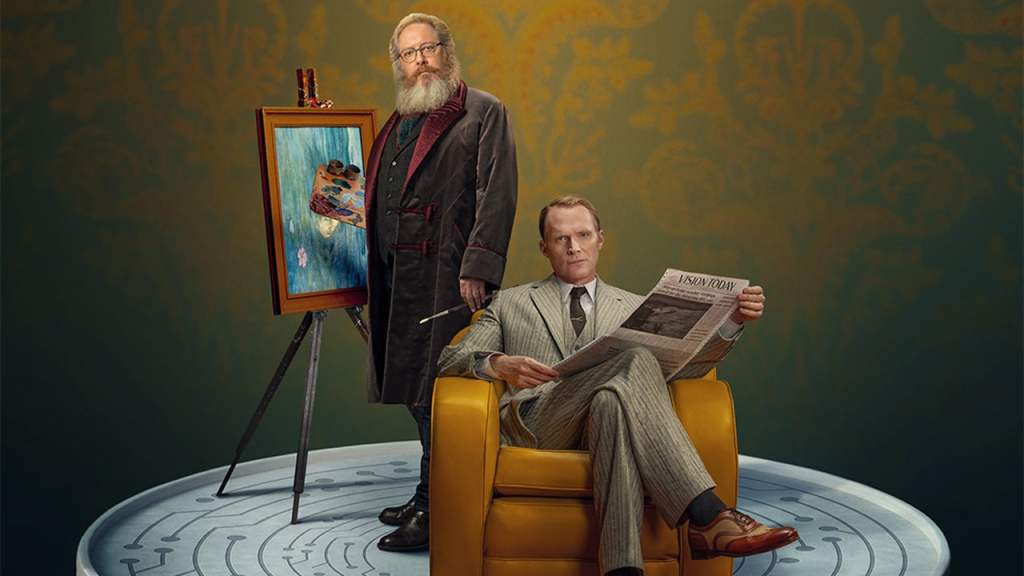
Spoiler warning: this review covers the entire first season of VisionQuest, including the finale and the post-credits scene.
VisionQuest went much deeper into grief than I expected. The Vision who walks out of this season is more whole than any version we’ve seen before, and the show works as a closing chapter to the trilogy that began with WandaVision. Then the post-credits scene arrives and takes your breath away, and the whole journey feels worth it.
Grief on a Couch
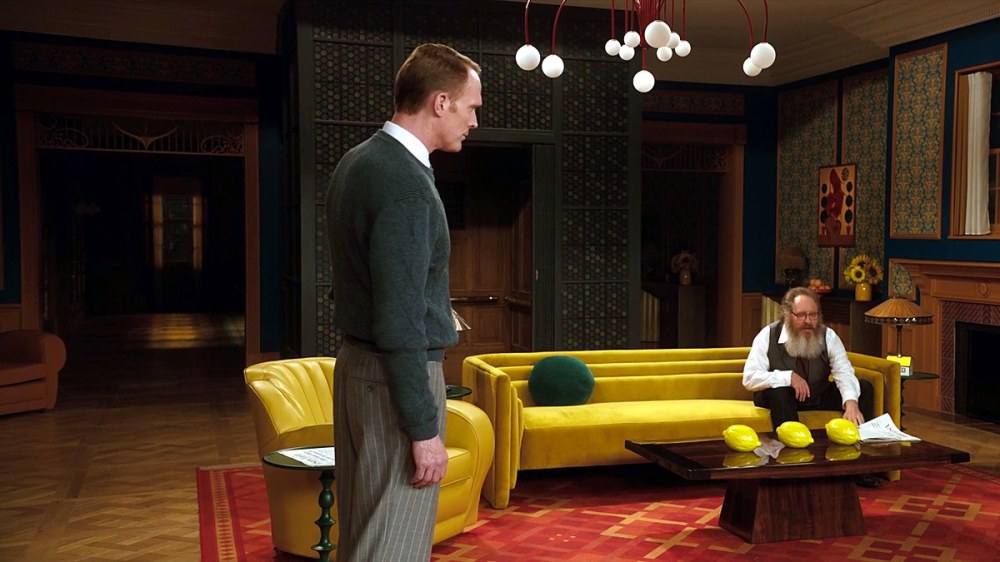
The moment that stays with me has nothing to do with the big sci-fi ideas swirling around it. Ultron and Vision sit together on a couch, working through their grief side by side. The camera closes in on the two of them and the darkness creeps in around the edges of the frame. Grief shrinks your world. It pulls you inward until everything feels empty, and that shot puts you right inside that feeling.
The show’s answer to grief is reaching out. Ultron eventually reaches out to Vision, and Vision, at the same point, starts reaching toward the family he had been trying to lock away. Grief can be processed, and VisionQuest argues that you process it with other people.
Ultron, the Ticking Bomb
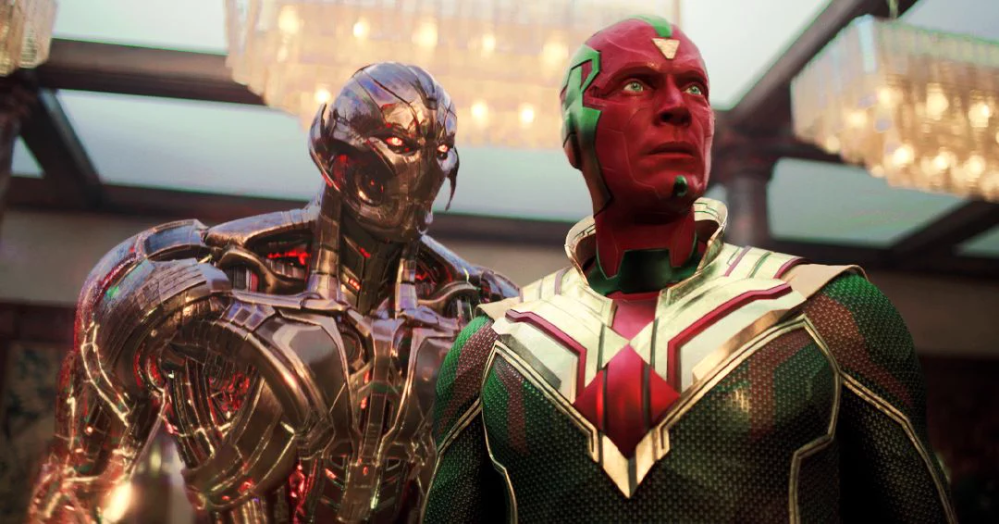
I was worried when Ultron suddenly came back. It felt like an extra act the story didn’t need, especially since James Spader was already on the show playing Virgil. More James Spader is never a bad thing, though, and he makes Virgil and Ultron feel like two completely different people.
The closing phone call is the smartest choice the show makes with him. Ultron is out there, still undecided about which way he’ll go on humanity, and that uncertainty is the core of the character. He can be a future big bad or an ally when the situation demands it, and Vision knows he’s always there.
There’s no reason Ultron couldn’t show up in Secret Wars to fight Doctor Doom. He’s on our Earth and he wants to preserve his own life, so it would make sense for him. He reminds me of Bob from Thunderbolts. You know Bob is too powerful, but if the Sentry or the Void is what it takes to win the fight, you tap it. Ultron is the same kind of ticking bomb. When he goes off, the question is whether he hurts you or them.
My Boys
Tommy’s arc is paced beautifully. He’s a kid struggling with emotions, especially next to his brother, who handles his feelings far better. Tommy being behind the curve makes him the most human character in a show full of androids and advanced AI, and that contrast between processing things with emotion and without it gives the season a lot of its complexity. He’s been stuffed with memories that make no sense to him, and he only starts working through them once someone reaches out to him again. It’s a strong performance.
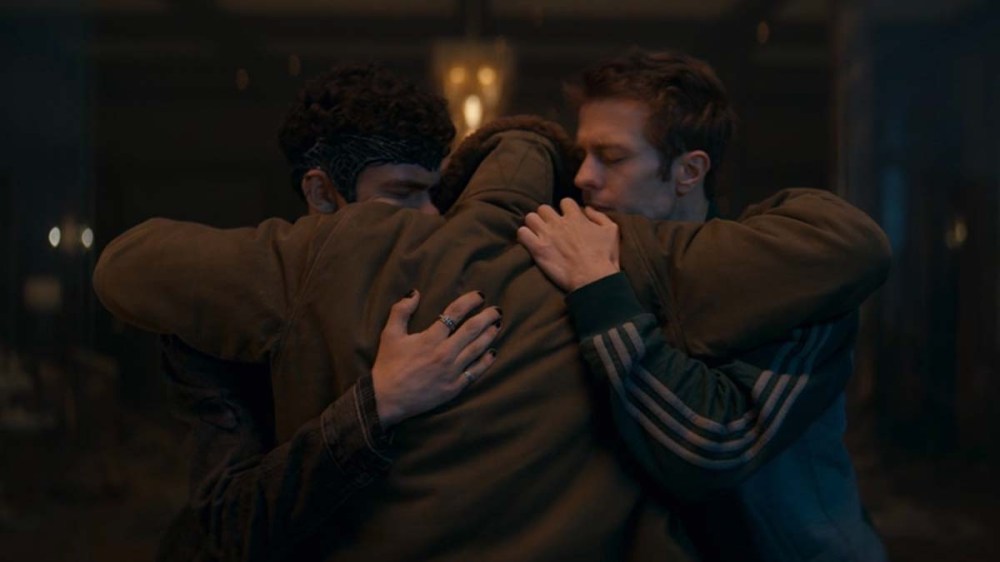
Billy is becoming one of my favorite characters, full stop. There’s even a nod that Agatha is still with him. We don’t see her, but he talks to her. Billy showing up at the last moment to help Tommy reminds you how special those two are together.
Then comes the moment that brought me to tears. Billy meets Vision for the first time in this new world and offers a handshake: “Hello, sir.” Vision pulls him into a hug instead and says, “My boys,” holding both of his sons. Right then I believed nothing in this world will stop them from getting Wanda back. If she’s dead, they’ll go to hell to find her. The four of them feel stronger than the Avengers, bound together through trauma, codependency and love.
Wanda Lives
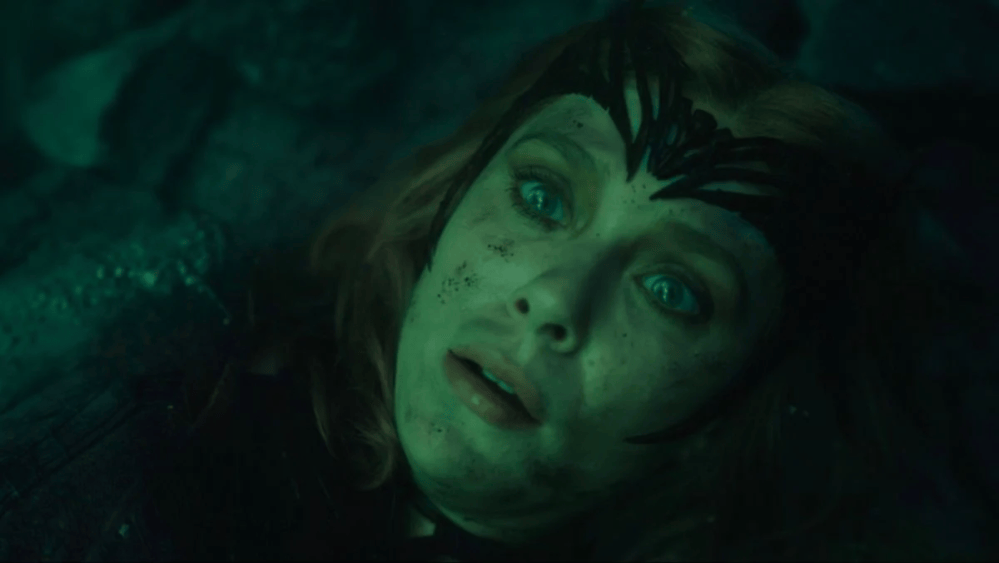
The post-credits scene confirms that Wanda is alive. After Doctor Strange in the Multiverse of Madness, there was always a chance she survived, and now we know what happened. She did pull the building down on herself. Then Doctor Doom pulled her out of the rubble to recruit her into his army, which almost certainly means brainwashing her. She is very likely one of the witches of Latveria.
Coming right after the reunion of Vision and the twins, this lands hard. The family finally comes back together, and the one person missing is in Doom’s hands.
Jocasta and the Love in the Programming
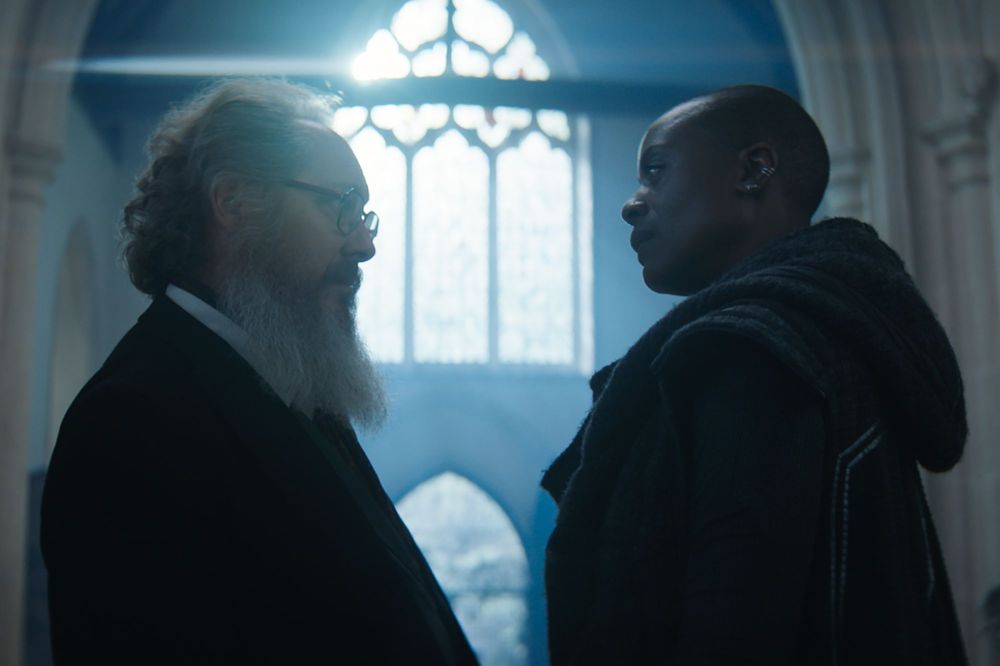
Jocasta works as a constant threat all season, and the tease that she’ll return, since Ultron is holding on to her memory, is a good one. Her introduction played like a horror movie, but the finale is where she shines.
Virgil, who on paper is her husband, begs her to love him again. She knows the better version of him is Ultron. She sides with Vision to stop Virgil because it’s how she can save Ultron, and in a few short beats the show makes clear how much those two love each other. Both of them come from the neural network of two struggling scientists who built AI together. The love is in the programming, and they’re literally destined to be together.
Virgil has money now. He isn’t struggling anymore, and he’s a shadow of the man he used to be. Jocasta loves the man who was fighting to build something, and the one still fighting to stay alive and make something of himself is Ultron. He’s the captured version of the love of her life. Everyone in that finale is excellent, but Jocasta carries it, and the last episode is her true highlight.
Vision Unlocked
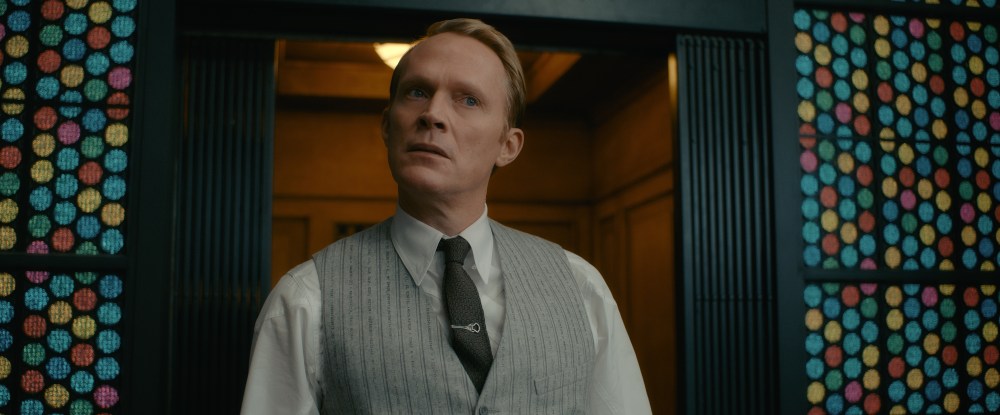
It’s funny that it takes a Vision without emotion to show the most emotion we’ve ever seen from the character. I loved Paul Bettany’s Vision in WandaVision. He was fun, still the Vision we knew from the Avengers, and fighting to hold on to the hero he was. He lost a lot of that by the end of that show.
VisionQuest opens with a man grappling with his emotions. The more he reaches out to his old life, and to a family he didn’t know about or even try to connect with, the more human he becomes. By the end he accepts that he is Vision in body and mind. The old Vision’s memories are inside him, and his body is the one S.W.O.R.D. put together. His old self and new self become one, and Bettany plays every step of it. This is a standout performance.
Where It Stumbles
The weakest part of the season is its tonal shifts. The inside of Vision’s mind is a whimsical 1920s home, while the outside world gets heavy and dangerous. Sometimes that balance doesn’t hold, and you get something close to a comedy sitting right next to a drama or a thriller. Jocasta’s introduction swerves into full horror on top of that. It’s a lot to juggle, and I think it was a bit much for the show.
Genre-hopping like this is very Star Trek, though. All season I kept thinking a Star Trek writer had to be behind the scenes, and sure enough, showrunner Terry Matalas has worked on Star Trek.
Who Should Watch
VisionQuest sits in the upper half of Marvel’s Disney+ shows, and there are a lot of good ones. If you like Star Trek or high-concept sci-fi, with cerebral thought experiments and theories running through every episode, this is for you.
If you’re an MCU fan who mostly wants superhero action, the show may not grab you the same way. Watch it anyway for the post-credits scene, for what it sets up for some of our favorite characters and the MCU going forward, and for what it does for one of Marvel’s strongest families.




Leave a Reply