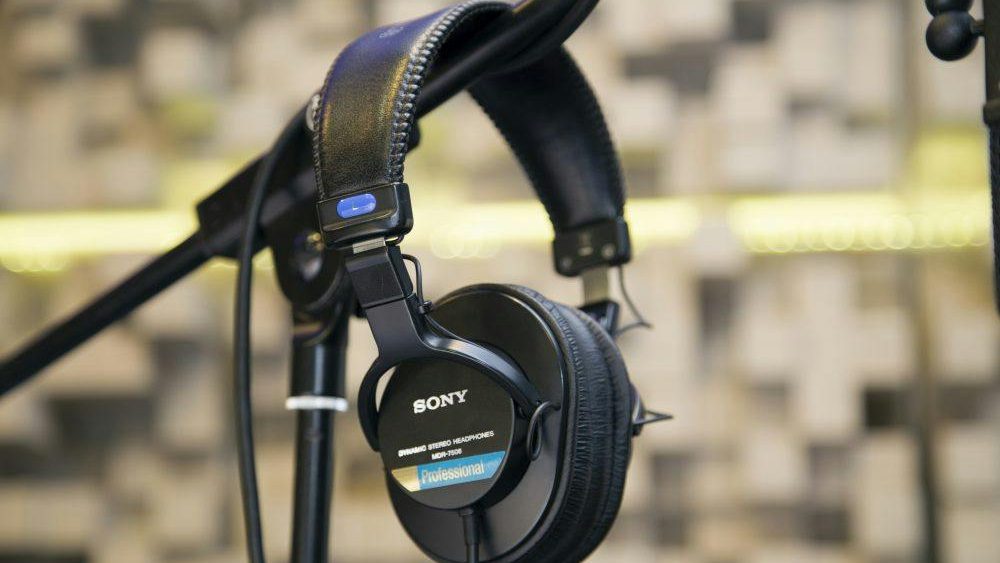
Editing headphones have a different job than the ones you listen to music on. Consumer headphones usually boost the bass and soften the treble, which hides the exact problems you are trying to catch: hum, mouth clicks, harsh S sounds, and clipping. Studio headphones with a flatter sound let you hear those problems before your listeners do. Wired headphones are the safer choice too, since Bluetooth adds delay that throws off your timing when you cut.
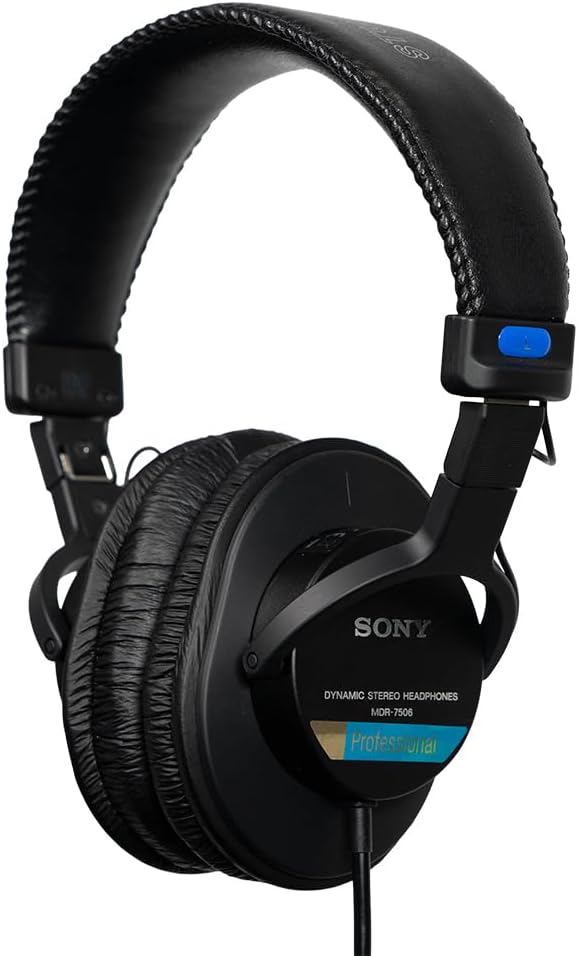
1. Sony MDR-7506
The MDR-7506 has been the default in studios and broadcast booths for decades, and it is still the best value for editing. The slightly bright top end makes sibilance and mouth noise easy to spot, and the closed back keeps your audio from leaking into a mic if you also wear them while recording. They fold up small and hold up to years of daily use.
The coiled cable is attached, so a damaged cable means a repair job instead of a quick swap.
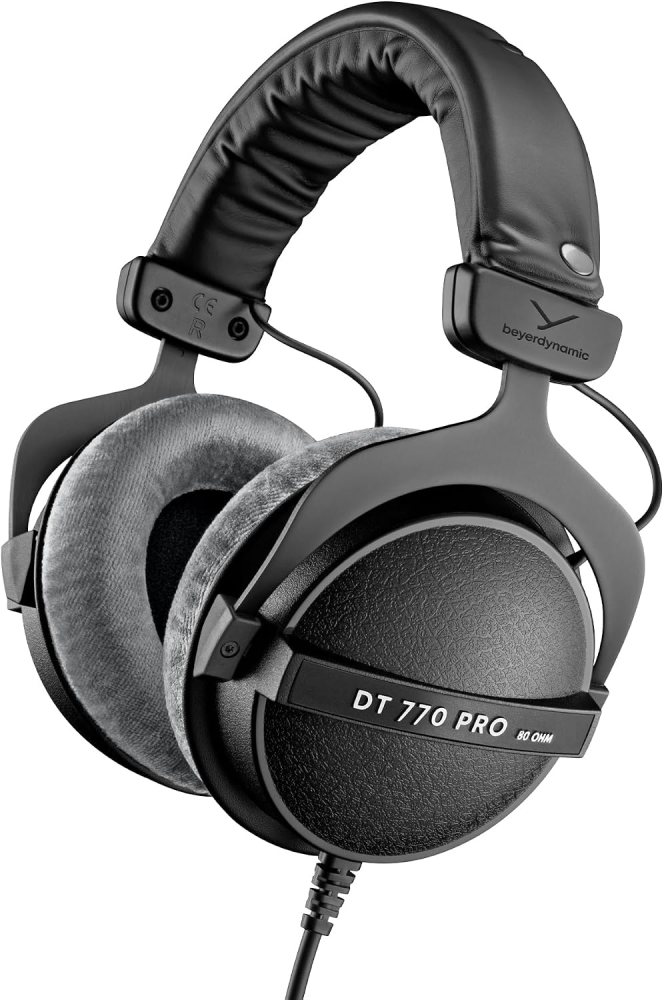
2. Beyerdynamic DT 770 Pro (80 Ohm)
If you edit for hours at a time, the DT 770 Pro is the comfort upgrade. The soft velour pads breathe better than the leather-style pads on most studio headphones, and the closed back blocks out a good amount of room noise. The sound is clear and detailed in the vocal range, which is where podcast editing happens.
Get the 80 ohm version for use with a computer or audio interface. The clamp is firm when they are new and loosens with use.
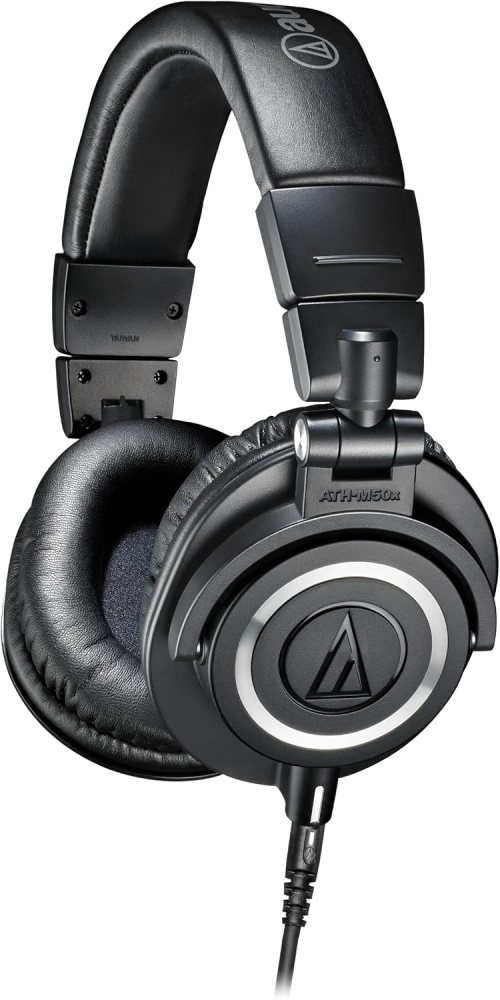
3. Audio-Technica ATH-M50x
The ATH-M50x is the best all-around pick for someone who edits, records, and listens on the same pair. The ear cups swivel so you can monitor with one ear, the headphones fold flat for travel, and the cables detach, with several included in the box.
They carry a little more bass than a strictly flat headphone. For dialogue editing that barely matters, but keep it in mind if you also mix music beds and intros.
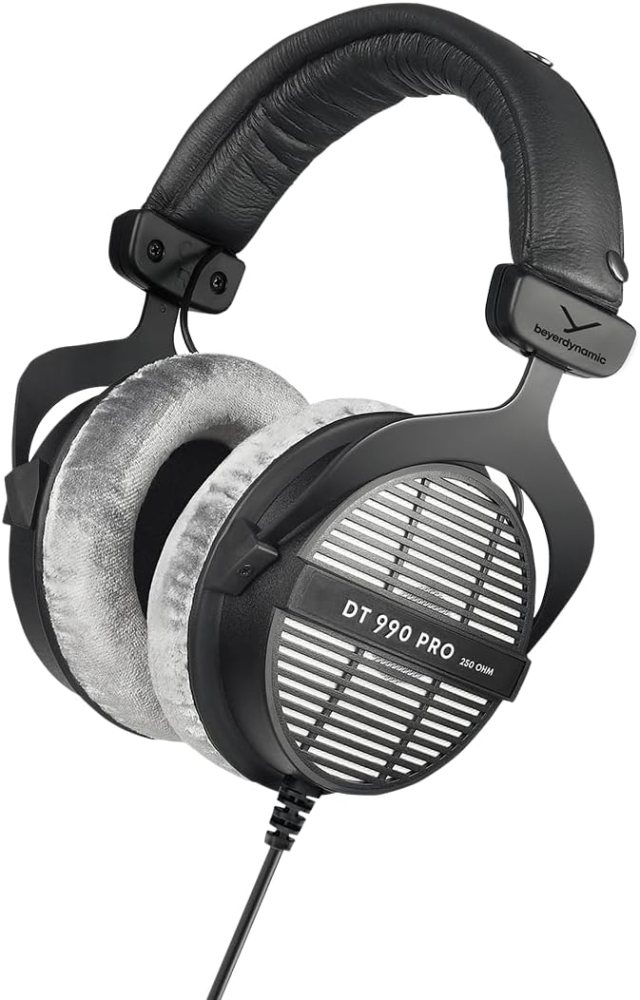
4. Beyerdynamic DT 990 Pro
The DT 990 Pro is an open-back headphone, which means the back of each ear cup lets air and sound pass through. That gives a wider, more natural sound that makes it easier to judge levels and spot problems over a long edit. It also means sound leaks both ways, so these are for editing in a quiet room, not for wearing while you record.
They work best as a second pair: closed-backs for recording, the DT 990 Pro for the edit.
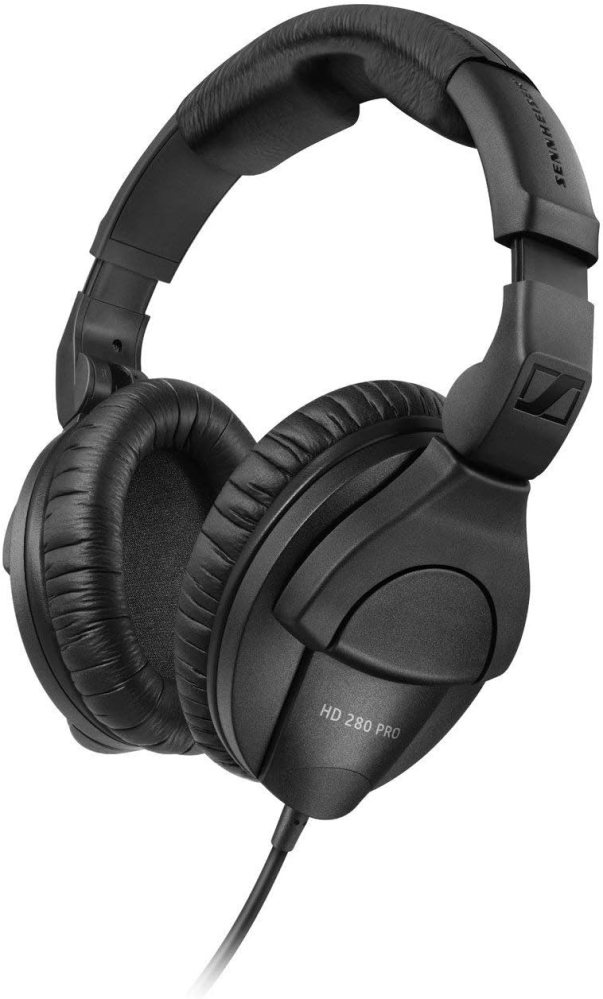
5. Sennheiser HD 280 Pro
The HD 280 Pro blocks more outside noise than anything else on this list. If you edit in a loud house or next to a noisy computer fan, that isolation helps you hear the quiet problems in a track. They are sturdy, reasonably priced, and comfortable enough for most sessions.
The sound is a bit less detailed than the Sony or Beyerdynamic picks, but the isolation makes up for it in a busy space.
Sources: Riverside








Leave a Reply