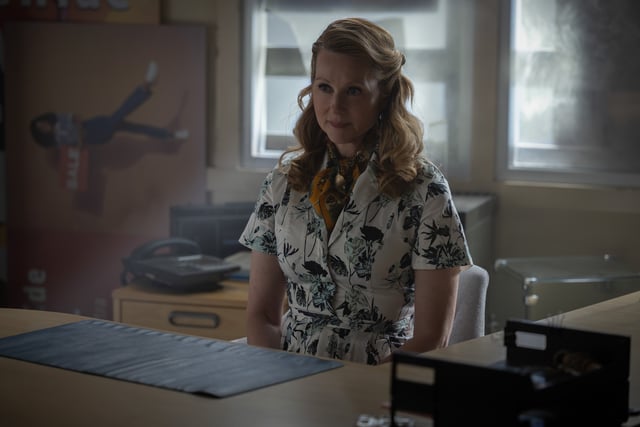
Lanterns episode 3 opens a door the franchise has kept shut for sixty-seven years. In “OutKast,” a green bubble lifts John Stewart Sr. out of his bed in the middle of the night, in front of his infant son, and an impassive voice asks him one thing: is he afraid. He screams that he is. The ring moves on and finds Hal Jordan.
Everything that follows in the Stewart family comes out of that thirty seconds. So it’s worth being precise about what the test actually measured, because the answer is close to nothing.
A scan became a question
In the comics, this moment is not a conversation. In Showcase #22, published in 1959 by John Broome and Gil Kane, the dying Abin Sur orders his ring to find an Earthman who is honest and born without fear. The ring probes Hal with a power beam and confirms he qualifies. Hal never answers anything. He is measured.
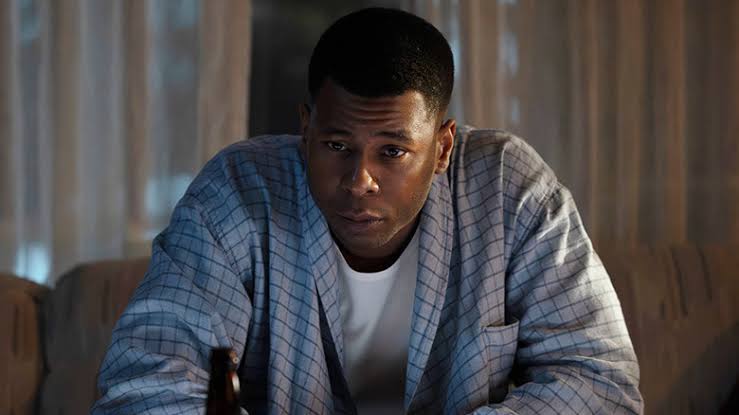
Lanterns changes the mechanism, and that change is the whole ballgame. A scan reads what is there. A question collects a self-report. The instant you ask a man whether he is afraid rather than checking whether he is, you stop measuring fear and start measuring what he is willing to say about himself under pressure.
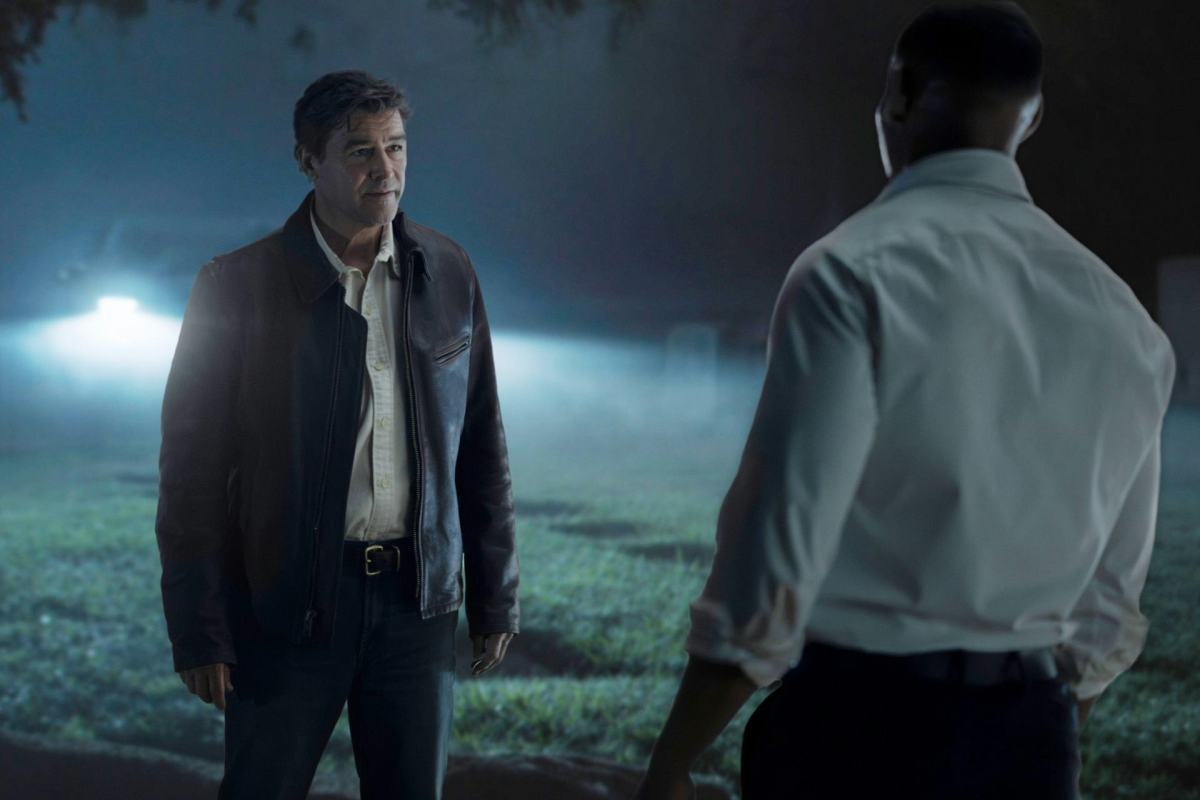
Now consider the pressure. It is the middle of the night. An unidentified force has pulled him out of bed and suspended him in the air in his own home, with his baby in the room. A voice with no body asks a question. Yes is the accurate answer. Yes is arguably the only sane answer. Anyone who says no in that situation is either lying, dissociating, or too slow to understand what is happening to him.
The Guardians built a screening question that filters out honest men and advances confident ones. John Sr. gave the true answer and lost his life over it.
The honesty problem nobody has raised
There’s a wrinkle here that the episode leaves sitting on the floor.
The Silver Age ring had two criteria, not one. Honest and born without fear. Both had to be satisfied.
John Sr. was honest. That is the specific thing that disqualified him. And when the news report plays later in the episode, the account of how Green Lantern got his ring is that he was asked the same single question and answered that he is fearless. That’s the statement that sends John Sr. across the room to shoot his television.
So either the show has dropped the honesty requirement, or Hal cleared a bar that John Sr. failed by giving an answer no human being could give truthfully. The series has spent three episodes establishing Hal as a drunk who blows missions and endangers people. Sheriff Kerry Kane already told us in the premiere that Hal isn’t fearless, he’s lonely. The test selected for the bravado and screened out the man who told the truth.
What Bernadette actually argues
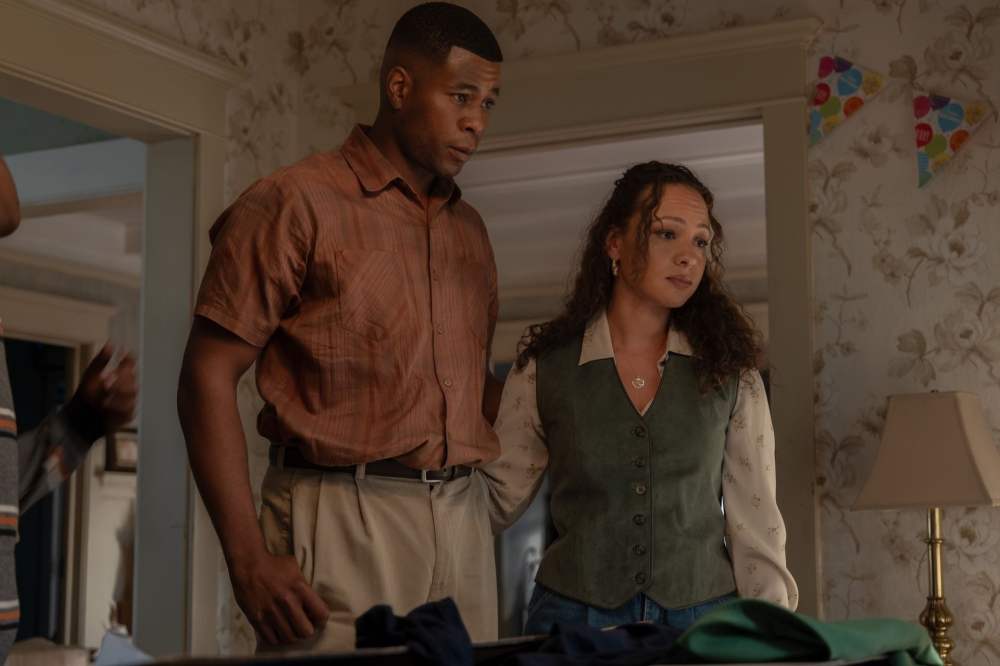
The episode’s best scene is Bernadette Stewart putting this to the Guardian directly at her kitchen table, after the alien turns up with an apology and a diamond the size of a doorknob.
She asks how unfair it is to ask a Black man in America whether he’s afraid. She tells the Guardian that her family lives with the daily terror of persecution and shows up anyway, often better than everyone else in the room. Then she closes with the line the episode is named around: even in space, you don’t see us.
That is not a complaint about the outcome. It’s an argument about the instrument. A question about fear is not neutral across people who carry different amounts of it for reasons that have nothing to do with courage. Asking it flat, with no context, and treating the answer as a character verdict guarantees that the people with the most reason to feel fear will be the ones who fail. J. Alphonse Nicholson, who plays John Sr., told TheWrap he was grateful the writers put it in, and framed it as a question about who gets the privilege of moving through life without thinking about those things.
Vanessa Baden Kelly wrote the episode. Whatever else “OutKast” does, that scene is the sharpest thing this series has produced.
The comics figured this out twenty years ago
Here’s the part that makes the show’s choice strange rather than daring.
The fearlessness standard was a problem almost immediately, and writers spent decades working around a phrase that made no sense on inspection. A man born without fear is not brave. He’s broken. Courage requires the thing you’re overcoming to be present.
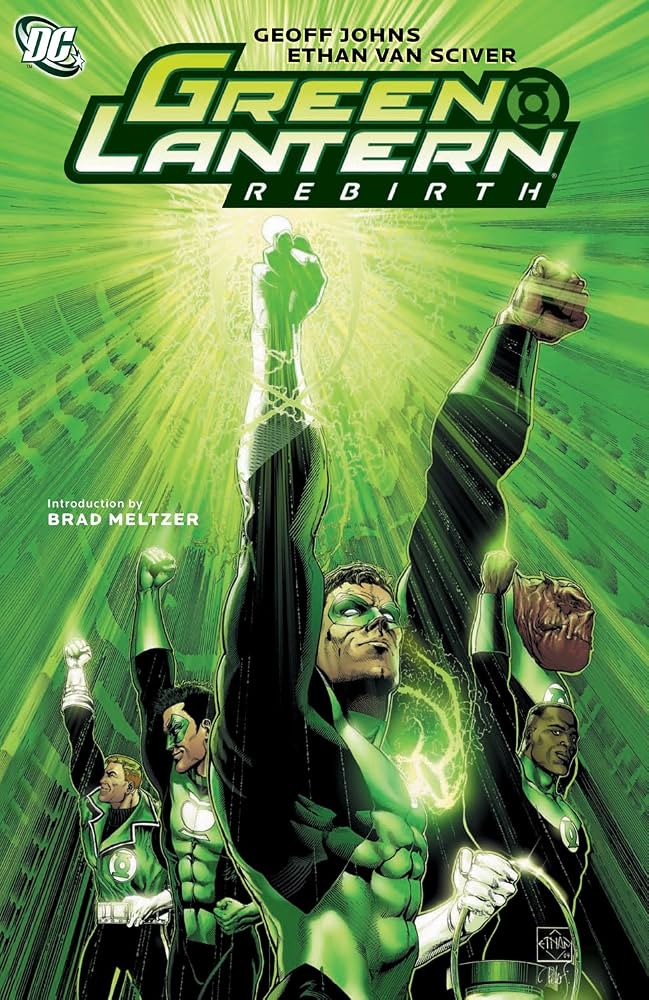
Geoff Johns fixed it. In Green Lantern: Rebirth, published across 2004 and 2005 with Ethan Van Sciver, he retconned fear itself into a physical entity called Parallax, imprisoned in the Central Power Battery on Oa, and used that to explain the ring’s old yellow weakness and Hal’s fall in the process. Out of that came the modern standard. New recruits are inducted with a specific line: you have the ability to overcome great fear. Not the absence of fear. The capacity to work through it.
That’s been the operating rule of the Corps for twenty years and change. It’s how Simon Baz and Jessica Cruz were brought in. Sinestro’s yellow rings run the mirror version, selecting for the ability to instill great fear.
Lanterns reverted to the 1959 standard and then built an hour around exposing why it doesn’t hold up. Bernadette and Geoff Johns arrive at the same conclusion through different doors. He said fearlessness is a deficit dressed as a virtue. She says it isn’t distributed evenly, so asking for it is rigged from the start.
The Guardians have always picked. They’ve never built.
One thing worth clearing up, since the show is being described as radically rewriting how Lanterns are chosen.
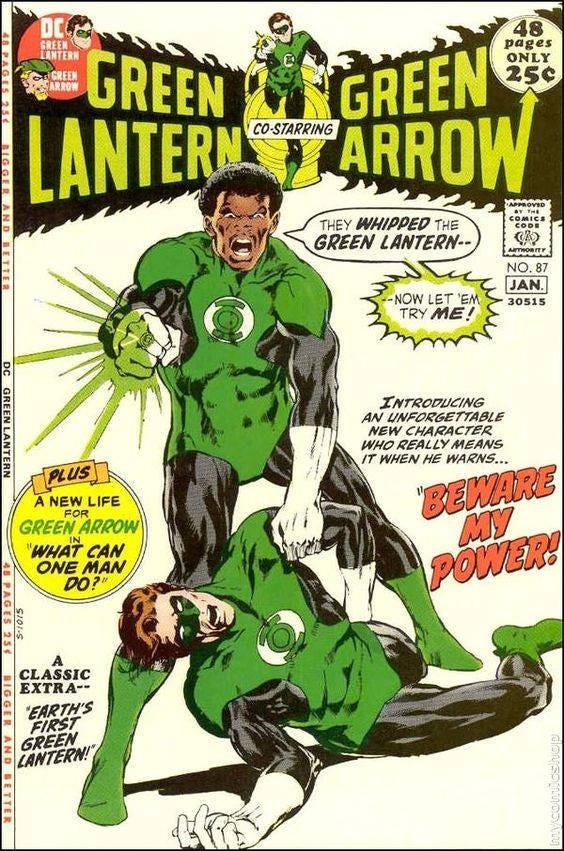
The Guardians selecting the person, over the ring and over a Lantern’s objection, is not new. It is how John Stewart was introduced. In Green Lantern #87, cover dated January 1972, Guy Gardner is hit by a bus during an earthquake, Hal worries there’s no backup, and a Guardian appears to say an alternate must be selected. They lead Hal to Detroit, where John is confronting a police officer. Hal has doubts about him. The Guardian insists. Hal hands over a ring.
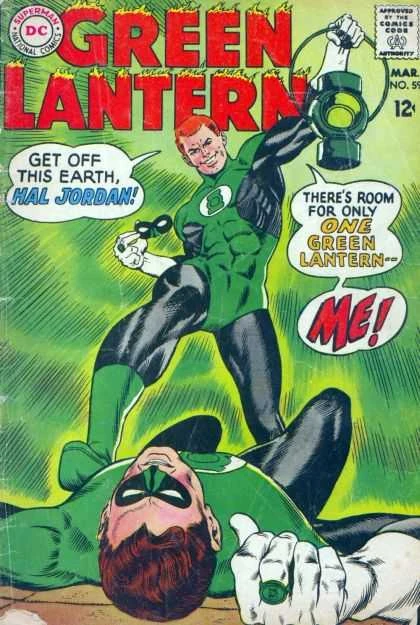
Guy is the same story four years earlier. In Green Lantern #59 from 1968, Abin Sur’s ring found two qualified candidates, and Hal got it only because he was physically closer to the crash. A ranked list of pre-approved humans has been part of this mythology since the Silver Age.
What Lanterns adds is the program. The Guardian tells Bernadette that whatever the ring saw in her husband may be genetic and could appear in one of their children. From that, Bernadette brokers a deal and raises her infant son to beat a test she has just finished explaining is unfair. Selecting an adult the Guardians have assessed is old. Manufacturing the adult is new.
Which leaves the season with a question it has set up carefully and not yet answered. The Guardians ask a question that cannot be answered honestly and passed. When someone finally points that out to them, they don’t change the question. They hand the problem to the family the question was rigged against and let them solve it over thirty years.
Sources: AV Club TheWrap Comic Book Club Den of Geek DC Database




Leave a Reply