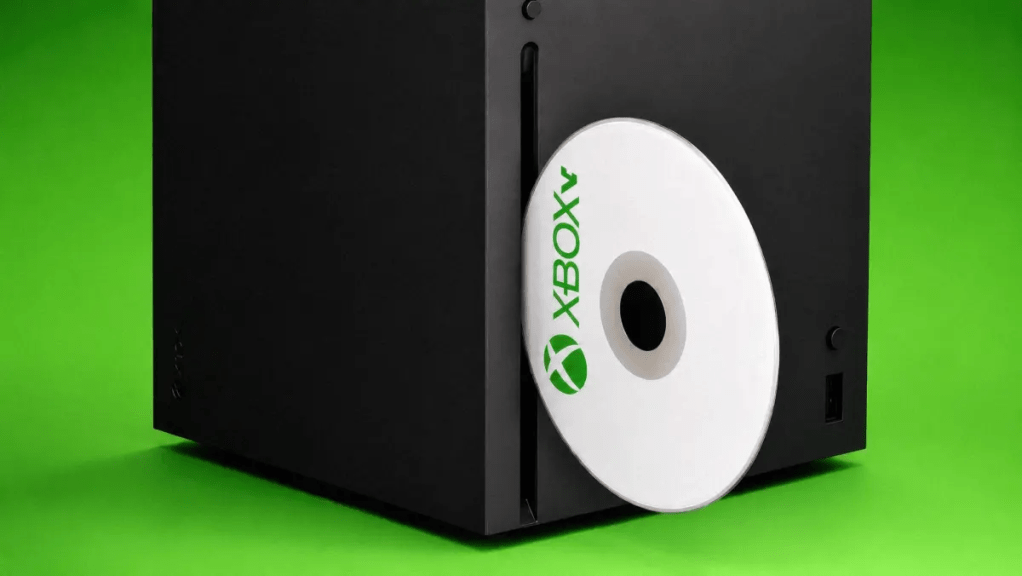
Microsoft has confirmed the disc-to-digital feature that has been rumored since May. Xbox Insiders can start claiming digital versions of the physical games they already own on August 31, with a wider rollout to follow in the months after.
The announcement came through an Xbox Wire post from Jason Ronald, VP of Next Generation, published alongside the company’s gamescom 2026 coverage. Ronald framed it around the libraries players have built across two decades of hardware, some bought on disc, some bought digitally, and the goal of making those collections easier to carry forward.
How It Works
Put a supported disc into an Xbox One or Xbox Series X, launch the game, and the console reads a unique identifier baked into the disc. Your Microsoft account then gets a digital entitlement for that title.
Once you claim it, the game behaves like a digital purchase. No disc required in the drive, and access to Xbox Play Anywhere and Xbox Cloud Gaming where those are supported. That extends the game across consoles, PC, cloud, and handhelds like the ROG Xbox Ally and Ally X.
The disc keeps working the entire time. Digitizing it does not disable the physical copy, so you can still slot it in whenever you want.
Microsoft says most Xbox One and Xbox Series X disc-based games are covered, starting with thousands of titles and expanding over time.
What Happens If You Sell the Disc
This is where the design gets interesting, and where Microsoft is clearly trying to avoid repeating 2013.
The entitlement is attached to the disc, not to you. Hand that disc to a friend or sell it, and when the next person installs and plays it under their own account, the license transfers to them and disappears from yours. Buy that same used copy back later and you can reclaim it.
The whole system runs server-side, so there is no retailer unlock step and no check-in requirement. Used game sales and lending both survive intact. What it prevents is one disc generating unlimited permanent copies across multiple accounts.
The fine print is worth reading, though. Microsoft specifies one revocable digital license per game disc, and adds that license eligibility varies and is subject to change. Those are not throwaway words given that a licensing outage earlier this year locked some players out of games they owned physically.
Who Gets Left Out
You need a console with an optical drive, so Series S owners are excluded entirely.
Original Xbox and Xbox 360 discs are not supported either. Those older discs were never manufactured with a unique per-disc identifier, so the console has nothing reliable to verify. Some early Xbox One releases may hit the same wall for the same reason. Microsoft has not said whether earlier generations could be added later.
One detail nobody has answered yet is whether the same disc can generate an entitlement more than once across its lifetime.
The Sony Comparison Everyone Is Making
Xbox never mentions PlayStation in the announcement, but the timing does the work. Sony confirmed earlier this summer that it will stop manufacturing physical PlayStation discs for games released after January 2028, and its executives have shown no interest in walking that back despite heavy pushback.
Ronald leaned on preservation language throughout the post, calling this part of a broader commitment to keeping games accessible as technology and distribution keep shifting. That framing has drawn some side-eye given that Microsoft recently laid off Kevin LaChappelle, who led the preservation program and spent decades at the company.
There is also a reading of this that is less flattering to Xbox. Project Helix, the next-generation console, has not been confirmed to include a disc drive at all. Analyst Daniel Ahmad pointed out that Xbox full-game sales already sit above 90 percent digital, higher than PlayStation, and framed disc-to-digital as the mechanism that lets Xbox eventually walk away from discs without stranding anyone’s shelf.
Microsoft tried something in this territory with the original Xbox One reveal in 2013 and reversed course within weeks after the backlash. The difference now is that the transfer mechanism protects resale instead of killing it, which was the part that torched the earlier attempt.
Testing opens to Xbox Insiders on August 31. Microsoft has not given a date for the general rollout beyond saying it arrives in the following months.
Sources: Xbox Wire | GameSpot | VGC | Gizmodo | Pure Xbox | MobileSyrup | Push Square





Leave a Reply