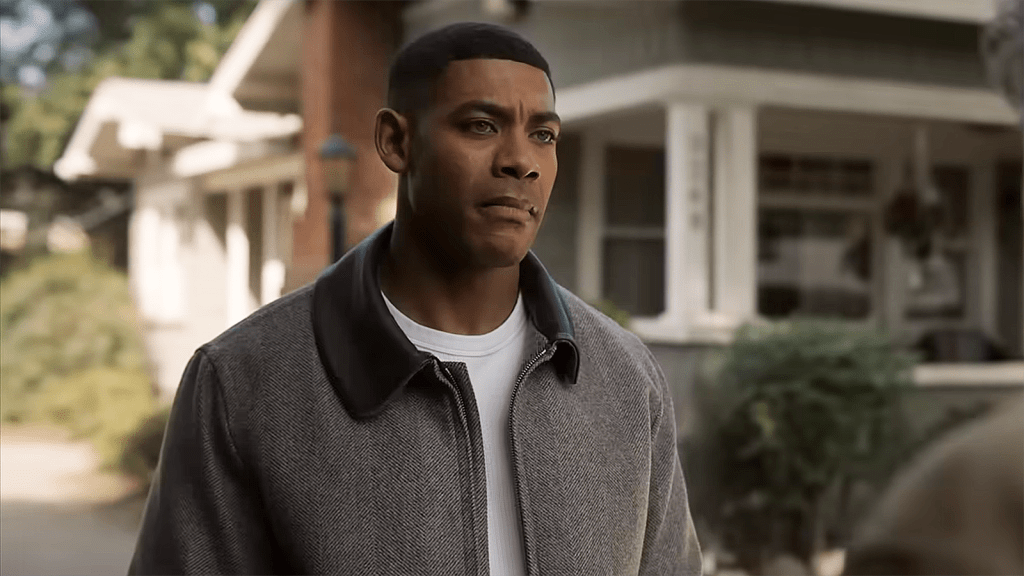
Two episodes in, Lanterns had me. The pilot is still the best hour this show has produced, and “Trust Fall” kept the detective engine running while dropping Ulrich Thomsen’s Sinestro into a cell at the end. Then “OutKast” arrived, and for the first time I found myself checking how much time was left.
What the episode does
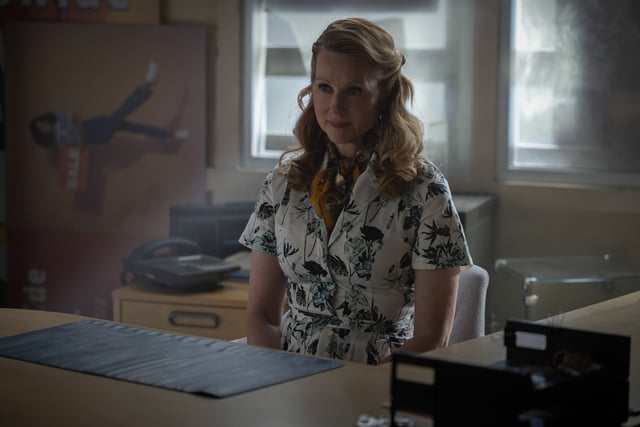
“OutKast” jumps back to 2016, a few months before the events of the pilot. John Stewart (Aaron Pierre) falls out of the sky and lands on a pile of mattresses inside an abandoned mall, follows a series of small arrows to an unremarkable office, and finds Laura Linney’s Guardian waiting. She tells him to wait. He waits through an entire day and night, and when she’s surprised to find him still sitting there the next morning, he tells her flatly that he was told to wait.
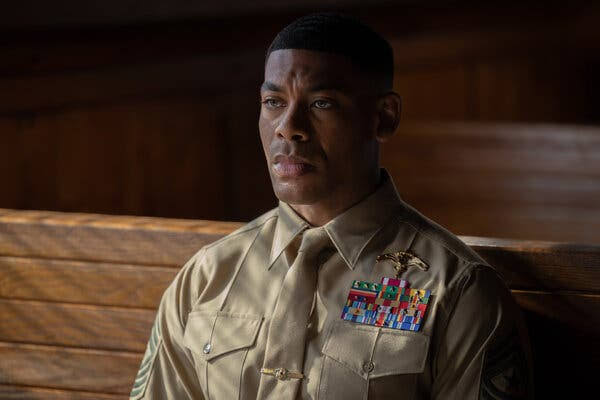
That’s the Lantern Corps interview. Linney asks, Pierre answers in about six words at a time, and the flashbacks fill in everything he isn’t saying. Written by Vanessa Baden Kelly and directed by Stephen Williams, who worked on Damon Lindelof’s Watchmen, the hour runs two timelines: John’s childhood and his career as a Marine sniper.
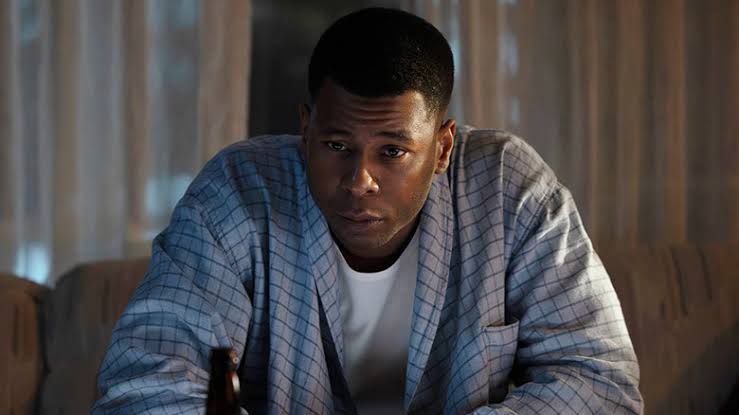
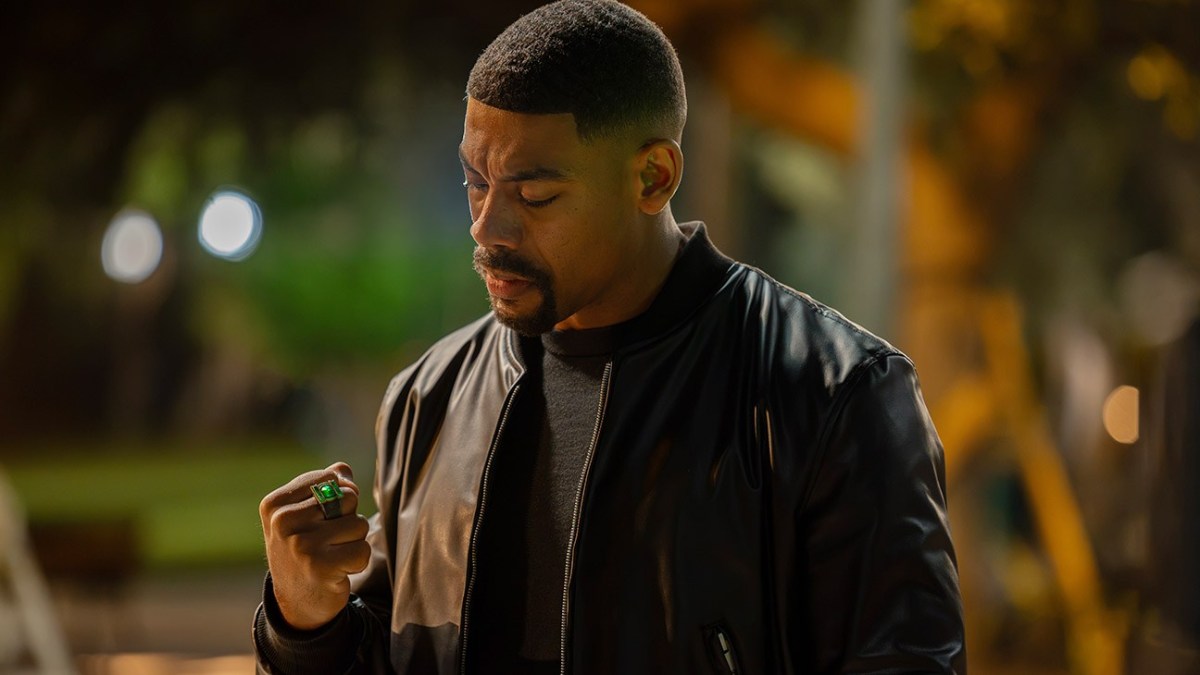
Underneath all of it is the test. Years earlier, a green glow fills the Stewart bedroom, lifts John Sr. (J. Alphonse Nicholson) out of bed in front of the infant John, and a voice asks him whether he’s afraid. He screams that he is. The ring moves on, and Hal Jordan gets it instead.
That’s a hell of a swing. It ties Hal and John’s destinies together from before John could talk, and it recontextualizes every scene of John absorbing Hal’s dismissiveness across the first two episodes. He hasn’t been patient. He’s been waiting since infancy, having watched his father fail the exact test he was raised to pass.
The episode’s best argument
Here is the part I want to be scrupulous about, because it is the strongest writing in the hour and it deserves to be represented accurately.
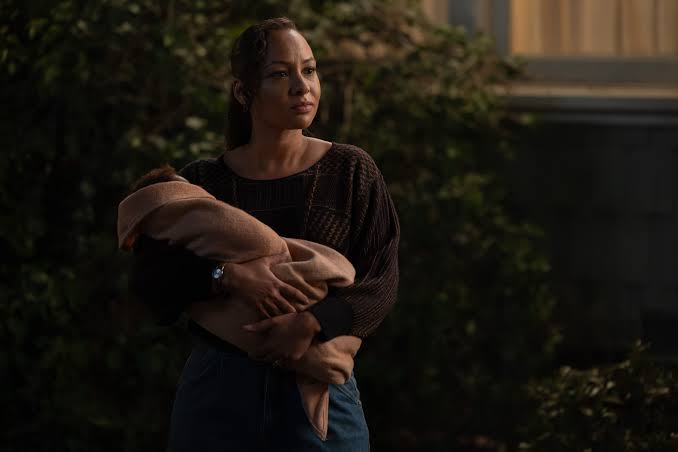
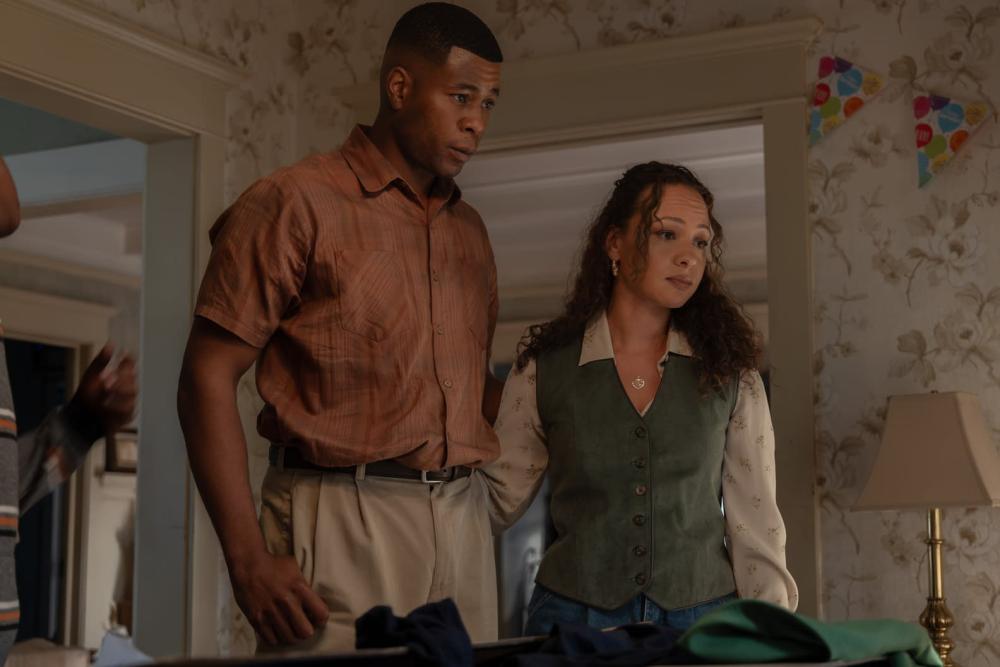
After the Guardian shows up to apologize for John Sr.’s failure, handing over a consolation diamond the size of a doorknob, Bernadette (Jasmine Cephas Jones) sits the alien down at her kitchen table and tells her the flaw in the entire operation. She asks how fair it is to ask a Black man on Earth whether he’s afraid. She tells the Guardian that her family lives with the daily terror of persecution and shows up anyway, often better than everyone around them. Then she lands the closer: even in space, you don’t see us.
That is a genuinely sharp piece of writing, and it turns what looked like a cheap plot mechanic into a real argument. The Guardians built a screening question that a Black man in America cannot answer the way they want, then treated the answer as disqualifying. Linney plays the head-tilt of an immortal being running the math and not liking the result.
So when I say the test felt too simple to me, I have to concede that the episode already knows that. It says so out loud, in its best scene. My complaint is what the show does next.
The Guardians problem
The ring chooses. That is the load-bearing idea of Green Lantern, and it has been for decades. A ring finds a person because of what that person already is, and the Corps rests on the ring being a better judge of character than any institution could be.
“OutKast” swaps that out. Linney’s Guardian explains that Lanterns are selected on the basis of their genetic makeup, which is a sentence that veers uncomfortably close to midi-chlorians. Bernadette then brokers a deal, and the family raises John Jr. to spec from birth so he can take the ring when Hal is done with it. Jones has said she played that scene as a Lady Macbeth moment, sitting on the couch and putting the idea in her husband’s ear. She’s right, and she’s right that Bernadette originates it rather than accepting it.
So the ring becomes a formality stapled to the end of a twenty-year program that a Guardian and a mother designed together. The comics have put the Guardians at odds with their own rings before. They meddle, they lie, they built the Manhunters and had to put them down. But that is usually framed as the system failing, with somebody in the story saying so.
Bernadette says the criteria are unjust. Nobody says the Guardians shouldn’t be running the criteria at all. The episode diagnoses a bad question, then has its most formidable character respond by getting her son admitted to the program anyway, and it treats that as the tragic-but-understandable move rather than the moment the mythology quietly changed shape. For a show this interested in institutions, that’s a strange thing to leave on the table.
I want to be fair to the counterargument. John Stewart’s comic origin has never been clean or particularly well told, and there’s real value in a version that hangs together. The rewrite may exist to give John’s place in the DCU a weight the books never bothered to give it. If that’s the trade, I understand it. I just don’t think the show has reckoned with what it cost.
Bernadette
Two things keep getting collapsed together in the conversation around this episode, so let me pull them apart.
Jasmine Cephas Jones is excellent. I spent the hour actively disliking Bernadette because the performance is doing precisely what it was built to do. Making an audience resent a character while still following her logic is difficult, and Jones lands it.
Bernadette is also overbearing to the point of being frightening. Once she’s committed, she is relentless, and what follows is a childhood that any outside observer would call abuse. John Sr. shoots apples William Tell-style off his son’s head, leaving a trail of bullet holes on the garage where the growth marks should be. They leave their youngest in a rough part of town in the middle of the night and make him find his way home while his older brothers watch in horror. And Bernadette tells him birds are the Guardians’ spies, reporting back on how he’s doing against fear, which is where that construct from last episode came from. Getting caught in the lie doesn’t slow her down.
Kelly has said she was consciously pushing the character to the edge of likability, that she wondered whether people would dislike her, and that she wanted the conversation to happen anyway. She framed it around what a Black woman carries inside a family unit while everyone around her collects the credit. Knowing that, I can respect the construction while the character makes my skin crawl. That’s the design working.
One detail complicates the abuse reading in a way I appreciated: it was young John who came up with the apple trick in the first place, and an older John who demanded his mother let him shoot one off her head when she doubted him. He isn’t only a victim of the program. Somewhere in there, he bought it.
The best thing in it
The strongest material is John slowly clocking what was done to him.
Pierre plays a man who has all the information and hasn’t finished assembling it. He can look at the tests and the isolation and see the shape of something wrong. Then he gets in a room with his mother and slides right back under. He is still running her programming. His own line about it is that loving the people who raised you is human, even when they’re crazy, which is about as close to an accusation as this version of John can get.
If the season is building toward him breaking that open, I’m fully in. It’s a real arc, and Pierre has the range for it. The small stuff supports it too: the drawings he hides from his mother, the art school stretch after his discharge where his artistic side finally gets air.
Where is Sinestro
Episode 2 ended with Hal in a cosmic prison, asking Sinestro about the Manhunters and getting told a surviving one would only be his second greatest threat, before Sinestro turned the conversation toward John Stewart. That is a hell of a cliffhanger. Two Lanterns, one cell, and an open question about what John actually is.
“OutKast” name-checks Sinestro twice. John mentions hearing about Hal and Sinestro’s relationship on the news, and offers the Guardian sympathy over Sinestro killing one of her own. Both are throwaways. The cell scene doesn’t happen.
I waited a week for that. So did the friends I’ve been texting about this show. A flashback episode is a legitimate structure, and the origin had to land somewhere, but this one also keeps Hal in the margins, appearing mostly to ruin a sniper mission in Russia by drunkenly grabbing the target and costing John a dishonorable discharge, then turning up in the final scene to introduce himself to the parents. The friction between Hal and John is the best thing this series has going. Losing the Sinestro thread and the partnership in the same hour is a large part of why this one felt long.
Jones and Pierre are doing excellent work, Linney is having a great time being politely condescending to the entire human race, and Bernadette’s kitchen table speech is the sharpest scene the show has written. None of that is in question.
It still didn’t land for me. The engineered childhood costs more than the episode pays for it, the Sinestro setup goes unanswered, and I spent an hour away from the dynamic that made me care about this series in the first place.
The pilot is still the high-water mark, “Trust Fall” sits second, and this one lands third out of three. I’m hoping it plays better in retrospect once the season shows me what it was building toward.






Leave a Reply