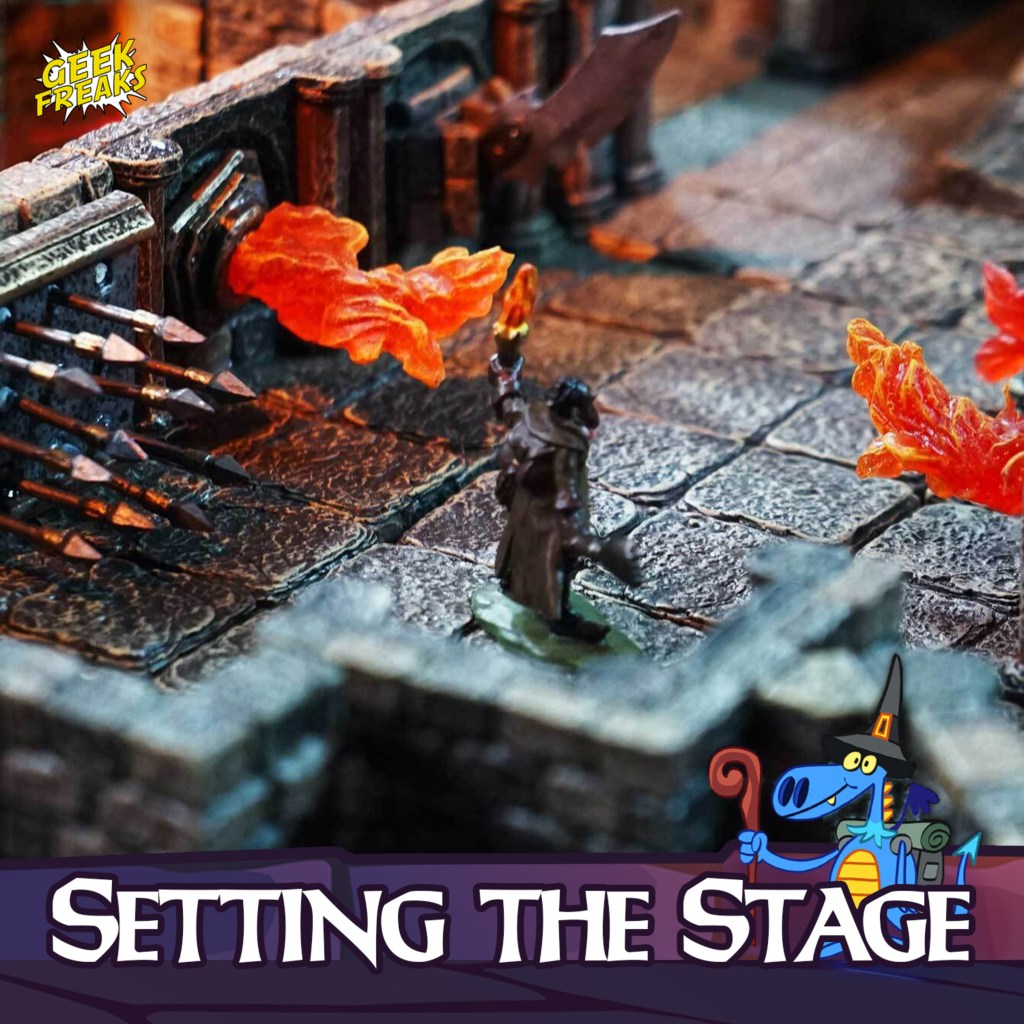
Picture a bar fight in a small tavern. A stray spell catches a table, the fire reaches the liquor shelf, smoke fills the room, and suddenly the whole fight spills out into the street. That scenario opens the latest episode of Hobby Quest, recorded live at the Hobby Quest store in Elk Grove, and it makes the episode’s whole point: a map can do more than sit under the minis.
DM Cody walks the table through seven ways to make the battlefield part of combat. His most useful advice comes right after the list. Pick about two per fight. Use all seven at once and nobody at the table can keep track of what is happening.
Shaping the Ground
Choke points come first, and Cody’s twist is that they don’t have to exist when the fight starts. The floor can give way, enemies can knock trees across a path, and a barricade can go up in the middle of a round. He wants every barricade to be breakable, though, so a stalled fight always has a way to get moving again.
Elevation and cover work the same way. High ground rewards the player who climbs for it, and cover gives the rogue somewhere to hide. Cody also likes taking cover away. A squad of archers waiting in an open desert leaves that rogue with nowhere to go, and suddenly a familiar character has to play differently.
Hazards are where the tavern fire comes back in. A good hazard grows over time, so the room at round five isn’t the same room the party started in. The episode’s advice is to save that kind of big map change for fights that matter. A random encounter on the road can stay in the forest. A boss fight can rearrange the terrain halfway through.
Giving Every Player a Job
Cody’s case for secondary objectives is aimed at a specific habit: the player who casts Eldritch Blast every single turn. Give that player a rope to cut, a prisoner to free or a ritual to interrupt, and the fight stops being a damage race. In important fights, he likes offering more objectives than the party can possibly finish. Once players choose what they care about, the rest can fall apart, and those choices become the story.
NPCs can join the fight too, with one rule. A powerful ally can show up, but the spotlight stays on the players unless taking it away is the whole point of the scene. Cody’s other tip is to treat enemies like a party of their own. “Think of them as your own set of player characters, instead of just a set of throwaway bandits,” he said. The more the monsters move, the more the players move in response.
House Rules From the Table
Because it’s recorded live with a panel, the episode picks up a few house rules worth stealing. One panelist drops opportunity attacks entirely for unnamed monsters. Players move more freely around the map, and the named enemies who still get those attacks feel more dangerous by comparison. Another gives dragons a bonus action Disengage, so a dragon can reposition and breathe fire instead of getting pinned in melee.
Cody also has a warning for DMs who hand out flying items too early. “Give them a broom of flying and watch your campaign get ruined,” he said. Elevation only works as a tool if the party can’t simply float over it.
The episode closes on the cheapest advice of all. You don’t need painted 3D prints or expensive terrain. The panel shows how Lego pieces, Dollar Tree toys and a handful of tiny rubber ducks can do the same job on the table. If you have a pile of random toys and a grid mat, you have everything you need to start making your fights more interesting this week.
Hobby Quest asks one question to close the episode: what is the strangest thing you have ever used as a mini? Send your answer to the show on Instagram or TikTok.







Leave a Reply