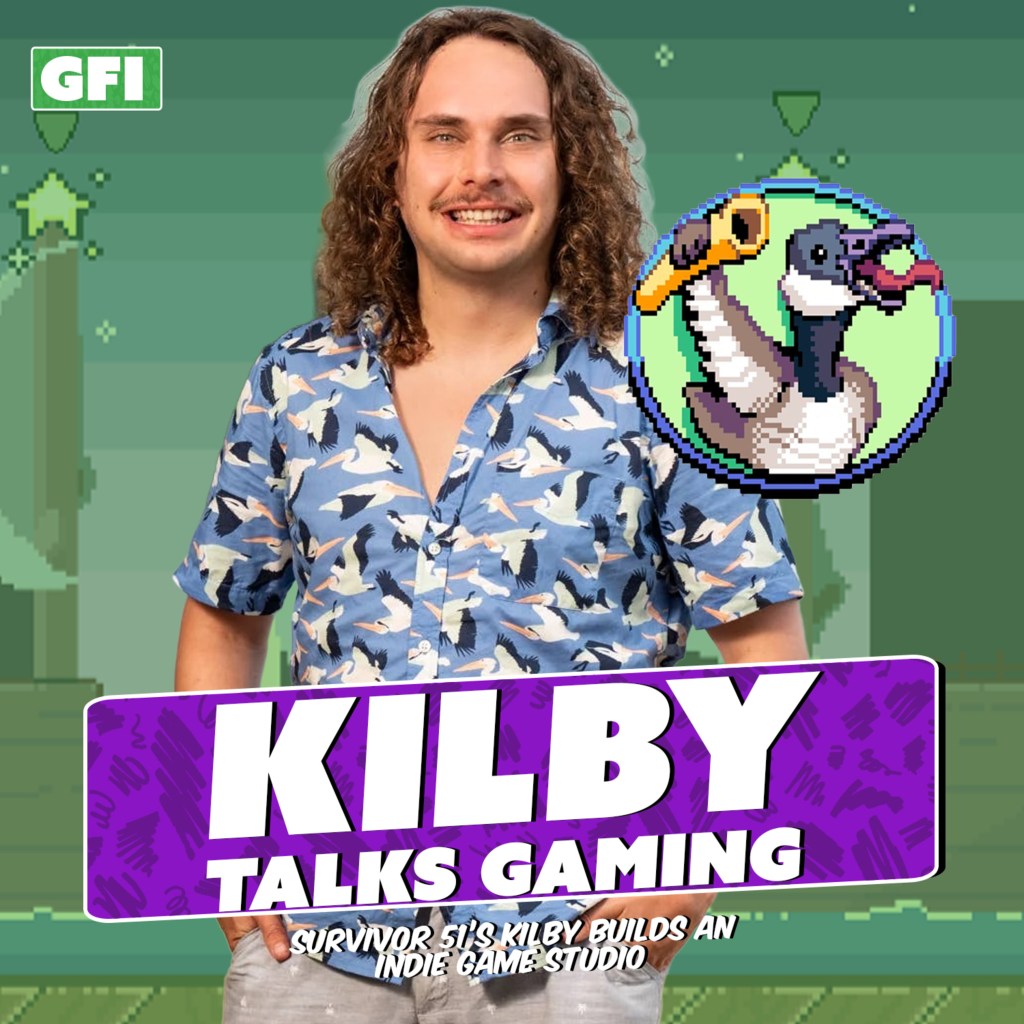
Dan “Kilby” Kilby has a simple test for whether a game idea is any good. Strip out the art, the sound and the animation. If the core loop is still fun as a board game, it is worth building. If it isn’t, no amount of polish will save it.
Kilby is best known right now as a Survivor 51 castaway, and he joined the jury this week after a pairs vote sent him out alongside Kristin Flickinger. Off the island, he runs Noodle Goose Games, an accessibility-focused studio in London, Ontario, and he walked Frank through how it works in the full interview on Geek Freaks Interviews.
A Studio Started Over Noodles
Kilby and his co-founder Karen spent more than a decade hosting online Survivor-style games, puzzle games and matchmaking shows for friends, all for free. After Kilby was laid off, the question became obvious. “Why not try to turn that into a business?” he said. The idea came up over dinner, and the two of them incorporated Noodle Goose in a three-day push to make a funding deadline.
The studio’s first project was a crisis-skills escape room for autistic youth, built as part of a game-based learning camp. That work still shapes everything Noodle Goose makes. Its programs use social deduction games like Among Us and Mafia to teach a hard lesson in a safe setting: some people lie, and here is how to spot someone trying to take advantage of you. The escape room’s life-balance point system is now the foundation of a coming-of-age time travel game the studio has in development.
Funding Games Without Betting the Company
The part of the conversation most useful for indie developers is how Noodle Goose pays for its games. It doesn’t take loans. Development is funded with profits from large live events, a boat party among them, plus government grants. If a game sold zero copies, the studio would still be standing.
Kilby’s “fun on paper” rule comes from watching the best games in the business. He points to Nintendo prototyping Breath of the Wild as a top-down, NES-style game to see whether its systems worked before building the real thing. “The best games, honestly, you go back and you’re like, they’re fun with the sound off,” he said.
Getting Noticed
For discoverability, Kilby’s advice is to market early and keep adjusting. Figure out what makes your game different from everything else on the store, and court small streamers whose audiences actually listen to them. His favorite example is Balatro, which found its audience after its creator kept sending it to Big Brother legend Dan Gheesling until he played it on stream. “If you make a game good enough, you just need a couple people to play it,” Kilby said.
He is also more optimistic about the industry than most people right now. With big publishers walking away from mid-size games and layoffs hitting studio after studio, he sees an opening. Players still want those games, and fewer companies are making them. He compares it to how A24 grew in film after the Fox merger left a gap in the market.
Frank and Kilby also trade notes on why Kilby plays more on his Switch 2 than his PC, his loyalty to the PlayStation Vita, and the long road Clair Obscur: Expedition 33 took to find a publisher. The interview ends with Noodle Goose’s next release, a cat-powered word puzzle game inspired by Scribblenauts that is headed to Kickstarter, with a playable prototype on the studio’s site now.
Sources: Noodle Goose Games, Eventbrite







Leave a Reply