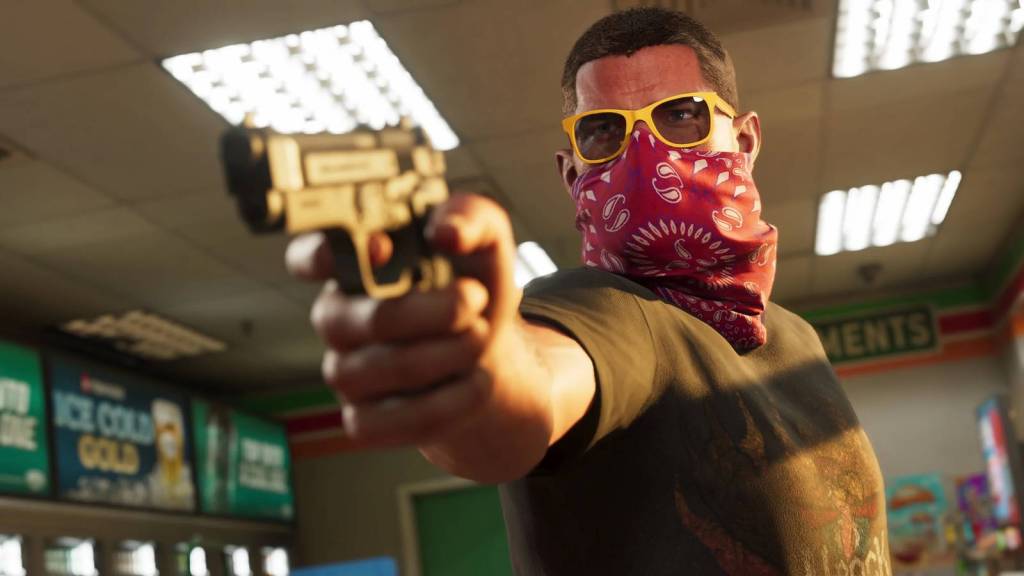
Rockstar finally showed Grand Theft Auto VI in motion on August 27, and it came with far more than a trailer. The 26 minute Extended Look premiered on Netflix at 3 p.m. ET before hitting YouTube six hours later, captured entirely from a base PlayStation 5. Alongside it, embargoes lifted on hands-off previews that select outlets and creators got at Rockstar North in Edinburgh back in July.
Between the two, this was the largest single information drop the franchise has ever had. Here is what we actually learned.
The Campaign Runs About 80 Hours
Rockstar North co-studio head Rob Nelson said his most recent full playthrough took roughly 80 hours. That puts GTA 6 ahead of Red Dead Redemption 2, which runs closer to 50 hours for the main story, and makes it the longest game Rockstar has built.
The structure is chapter-based, similar to Red Dead 2. Rather than pushing you toward the next objective, the campaign is designed to reward wandering, and open world encounters are meant to blend into the story so it is less obvious where side content ends and the main plot begins.
Player choice runs throughout. Small decisions may not register at first but compound as the campaign moves along, while larger ones can reshape events almost immediately. Rockstar is banking on those branches being different enough to justify a second playthrough.
Two other story notes stood out. Lucia’s ankle monitor is central to the plot and is what sets her partnership with Jason in motion. And before landing on the criminal couple, Rockstar reportedly explored an earlier version of the game built around four lead characters.
On tone, the satire is intact, but the studio deliberately avoided topical politics, viral trends, and memes. Given how long this game has been in development, anything tied to a specific moment would have aged badly by launch.

Leonida Is Enormous
Rockstar has not given an official measurement, describing the map only as very big. Preview estimates fill in the gap. The full landmass appears to be roughly three times the size of Red Dead Redemption 2 and about double GTA 5. Vice City on its own is around twice the size of Los Santos, and one estimate put Leonida at nearly eleven times more populated space than GTA 5.
Regions are built to feel distinct, with architecture, residents, and atmosphere reflecting local culture. The in-game map itself got a visual overhaul, trading the simple road layouts of past entries for detailed satellite-style imagery.
There is a rideshare app called Ryde Me for fast travel, and you can hold conversations with whoever you are sharing the ride with. Rockstar also says the game carries the largest collection of radio and TV commercials in franchise history, advertising things like an antidepressant named Angstipan and a 30,000 calorie Prairie Sandwich.
Off the beaten path, you will find optional content that never appears as a map marker. One example making the rounds is a lawyer living in a dumpster who offers legal guidance in exchange for pills.
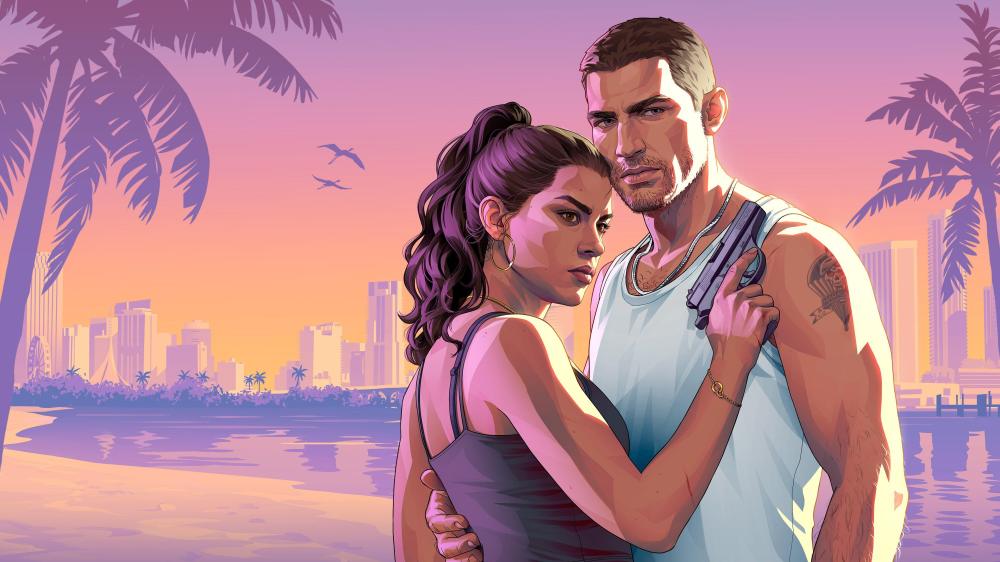
Jason and Lucia Can Be Partners or More
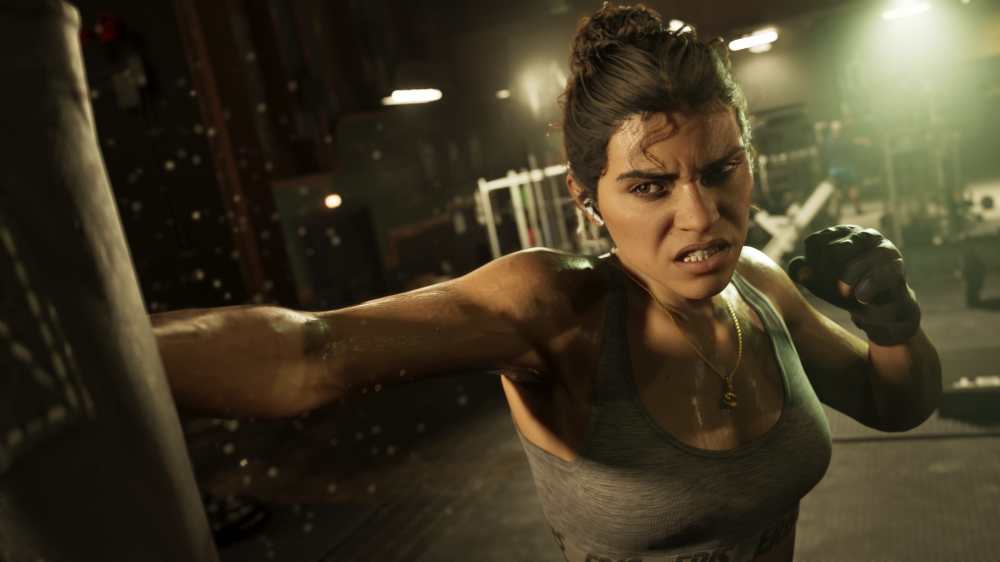
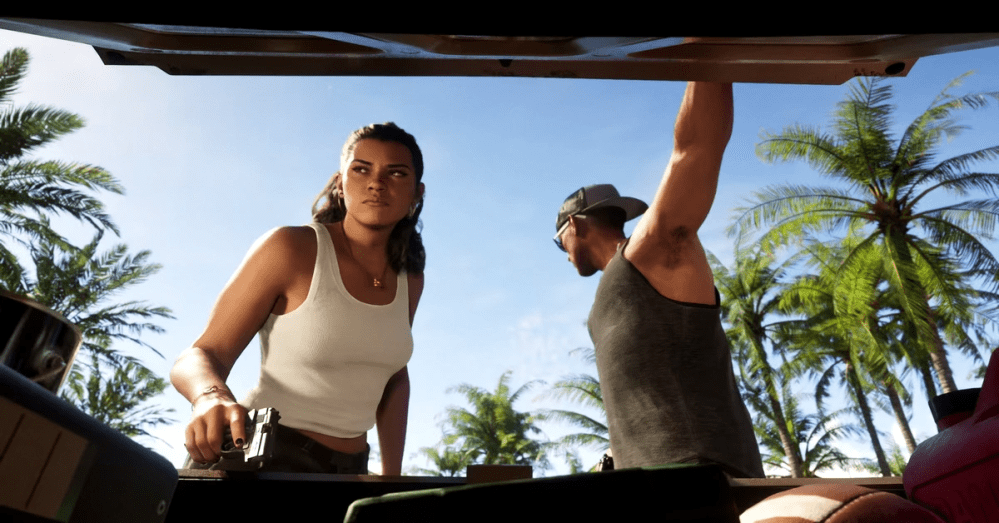
You can swap between the two freely while roaming, with the option locked only during specific story moments. Outside missions they live separate lives on their own schedules, and you can call the other one to come hang out.
The romance is optional. The pair start with mutual interest, but you decide whether it develops. Keeping things strictly platonic still gets you the complete campaign. Building the relationship means spending time together outside missions, working out, shopping, changing appearance, sightseeing, and pulling jobs as a team. A stronger bond changes how certain scenes play out, but it unlocks no stats or mechanical perks. It is a roleplaying choice.
The relationship can also erode. When you are playing as one character, the other will text you about what they are doing or things that need handling at home. Ignore those messages often enough and the connection suffers.
Small touches sell it. The pair can walk hand in hand, they hold doors for each other, and either one might suggest abandoning the current plan to check out something nearby.
The Wanted System Got Rebuilt
Six stars are back after GTA 5 capped heat at five, and the whole system now runs on evidence rather than an invisible alarm.
Police are only alerted if a person witnesses the crime or a security system catches it. Responding officers get briefed on what happened and who was involved. Escaping does not immediately end things either, since the scene stays an active police zone while officers search the area before eventually calling it off.
What the cops know is displayed as individual icons beneath the wanted meter. Depending on available evidence, they may have your face, your outfit, or your vehicle. Each one can be cleared:
- Visiting a barber and changing your hair wipes the physical description. A different hat or pair of glasses will not do it.
- Beating a clothing description requires a full outfit change, not an accessory swap. Cars have usable trunks for stashing a spare set.
- Wearing a mask during the crime and ditching it during the getaway can keep your face off the record, including off surveillance cameras.
- If they have made your car, abandoning it for another one degrades the search.
Outlined stars mean police are hunting an offender they cannot yet describe. Movement mechanics like sprinting, vaulting, and climbing were overhauled specifically to support escaping on foot, and ditching the car for an alleyway is now a real tactic. Three stars or higher in Vice City is especially rough thanks to narrow roads and heavy traffic.
The two-protagonist setup feeds into this. When police realize both are involved, you can split up and force them to divide resources. You can send your partner clear while you take the heat, and they will text once they are safe. One can get busted while the other stays loose.
Crime Is a System Now, Not a Button
Money matters more than in any previous GTA. You may need to raise a specific amount before parts of the main story will advance, earned through vehicle theft, business robberies, store holdups, and bank heists.
Robberies trade speed against payout. Blowing a safe open is fast but damages some of the valuables inside. Cracking the combination preserves the full haul but takes longer, and every extra second raises the odds police arrive first. Officers can surround a location and wait you out, though many spots have secondary exits. Stolen goods move through specialized fences, and vehicle fences will tip you off about valuable cars sitting in places like police impound lots.
Stealing a parked car is no longer one button. Vehicles are sorted into security tiers, and a phone app called WAINK scans one before you commit, showing estimated value, registration cost, lock status, alarm, and any tracking tech. Older cars open with a slim jim. Modern luxury models need key-cloning tools that unlock through story progress, so some cars are simply off limits early on. Certain vehicles carry GPS trackers that report to police automatically, meaning you either outrun the signal or dump the car. Anything you deliver damaged sells for less, which is harder than it sounds on Vice City’s tight streets.
Robbing places together also strengthens the Jason and Lucia relationship.
Criminal Profile Replaces Honor
Red Dead 2’s Honor system has been swapped for something Rockstar calls Criminal Profile, and it does not sort your behavior into good and evil. Patterns shape how Leonida’s residents react to you and can affect how parts of the story develop.
Unnecessary violence and destruction feed into it, as do surprisingly mundane actions like properly disposing of trash. Violence a mission requires, or that a robbery demands, does not count against you. Pulling off jobs cleanly and efficiently builds your reputation as a capable criminal.
NPCs Are the Quiet Headline
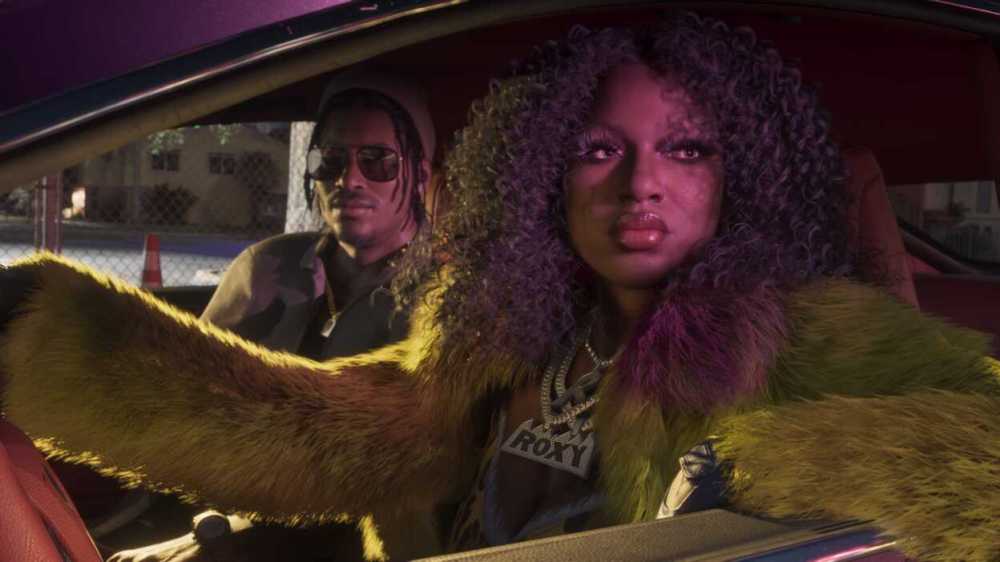
GTA 6 reportedly contains more than 600,000 NPC animations. GTA 5 had roughly 55,000 and Red Dead Redemption 2 had around 300,000.
Rockstar says NPCs are individually art directed rather than assembled by procedurally mixing clothing and body parts. The population covers a far wider range of heights, weights, and body types, and animations adjust to a character’s size so they interact naturally with objects and people.
They notice you, too. NPCs can tell when you are listening in on a private conversation. Follow someone too long and they get uncomfortable and confront you. Some residents are armed and will start something without being provoked. Ambient conversations can grow into activities or unexpected events, and you can sometimes defuse a situation by threatening someone without firing.
Everything Else Worth Knowing
The phone is a real object. It is no longer an interface layered over the HUD. The camera moves in toward the character’s hand when it comes out. Snapmatic returns as the Instagram parody, but Jason and Lucia cannot post their own photos because they are fugitives avoiding a digital trail. You can still browse, follow accounts, and read what is happening online.
Safehouses feel like camps. Jason and Lucia share a home, and rather than sitting there as static player property, these locations behave more like the camps in Red Dead 2, with characters coming and going. Some bases belong to other people. You can shave or trim hair and facial hair at home, though new hairstyles still require a barber or salon. Every clothing store and salon carries its own selection, so there is reason to shop across the map.
Bodies respond to habits. Regular workouts make both characters stronger and more muscular, while overeating adds weight. Food restores a significant amount of health, so eating is still worth doing.
Combat has more range. Enemies can be taken down non-lethally by shooting an arm or leg, and accurate players can shoot a weapon straight out of someone’s hands. Particularly clean kills trigger cinematic slow motion similar to Red Dead 2, and there is a Focus mechanic that highlights nearby objects and useful details while making it easier to stay out of police sightlines.
Free roam is stacked. Confirmed activities include pool, mini golf, kayaking, scuba diving, parachuting, base jumping, jet skis, dirt biking, working out, and visiting the zoo. Wildlife you find in captivity or in the wild can be studied and logged on a checklist, expanding the Red Dead 2 compendium idea. You can also interact with dogs, including petting them.
The Part Nobody Wanted to Hear
Creator Davy Jones reported that the standard PS5 build currently runs at 30 frames per second. Whether the PS5 Pro gets a higher frame rate performance mode was not confirmed. First person gameplay reportedly will not be in at launch either.
Rockstar has not officially confirmed the frame rate cap or the absence of first person mode, so both carry an asterisk for now.
Still Unanswered
A PC release date remains unannounced, with no indication of when it might arrive. GTA Online’s future is entirely unaddressed. There is no official map release yet, and no performance mode details.
Grand Theft Auto VI launches November 19, 2026 on PlayStation 5 and Xbox Series X and S. Rockstar reaffirmed that date on August 26 while addressing the leak situation, and nothing shown last week suggested it is moving.
Sources: Vice · Rockstar Games · Netflix Tudum · Kotaku · GTA BOOM · GamesRadar · PC Gamer · Consequence


 gfpods.com
Leave a comment