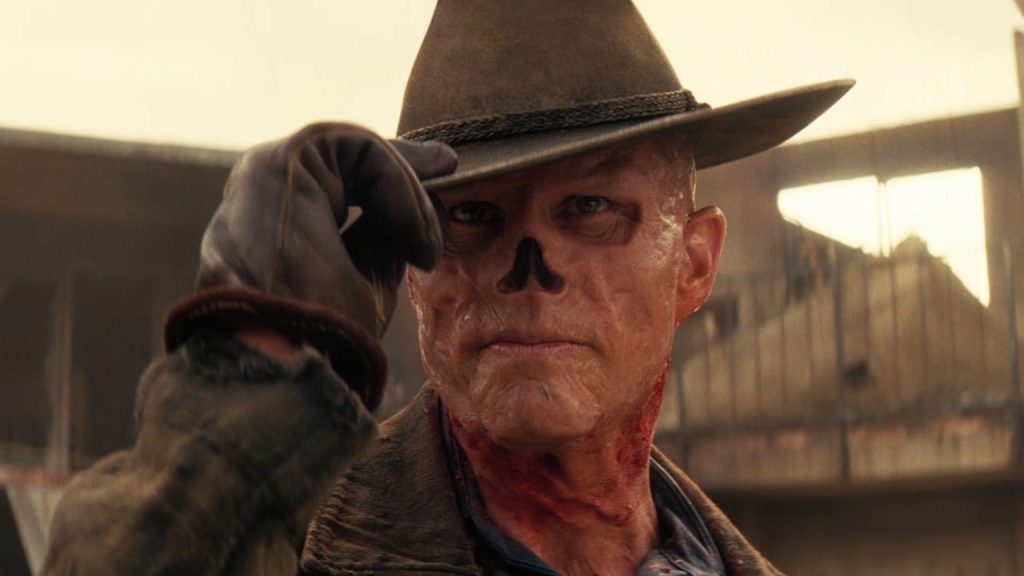
Fallout Season 2 had one of the hardest jobs on television: follow up a breakout first season, expand the world, bring in New Vegas, and still make the story feel personal. For the most part, it pulls that off. This season is bigger, stranger, bloodier, and more connected to the games, but it works best when it remembers that Fallout is not just about factions and lore. It is about broken people trying to survive systems that were rotten long before the bombs fell.

The first season succeeded because it understood tone. It was funny without undercutting the danger, violent without feeling empty, and faithful to the games without turning into a checklist. Season 2 keeps that identity intact while pushing the show into more complicated territory. New Vegas gives the series a fresh visual identity, a stronger sense of scale, and a direct line into one of the most beloved corners of the franchise. The result is a season that feels more ambitious than Season 1, even when that ambition occasionally makes the pacing wobble.

Ella Purnell remains the emotional center of the series as Lucy. What made Lucy such a great character in Season 1 was not just her optimism, but how hard the world worked to break it. Season 2 continues that evolution in a smart way. Lucy is no longer simply the vault dweller learning how ugly the Wasteland can be. She now understands enough to make choices, question justice, and recognize that doing the right thing is rarely clean in this universe. Purnell plays that shift beautifully, keeping Lucy sincere without making her naive.

Walton Goggins continues to be the show’s secret weapon as The Ghoul. Season 2 gives him more emotional weight while still letting him be funny, terrifying, and impossible to fully trust. The Ghoul works because he is not just a cool gunslinger with a melted face. He is Cooper Howard, a man carrying two centuries of guilt, anger, loss, and survival. His pairing with Lucy remains one of the show’s strongest engines because they challenge each other in ways that feel natural. She reminds him of the person he used to be, and he forces her to face the world as it is.

Maximus also gets stronger material this season. Aaron Moten brings a great mix of insecurity, ambition, and wounded loyalty to the character. Maximus has always been messy, and that is what makes him interesting. He wants to be noble, but he also wants recognition. He wants love, but he has been shaped by institutions that reward obedience and violence. Season 2 lets him grow without smoothing out those contradictions.
The biggest win this season is how confidently it expands the lore. New Vegas could have easily become a fan-service trap. Instead, the show uses it as a pressure cooker for competing ideas about power, survival, and control. Robert House, the Legion, the Brotherhood, the NCR, Vault-Tec, and the Enclave all bring different versions of the same question: who deserves to rebuild the world? That question has always been at the heart of Fallout, and Season 2 understands that the answer should never be simple.

The production design is still fantastic. The show’s retro-futuristic look remains one of the best in genre television, and the move toward New Vegas gives the season some of its most striking imagery. The world feels huge, broken, and oddly beautiful. Even when the story gets crowded, the craft keeps the season watchable. The costumes, creatures, sets, and practical details help sell the absurdity of this universe without making it feel fake.
The humor also still lands. Fallout has always been built on contrast: cheerful music over horror, corporate optimism over mass death, goofy mascots sitting next to nightmare fuel. Season 2 keeps that balance. It knows when to go broad, when to get nasty, and when to let a joke sit uncomfortably close to tragedy. That balance is not easy, and it is a huge reason the show still feels like Fallout rather than just another post-apocalyptic drama.
That said, Season 2 is not as cleanly paced as Season 1. There are moments where the show is juggling so many factions, flashbacks, reveals, and setups that the main emotional thread gets a little buried. Some episodes feel like they are moving pieces into position rather than delivering full payoffs. The finale especially leans hard into setting up what comes next, which is exciting, but it also makes the season feel slightly incomplete. There is a difference between a cliffhanger and a story that feels like it paused mid-sentence, and Season 2 flirts with that line.

Still, the season’s strengths outweigh those issues. The performances are excellent, the world-building is richer, and the show continues to prove that video game adaptations work best when they respect the source material without being trapped by it. Fallout Season 2 is not just asking fans to recognize locations, creatures, and factions. It is using those pieces to tell a story about identity, history, propaganda, and the lie that humanity can simply start over without confronting what destroyed it in the first place.
Season 2 may not have the surprise factor of the first season, but it has confidence. It knows what kind of show it is. It knows how weird this world should feel. And most importantly, it knows that the Wasteland is at its best when the laughs, horror, and heartbreak are all sitting at the same table.
Fallout Season 2 is a strong follow-up that expands the world in exciting ways while keeping Lucy, The Ghoul, and Maximus at the center of the chaos. It is a little messier than Season 1, but it is also more ambitious, more lore-heavy, and still one of the best video game adaptations on TV.
Score: 8/10

 gfpods.com
Leave a comment