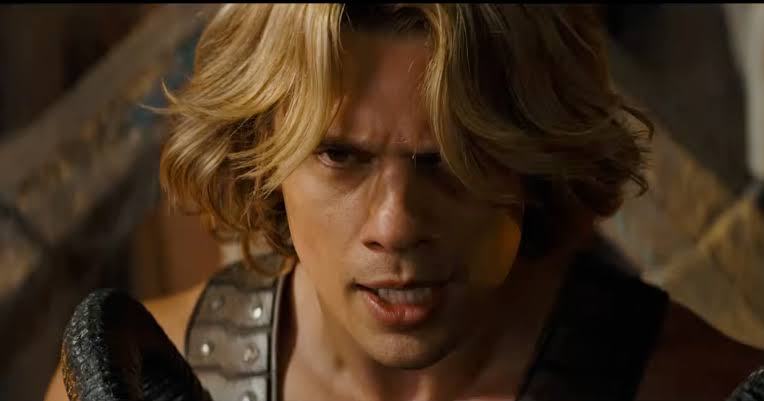
Masters of the Universe has split the internet down the middle. Some fans love the 2026 film as a pulpy popcorn adventure, others bounced off it entirely, and a third camp is arguing about what the movie is actually trying to say. On the latest episode of the Fandom Portals Podcast, hosts Aaron and Brash waded into that debate with a surprising thesis: underneath the shoulder pads and Skeletor quips, this movie might feature one of the healthiest portrayals of a male hero in years.
The hosts are upfront about the caveat. This is a movie about cool action figures from the 80s, and its first job is to entertain. But as Aaron puts it, there is no homework associated with this film. You can watch it as a fun summer blockbuster, or you can take more from it, and the two are not mutually exclusive.

Talk First, Fight Last
The thing that separates Adam from most modern action heroes is how hard he works to avoid the fight. Some viewers online have complained about it, asking why he insists on talking to everybody first. For Aaron, that is the entire point of the character. Adam negotiates, compromises, and explores every other avenue before throwing a punch, and the movie treats that as strength rather than hesitation.
That reading reframes one of the film’s most criticized moments. When Adam first transforms and struggles to beat Lockjaw, plenty of fans called it a power-scaling problem. He-Man should be able to go all day. Brash offered a different interpretation: Adam has not fully accepted the power yet, because he does not want violence in the first place. He looks the part, but the strength is not really his until he understands what it is for.
The Cave-In
The film’s smartest move, according to the hosts, is showing what happens when that strength gets used the wrong way. In Skeletor’s lair, fighting desperate and angry to save his father, Adam swings wildly, tears through goons, and brings down the cave-in that ultimately ends his father’s life. He was using his power for the right reasons, but in the wrong way, and someone he loved paid the price.
Aaron connects that directly to real life. Men can use their strength in a manner that feels correct and protective, and still hurt the people they care about when it is uncontrolled. The film even shoots the final Skeletor confrontation differently, freezing on deliberate, controlled hits to show how far Adam has come from the wild swings in the lair. The lesson lands in a single line near the end, one Aaron calls a mantra for healthy masculinity: I have the power inside of me, I just prefer not to use it.
And crucially, the movie does not pretend talking always works. Adam offers Skeletor every off-ramp, and Skeletor refuses them all. Sometimes the protector has to protect. The point is that force is the last tool he reaches for, not the first.

Duncan, Teela, and the Other Kinds of Strength
Adam is not the only character carrying the theme. Duncan, played by Idris Elba, might carry it best. The strongest man in Eternia builds his entire identity on being the protector, fails, and collapses into the bottle. His recovery does not come through revenge on Skeletor. It comes through renewed purpose, being better for his daughter, and learning that the people around him always valued his kindness, his guidance, and his sacrifice more than his sword arm. As Aaron puts it, Duncan is a man who learns he is still valuable after he fails.
Teela’s arc mirrors it from the other side. She had to grow up too fast and carry the strength her father dropped, and part of her journey is learning to trust him again and let go of the control she was forced to hold. Even a small running gag, Adam’s Earth housemate hiding his tears during The Notebook, feeds the same idea: the movie keeps poking at the stigma around men showing emotion.
Even Skeletor serves the thesis by inverting it. He has more raw power than anyone in the film and the most fragile relationship with it, terrified of losing the sword, demanding fear from his followers, and needing external validation to feel strong at all. Adam uses power to help the people around him. Skeletor uses it to control them.
Both Things Can Be True
The hosts do not oversell it. The film’s constant tongue-in-cheek humor undercuts some of its most sincere moments, and Aaron admits the joke fatigue is real. But their bigger argument is that the discourse has created a false choice. Masters of the Universe can be a silly movie about selling toys and still suggest that real strength is not proving you are powerful, it is knowing when and why to use your power. Courage is not the absence of empathy. It is the measure of your character.
The full conversation, including the hosts’ takes on Jared Leto’s Skeletor, Roboto’s scene-stealing arc, and where a sequel could go, is on the latest episode of the Fandom Portals Podcast.



Leave a Reply