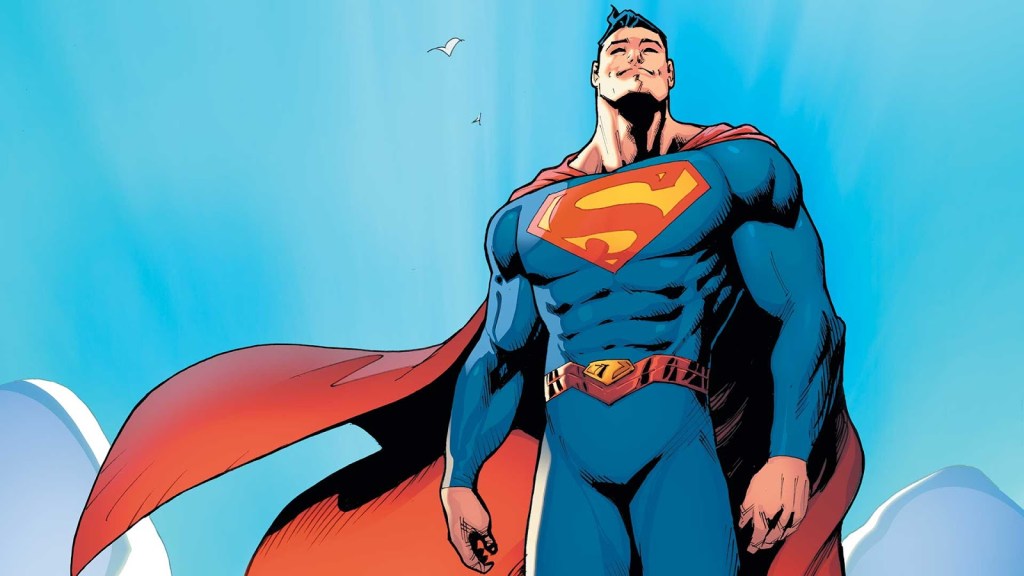
Superman debuted in Action Comics #1 in 1938 as the champion of the weak and oppressed. The men who created him spent the next several decades fighting to be treated as anything but. That fight is the subject of The Superman Wars, the new book from author Bill Bernhardt, who joined the Geek Freaks Podcast to talk about writer Jerry Siegel, artist Joe Shuster, and the court battles that shadowed the most famous superhero on Earth.
Telling History Like a Novel
Bernhardt has written more than 60 books, most of them fiction, and The Superman Wars marks his first venture into narrative nonfiction. The shift was harder than expected. He rewrote chapter one several times before landing on the approach that defines the book: telling the entire story from Jerry Siegel’s point of view.
That meant learning everything there was to know about Jerry, and Bernhardt found an unexpected personal connection in the process. As a writer, he recognized that early hunger to create something, send it out into the world, and see it published. The book uses the narrative techniques of a novel, minus the luxury of making anything up.
The research opened doors most Superman fans could only dream of. A chance conversation at Writer Con, the annual writers conference Bernhardt hosts, led to an introduction to Paul Levitz, the legendary comic writer and former DC president. He also interviewed Elliot S. Maggin, his favorite Superman writer growing up, and Laura Siegel, Jerry’s daughter.

Clark Kent Is Jerry Siegel
One of the book’s central arguments is that the inspiration for Clark Kent was never a mystery. Theories have pointed to Harold Lloyd and others over the years, but Bernhardt is direct about it: Clark is a taller, slender Jerry, right down to the eyeglasses and the shyness around women. Superman, meanwhile, is what Jerry wished women would see inside him. Bernhardt describes it as a Cinderella story, with the world’s strongest hero hiding inside the man nobody appreciates.
The Jewish immigrant experience runs through the entire creation story. Comic books in that era were the scruffy, disrespected corner of publishing where Jewish writers and artists could actually find work when newspaper strips would not have them. The influence shows up in the character himself. Superman’s origin, parents saving their child by sending him away to be raised by others, is Moses in outer space, and the cover of Superman #4, with the hero pulling down temple pillars, is Samson straight out of the Bible.
Bernhardt also makes the case that Joe Shuster deserves far more credit than history gives him. His art style looked like nothing else on the stands, accessible in a way that made kids feel like this belonged to them. But Joe was gentle and deeply shy, and without Jerry’s relentless drive to keep submitting their work year after year, Superman might never have made it to print.
The Heartbreak Years
The book’s middle section is its hardest. After DC fired Siegel and Shuster in retaliation for their 1947 lawsuit, the company stripped their credits from everything, including reprints of stories that had originally carried their names. Bernhardt does not mince words about it: whatever the legalities of how DC acquired Superman, removing creators’ names from their own work was simply immoral.
By the early 1950s, Jerry was struggling to support a new daughter while watching Superman conquer television. Laura Siegel told Bernhardt that when the George Reeves series came on, her father would leave the room. It was too painful. In a roughly 100-page autobiographical fragment Bernhardt uncovered, Jerry admitted he felt suicidal during those years. What pulled him through was Joanne, his wife and the original model for Lois Lane, who became his agent and eventually Joe’s as well.
The book also delivers surprises about the men on the other side of the fight. Harry Donenfeld, the DC executive who plays the villain in Jerry’s story, quietly helped fund the rescue of 1,200 Jewish refugees. Bernhardt was so stunned by the discovery that he restructured the book to save it for the end, letting it hit readers the way it hit him. His conclusion is that men like Donenfeld and Jack Liebowitz genuinely believed business was business, capable of ruthlessness toward creators and remarkable generosity at the same time.
The famous 1975 pension deal, struck as bad publicity mounted ahead of the Christopher Reeve film, is often treated as the story’s happy ending. Bernhardt is quick to correct that. The settlement paid Siegel and Shuster roughly what DC paid its secretaries, and the legal conflict continued for another 50 years, with chapters in 2008, 2013, and questions about the public domain stretching toward 2033.
A Cautionary Tale for Writers
Bernhardt, who advocates for authors through Writer Con every Labor Day weekend in Oklahoma City, sees the Siegel story as a warning that still applies. The vultures have changed shape, from vanity presses masquerading as legitimate publishers to AI-generated scam offers flooding author inboxes, but they are still out there. His advice: build a community of fellow writers, and never sign anything without an intelligent second opinion, preferably from a lawyer.
The conversation wrapped with rapid fire Superman questions. Bernhardt’s favorite story is Must There Be a Superman by Elliot S. Maggin, which floored him at age ten. His favorite screen Superman is Christopher Reeve, who looked like a Curt Swan drawing walked in front of a camera, though he praised David Corenswet’s earnest take on the character. And the Superman trope he would retire? The ever-expanding rainbow of suns and their confusing effects on Kryptonians.
The Superman Wars: The Battle for Truth, Justice, and an American Icon is available now at local bookstores and all online retailers. The full interview is on the latest episode of the Geek Freaks Podcast.


 gfpods.com
Leave a comment