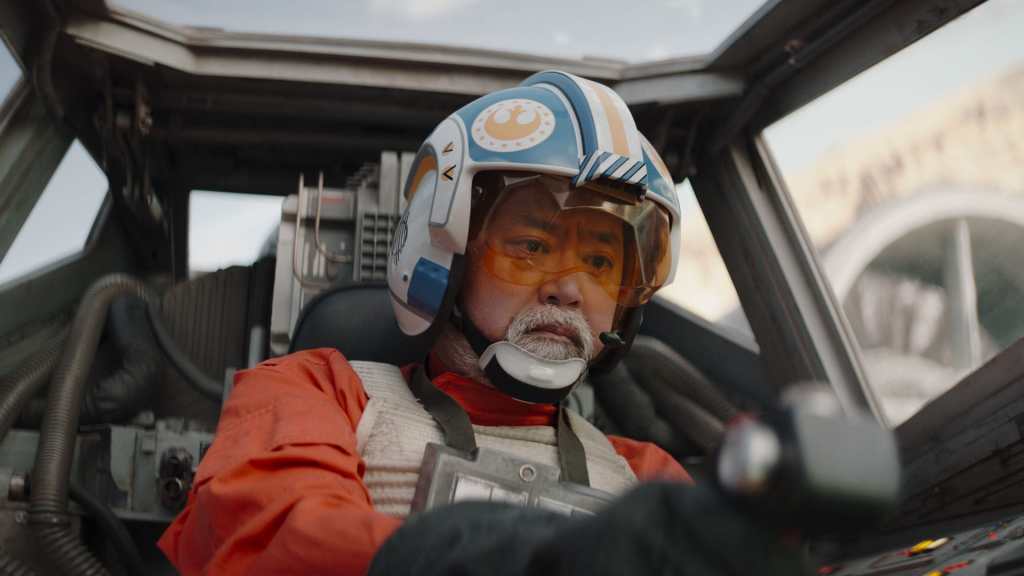
Paul Sun-Hyung Lee carries three of the most beloved characters in modern genre television. He is Uncle Iroh in Netflix’s live-action Avatar: The Last Airbender. He is Captain Carson Teva, the grounded New Republic pilot who has quietly become the connective tissue across The Mandalorian, Ahsoka, and the broader Mandoverse. And before either of those, he was Appa, the patriarch at the heart of Kim’s Convenience, a sitcom that found a second life during the pandemic and never really lost it. He sat down with Geek Freaks ahead of the June 25th return of Avatar: The Last Airbender Season 2, and the conversation moved through all three corners of his career with the kind of honesty that only comes from someone who has been watching this stuff since he was five years old.
Season 2 and the Weight of an Adapted Fandom
Lee is candid about what Season 1 was. It was a testing ground. The fandom was still raw from the 2010 feature film, and the cast and crew walked in knowing the room would be skeptical no matter how hard they worked. Nobody sets out to make a bad show, he said, and the first season was built around telling the best version of the story in a new format rather than reproducing the animated series shot for shot. By his read, they won most of the original fans over and brought in new ones, including viewers too young for the cartoon who watched the live action first and went back to discover what the fandom had been protecting all these years.
Season 2 has been greenlit alongside Season 3, and Lee said the continuation moves the story into the character work that fans of the original have been waiting for. Zuko’s redemption. Aang’s growth. The journey across the Earth Kingdom. For Lee personally, it also means a shift in shooting experience. Season 1 was Iroh and Zuko shoulder to shoulder for the entire run, and Season 2 pulls them apart for stretches. He admitted he missed working with Dallas Liu, which says something about the bond the cast built on the first go around.
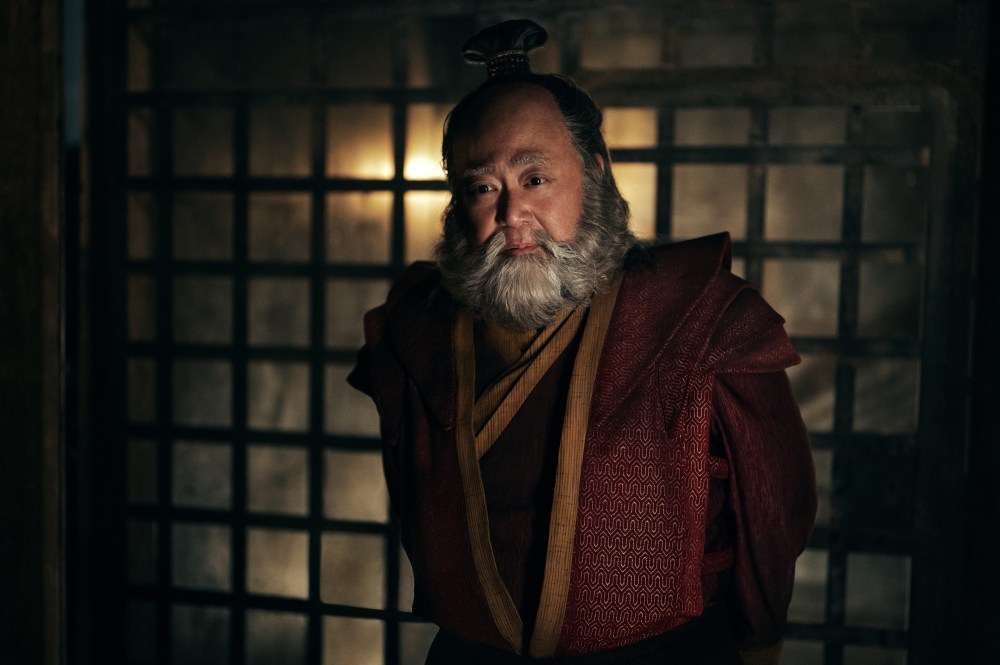
Iroh’s Reckoning, and What the Series Adds
One of the more interesting threads in the conversation was Lee’s take on what an adaptation can do that the source cannot. He talked about Iroh coming to terms with the siege of Ba Sing Se in a way the animated series only gestured at. In the cartoon it gets mentioned, but Iroh is never really forced to sit with the part he played in it. The live action makes more room for that reckoning, and Lee said that is one of the strengths of adapting something rather than copying it. The audience gets a slightly different angle, the character gets a different kind of weight, and the actors get something fresh to play.
He also pushed back gently on the idea that an actor needs to memorize every scrap of expanded universe material to play a legacy character well. He watched the original, learned the scripts, and trusted the writing room. The deep cuts are wonderful if you have the time for them, but he believes actors can overcomplicate things in their own heads and miss the forest for the trees.
Fandom, Criticism, and the New Generation
Lee has been on the receiving end of online criticism long enough to have a settled philosophy about it. He talked about the difference between fans who love something and want to share it and fans who treat every new iteration as a personal attack. He has read the nasty stuff written about his Star Wars work. He has also read the great stuff. The job, as he put it, is to make smart and bold choices, collaborate with the people around you, and trust that the work will find its audience.
The part of this section that hit hardest was his thoughts on generational fandom. The original trilogy was made for kids. The prequels became a generation’s Star Wars. The sequels became another generation’s entry point. None of those new iterations erase the old ones, and the loudest voices crying about a new version are usually the same people who watch it anyway. If you hate something that much, he said, the consistent thing to do is not watch it. Otherwise you are just spending energy you could be using on something you actually love.
The Frank in this conversation made the same point about Iroh specifically. The original Iroh and Leaves From the Vine will always be there. For a kid watching the Netflix series right now, Paul Sun-Hyung Lee is Uncle Iroh, and that is its own kind of beautiful.
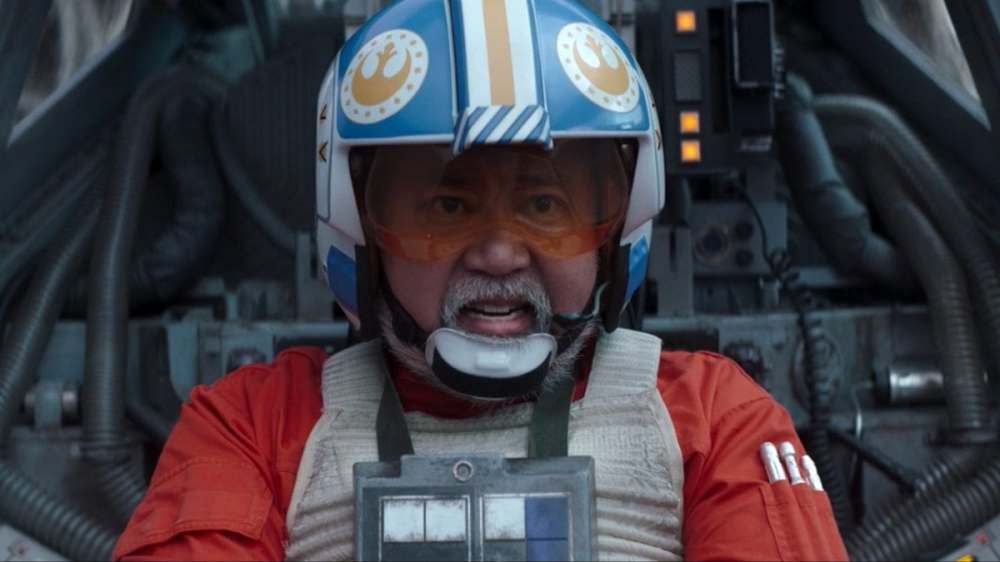
Carson Teva, the Everyman in a Galaxy of Demigods
Lee is a Star Wars lifer. He saw the original in theaters at five years old. He collected the toys, read the books, and read the comics. Stepping into the Star Wars universe as Carson Teva was less about reinventing himself than about earning a spot in a world he already lived in. His goal was to feel like he belonged, like he had been around the block, like a rebellion veteran who can see the Empire reforming and is trying to connect the dots before anyone else will listen.
He has been compared to Nick Fury, to Agent Coulson, and once at a panel to R2-D2, the connective character who shows up across the storytelling and grounds the audience. He liked that last comparison the most. Carson is not the chosen one. He is not chiseled out of a magazine. He is the kind of pilot the Star Wars universe actually needs more of, a working person doing a hard job, and Lee said that is exactly what Jon Favreau and Dave Filoni wanted from the role. He compared Carson in his own head to a Texas Ranger in the Old West, a beat cop in space, someone whose moral compass is more reliable than his orders.
When asked whether he had ever picked Favreau and Filoni’s brains about Carson’s deeper backstory, Lee said he asked Dave a thousand questions and got a version of the same answer most times. They do not have all the answers yet. The universe is too big, and locking a character down too early limits where the story can take him. That is how the best writing rooms keep characters alive across years of storytelling, and it is how Carson Teva quietly became one of the most reliable presences in the entire Mandoverse.
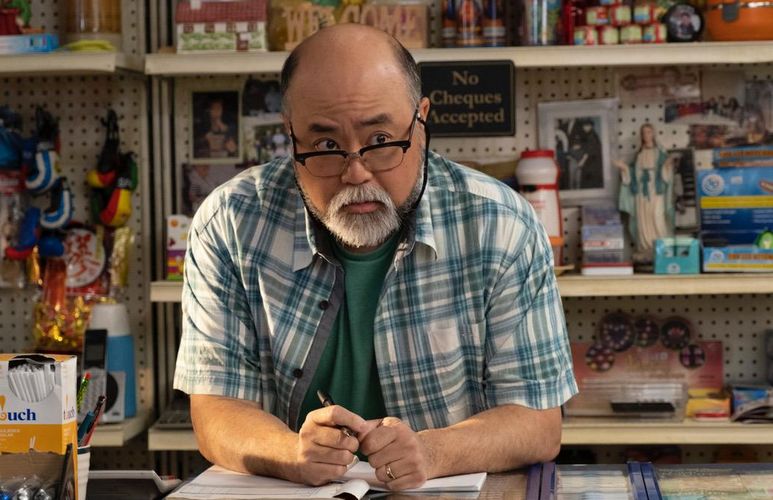
Kim’s Convenience and the Reconciliation That Never Came
The most personal part of the conversation was Kim’s Convenience. Lee played Appa, the Korean immigrant father whose specificity somehow made him universal. He talked about how viewers from every background see their own father, uncle, or grandfather in the character, and how the show became a kind of refuge during the pandemic when audiences needed something rooted in love. The cast went on to do remarkable things afterward, including one of them becoming a Marvel superstar, and Lee said none of those next chapters happen without the show.
He was open about the way Kim’s ended, too. The production was greenlit for a sixth season before the wheels came off. He has made his peace with it, but he is still upset for the fans who never got the reconciliation between Appa and Jung. The play that Kim’s Convenience was based on ended on that reconciliation, and it is, in his words, powerful and heartbreaking and wonderful all at once. He would have loved to play it. He also believes there were rich stories on the other side of that reconciliation, because making up does not actually resolve the friction between two people who are too much alike to admit it.
His philosophy on the whole thing was the kind of line that sticks. Better to leave audiences wanting more than to overstay your welcome and run out the clock. If you have to go, go out on top.
Rapid Fire
The conversation closed with three quick ones. On the MCU, Lee said he would not necessarily want powers but would love to work with Benedict Wong or Randall Park, playing the everyman in a corner of the universe rather than a hero on the poster. On The White Lotus, he admitted he has never seen a single episode, so he passed on naming a destination. On whether Carson Teva would fit in Star Trek, he landed on full commander. Not a captain, because Carson likes working alone too much, but a commander who treats the Prime Directive as a suggestion when his moral compass demands it, in the tradition of Picard, Kirk, Janeway, and Sisko.
Avatar: The Last Airbender Season 1 is streaming now on Netflix. Season 2 arrives on June 25th.



Leave a Reply