
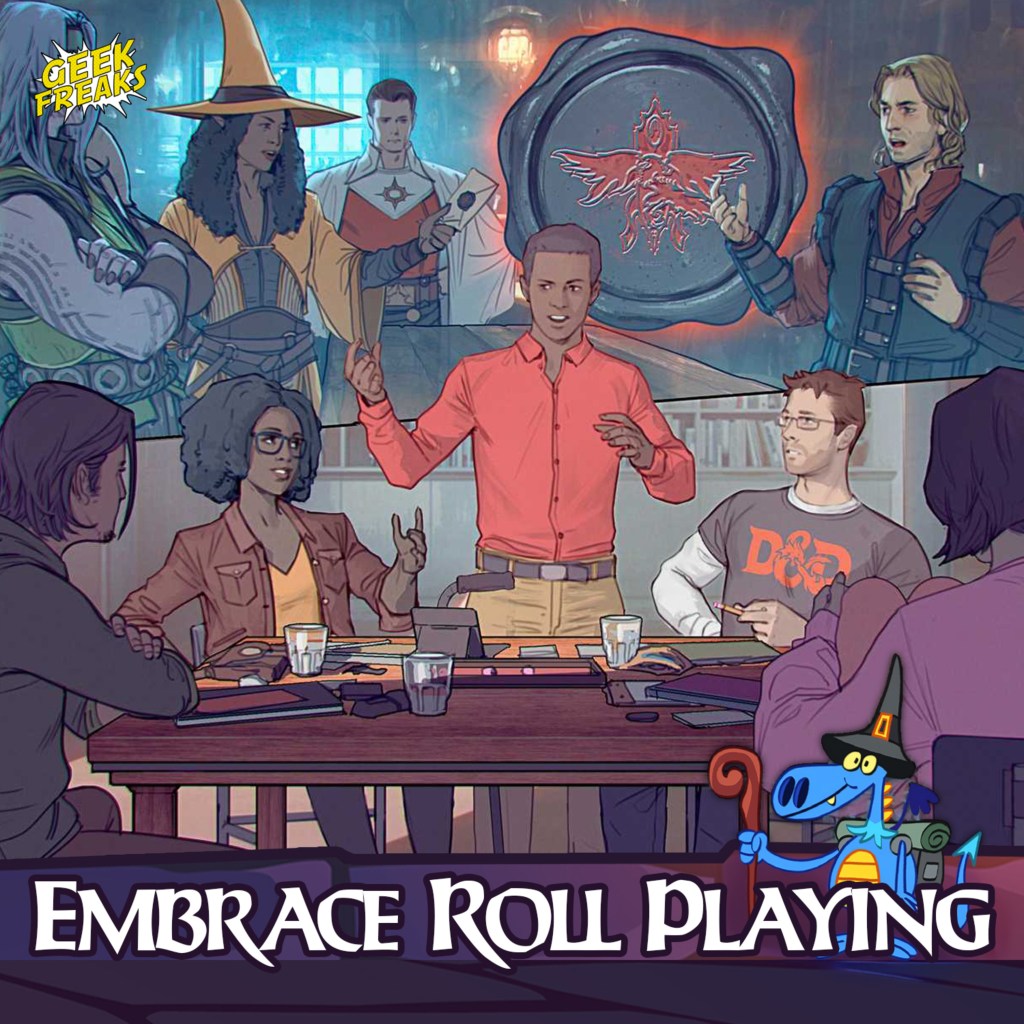
Every Dungeon Master has had the player who goes three sessions without saying a word in character. The latest episode of Hobby Quest, “Don’t Force Role Play: Getting New D&D Players Talking”, is built around that player. Community DM Tony leads a live panel recorded at the Hobby Quest store in Elk Grove, and the rule he opens with is in the title. The fastest way to lose a new player, he says, is to overwhelm them until the game stops being fun.
Start Where Video Games Left Them
The panel’s first piece of advice is to let people speak in third person. Most new players arrive from video games, where you pick a dialogue option and the character delivers the line. “My character looks for a tavern” is a fine place to begin, and nobody needs to put on a voice to play. The panel ran a live exercise with the audience playing an adventuring party walking into a new town, practicing those small in-character choices as a group.
Combat turns out to be the easiest on-ramp. When a player says they attack, the DM reminds them what weapon they are holding and asks what the swing looks like. If the player freezes, offer a couple of options, like a stab or an overhead chop, and let them pick. The panel’s next step after that is asking why. Once a player is comfortable saying what their character does, ask them to explain the reasoning behind it.
Reciprocity came up more than once. If a player describes their fireball, the DM should answer with the charred goblins and the burned grass so the description feels like a conversation. The panel also warned against asking for a description on every attack in a long fight. A couple of times per session, at the big moments, is enough.
Flavor Without Extra Rules
Cody offered his warlock as an example of roleplay that costs nothing mechanically. The character’s eyes shift color depending on which school of magic he is casting from, which gives the table something to picture every time a spell goes off. Cody also pushed DMs to make missed attacks entertaining. His advice was to make the failure exciting and flashy, especially the first time a new player whiffs.
For rewards, the panel talked about handing out advantage or a generous saving throw when someone commits to a moment in character. Two paladin scenarios pushed the conversation toward interior roleplay: a lawful paladin outvoted on a rogue’s heist, and a vengeance paladin forced to let his family’s killer get away. In both cases the DM’s prompt is the same question, asking the player what their character is thinking.
Leave the Quiet Player Alone in Public
Tony was firm that the quiet player should never be put on the spot in front of the whole group. When the louder players finish making a plan, check in with the quiet one one-on-one and ask what they think. Pairing helps too, either with a veteran who can model the game or with another newcomer who plays a similar way, so talking to one person replaces talking to the whole table.
He also drew a line between participation and engagement. A player can roll dice and take turns without being invested, and a player can be completely locked into the story without volunteering to speak. Treating silence as boredom is how DMs end up pushing the wrong people.
Session Zero Sets the Dial
The panel’s last stop was session zero, where the table settles how much of the campaign leans on roleplay versus combat before anyone gets pushed out of their comfort zone. Session zero started as a community practice and made its first official appearance in the 2024 Dungeon Master’s Guide, which Wizards of the Coast released on November 12, 2024. D&D Beyond’s own session zero checklist asks what level of roleplay everyone is comfortable with, which matches the panel’s advice almost word for word.
Because Hobby Quest runs games in a public store, the panel also covered keeping content appropriate for the age of the table and the venue, and agreeing on each player’s bugaboos up front. If something makes a player uncomfortable, the game stops right there.
The episode closes by asking listeners to send it to a DM whose new player hasn’t spoken in three sessions. Questions and table tricks can go to Hobby Quest on Instagram at @hobby_quest_eg or TikTok at @hobby_questing, or players can bring them to a drop-in game at the store.
Sources: D&D Beyond, Dungeons & Dragons Fan, PC Gamer





Leave a Reply