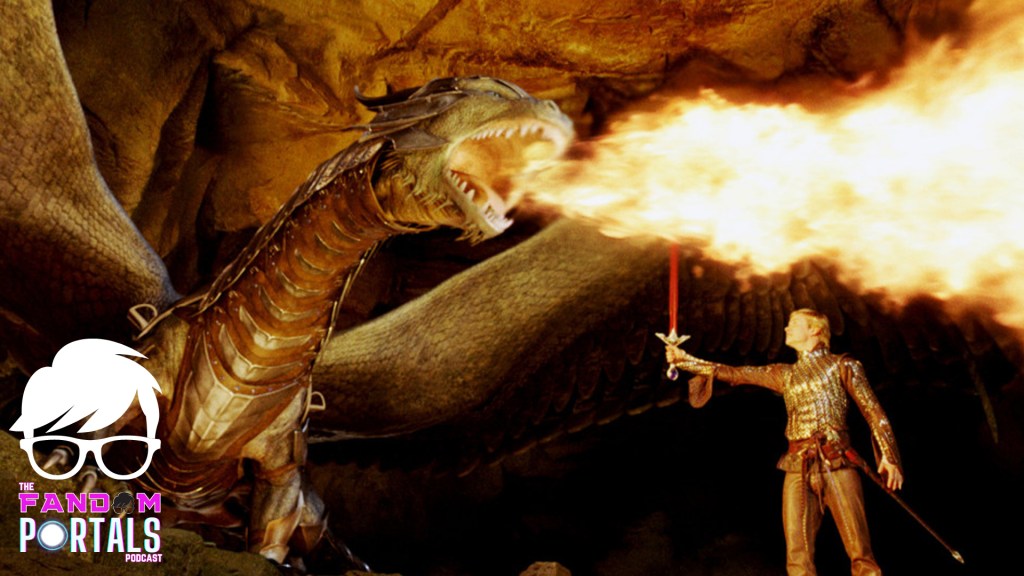
On this week’s episode of the Fandom Portals podcast, we are heading back to Alagaësia to talk about the 2006 Eragon movie and the novel that started it all. The film has lived in fandom infamy for years, but it is still a useful case study in what happens when a big, lore heavy fantasy book is compressed into a two hour movie. The core question hangs over the whole thing: is Eragon a faithful adaptation, or did the film lose what made Christopher Paolini’s story connect with readers in the first place?
The Book That Launched a Fandom
Eragon, the first book in The Inheritance Cycle, follows a farm boy who finds what he thinks is a strange blue stone, only to discover it is a dragon egg. That discovery pulls him into a world shaped by the fallen order of Dragon Riders, a tyrant king named Galbatorix, and a growing rebellion known as the Varden. The outline feels familiar on purpose, but the way the book handles it is what won people over.
On the page, the journey is slow and detailed. You spend a lot of time with Eragon as he travels, trains, and stumbles his way into understanding magic, history, and politics. Alagaësia feels old. The different peoples, languages, and traditions give the world weight, and the relationship between Eragon and his dragon Saphira builds gradually through shared thoughts, arguments, and hard decisions. You feel like you are growing alongside them, not just watching events pass by.
That careful, methodical build is where the movie struggles the most.
What the Movie Actually Keeps
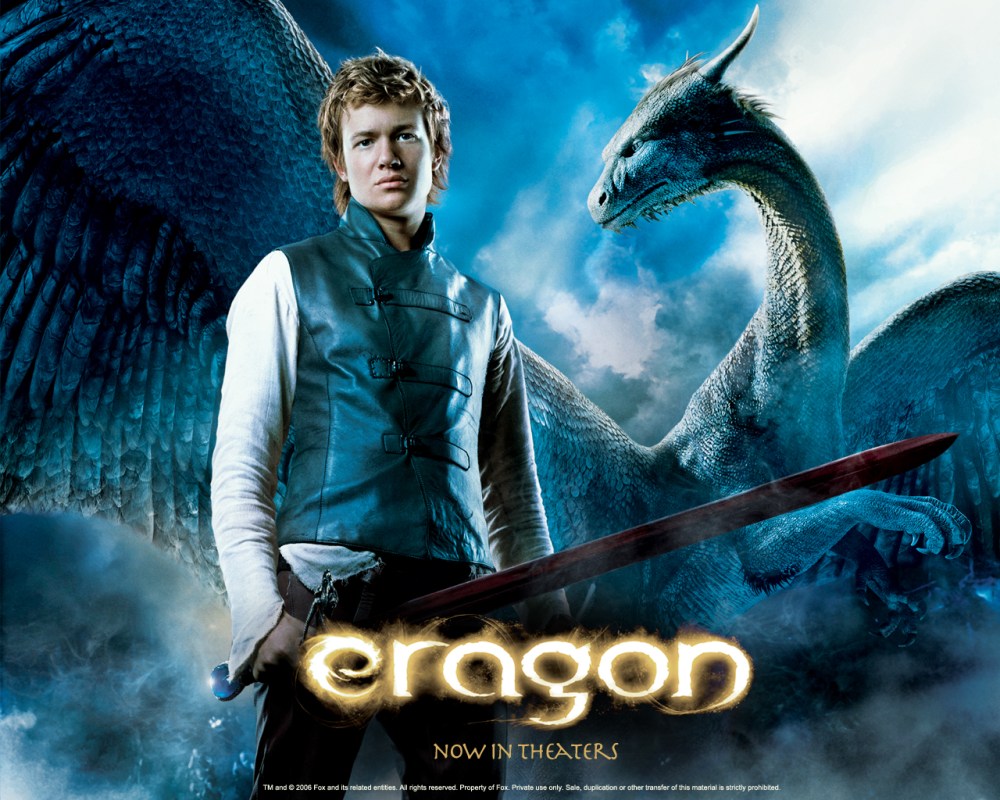
If you strip the story down to its basic skeleton, the film does follow the same path. Eragon finds the egg. Saphira hatches and bonds with him. The Ra’zac attack his home, which pushes him to leave. Brom steps in as the mysterious mentor with a connection to the Riders. Eventually, Eragon ends up with the Varden and faces the forces of Galbatorix in a climactic battle.
Most of the key names and roles are still there. Eragon is still the chosen rider. Saphira is still his dragon. Brom is still the gruff guide with a secret past. The Varden are still the rebellion hiding in the mountains. On paper, that sounds like a straightforward adaptation that respects the main beats of the story.
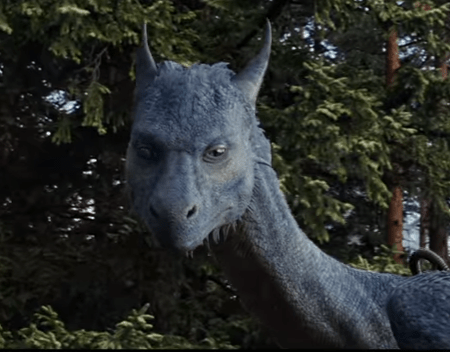
There are even a few elements that feel close to what readers imagined. Jeremy Irons brings a sense of lived in regret to Brom that fits the character well, and Saphira, while not universally loved in design, still carries some presence on screen. The dragon and rider bond is acknowledged through telepathy, even if it is only lightly explored.
The problem is not that the movie ignores the book’s plot. It is that it trims away almost everything that gives that plot texture.
A Smaller, Thinner Alagaësia
The clearest difference between book and movie is the worldbuilding.
In the novel, Alagaësia feels vast and layered. You hear about the Dragon Riders as an institution with rules, responsibilities, and political influence. Dwarves and elves have distinct cultures that matter to the story. The Varden feel like a real movement with factions, conflicts, and history. There is a sense that Eragon is stepping into a story that began long before he was born.
The movie pares this down to the bare minimum. The Riders are mentioned in quick exposition. The Varden might as well be any generic resistance army hiding in a mountain fortress. Dwarves and elves barely register as separate peoples. The invented languages and formal names that give the book flavor are toned down or dropped entirely.
What is left is a functional fantasy backdrop that supports the plot but does not feel like it exists beyond it. Instead of walking through a living world, you feel like you are moving through a set built for a single adventure.
Characters Reshaped by the Adaptation
Even when the film keeps the same characters, it often changes how they feel.
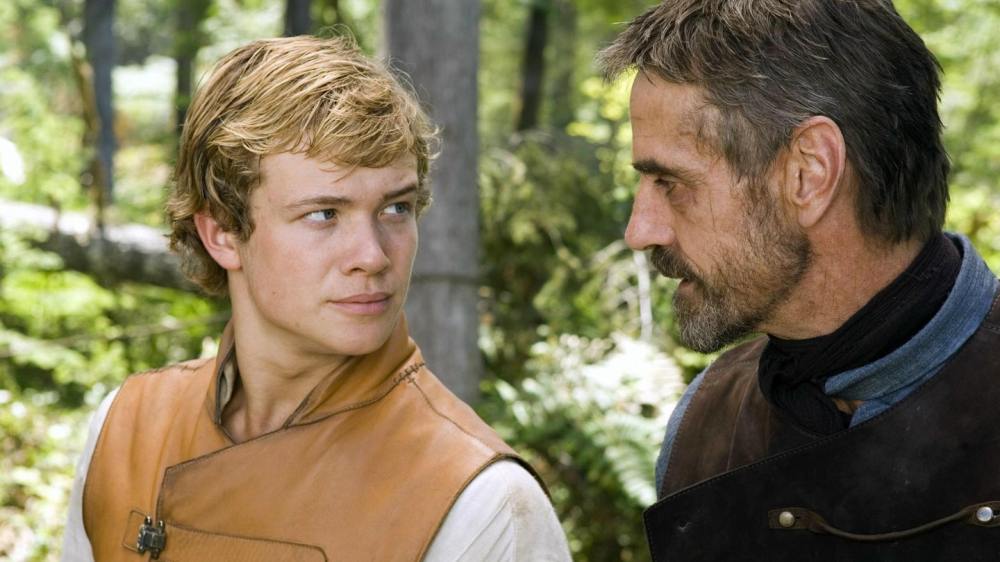
Eragon on the page is stubborn, insecure, and frequently in over his head. His mistakes hurt him and the people around him, and his training is long and grueling. He earns his progress. The movie version is far smoother. He learns quickly, fails less, and fits more easily into the role of a straightforward fantasy hero. That shift might make the story move faster, but it also makes his growth feel less earned.
Brom arguably fares the best, largely because Jeremy Irons brings so much presence to the role. The film still has him carrying secrets and a painful history, but there is not enough time to let those layers unfold. His death hits the plot, but it does not land with the same emotional weight it had in the book, where you have spent many more pages with him and seen more of his inner conflict.
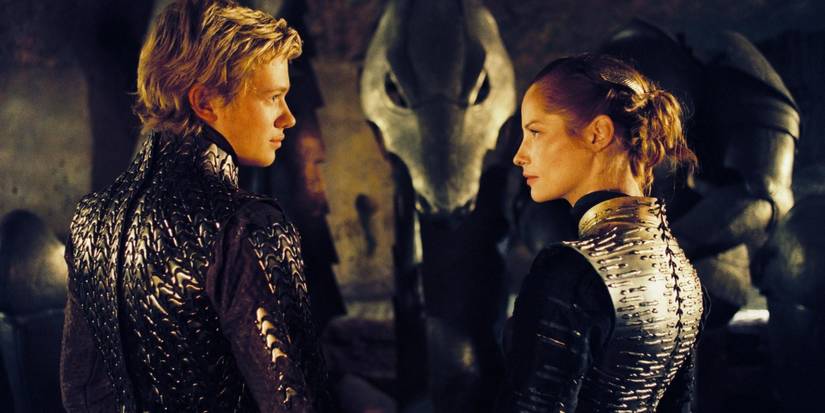
Murtagh is where the adaptation really shows its limits. In the book, he is one of the most morally complex characters, constantly wrestling with his family’s legacy and his own sense of honor. His conversations with Eragon are sharp, funny, and tense. In the film, he shows up late, gets a handful of lines, and never really becomes the nuanced figure the later books rely on. It feels like a setup that never gets the payoff it deserves.
Arya is also affected. On the page, she is competent, distant, and clearly driven by a mission that is not centered on Eragon. She has her own priorities, and the story respects that. The movie keeps her in play but reduces her presence and personality, turning her into more of a standard fantasy ally than a fully realized character with her own agenda.
Saphira and the Heart of the Story
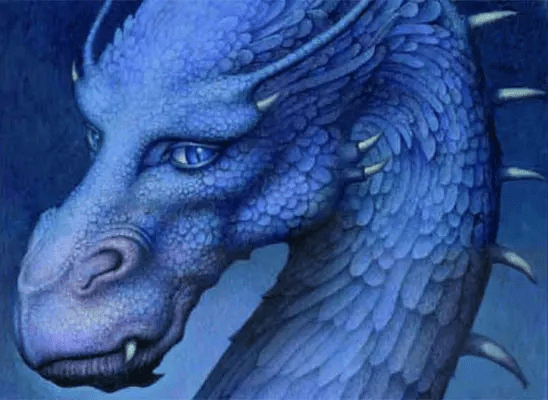
At the heart of Eragon is the bond between rider and dragon. The novel gives that relationship a lot of space. Eragon and Saphira speak mind to mind, argue, disagree, and comfort each other. Saphira is not just wise and calm. She is young, proud, and sometimes impatient. Both of them are learning what it means to carry power they barely understand.
The movie rushes this. Saphira hatches, grows to full size in a dramatic storm sequence, and is quickly ready for battle. It looks cinematic, but it skips the long stretch of shared vulnerability that makes their relationship feel real. Their conversations tend to be short and functional instead of digging into who they are as individuals.
Because of that, many of Eragon’s choices in the film feel like generic hero decisions rather than the product of a deep, evolving partnership with Saphira. The story tells you they are bonded, but it rarely slows down enough for you to really feel it.
Magic Without Much Cost
Magic in the book has clear rules and consequences. Every spell draws energy from the caster. If you try to do something too powerful, it can exhaust or even kill you. A big part of Eragon’s training is learning what he can and cannot do safely, and that limitation makes every use of magic feel risky.
The movie keeps the idea of an ancient language, but the cost mostly disappears. Spells are spoken and they simply work. Eragon does not struggle much with the toll that magic takes on his body. Without that sense of danger, magic becomes just another visual effect rather than a force that characters have to respect and fear. It dulls one of the more interesting aspects of the book’s world.
So, Is It a Faithful Adaptation?
If you look only at the broad outline, you could argue that the Eragon movie is faithful. The same hero, the same dragon, the same villain, the same rebellion, and the same final destination are still there. The path from farm to battlefield is recognizable.
Once you start looking past the outline, that claim begins to fall apart. The film shrinks the world, simplifies the politics, and softens the rules of magic. It trims down or flattens characters who are crucial to the deeper themes of the series. Most importantly, it rushes the central bond between Eragon and Saphira, which is supposed to be the emotional core of the story.
In that sense, Eragon is a good example of how an adaptation can match the events of a book without really capturing its spirit. It is not a total failure, and there are pieces that fans can still enjoy, especially individual performances and certain visual ideas. It just does not feel like the same rich, evolving saga that lives on the page.
Why It Is Still Worth Talking About
Looking back at Eragon now, it feels like a fantasy story that was forced into the wrong format. The novel’s slower pacing, heavy lore, and character driven development all seem better suited to a series that has the time to breathe. Modern fantasy adaptations are starting to move that way, which makes Eragon an interesting early lesson in what happens when you try to compress that kind of story instead.
That is part of why it is such a fitting topic for Fandom Portals this week. The gap between the book and the movie is not just about pointing out what was wrong. It opens up a bigger conversation about what fans expect from adaptations, what details can be changed without breaking the story, and which elements are so central that losing them means it no longer feels like the same tale. Eragon might not be a faithful adaptation in the deeper sense, but it still gives us plenty to talk about when we look at how beloved fantasy worlds make the jump from page to screen.




Leave a comment