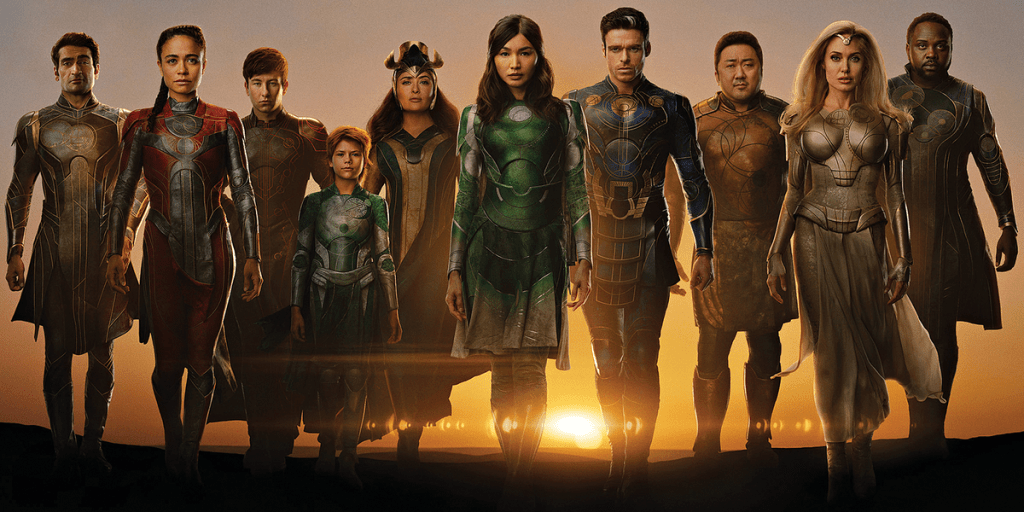
Kumail Nanjiani says he signed on to play Kingo in six Marvel films, plus a theme park ride and a video game. That kind of commitment tells you everything about how confident Marvel was that Eternals would be a franchise pillar for the next decade. The plans never materialized, and Nanjiani has since talked about how the reaction to the film sent him to therapy.
All the signs of a franchise bet
Marvel built the runway. Eternals ends with “The Eternals will return,” and the film sets up multiple spinoff lanes in its two post credits scenes, from Harry Styles’ Eros and Pip the Troll to Kit Harington’s Dane Whitman teasing Black Knight with a Blade voice cameo. That is classic Marvel franchise scaffolding.
The studio also invested in synergy. Around release, mobile titles rolled out Eternals characters, uniforms, and quests, which usually happens when a studio expects a continuing presence. It is not the same as a bespoke “Kingo video game” that Nanjiani mentions, but it shows Marvel was lining up the broader ecosystem.
Marvel expected Eternals to land. The early positioning framed it as a prestige swing with large implications for the next phase, and the promise of cosmic world building far beyond a single movie.
Why the confidence was so high
A celebrated filmmaker at the helm. Chloé Zhao was coming off major awards success with Nomadland and had wowed Kevin Feige with a pitch and footage that emphasized natural locations and a grounded visual approach. Internally that reads like credibility, artistry, and a chance to evolve the house style.
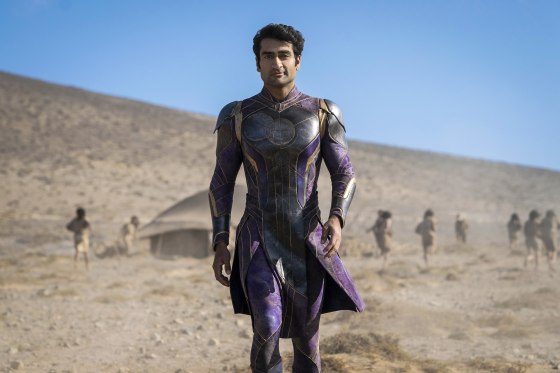
A starry global cast and a big, inclusive swing. The lineup included Angelina Jolie, Salma Hayek, Gemma Chan, Richard Madden, Lauren Ridloff, Brian Tyree Henry, Barry Keoghan, and more. Marketing could speak to global audiences and representation milestones, including the MCU’s first deaf superhero and the franchise’s first sex scene. Those are the kinds of headlines that suggest reach beyond core fans.
Mythology that could power a phase. Celestials, Eternals, and ideas like a “Uni-Mind” are designed to plug into the cosmic side of the MCU. Even after the mixed reception, that lore has continued to echo in later projects, which confirms how central Marvel once imagined it could be.
Where the bet stumbled
Reception and returns did not match the plan. Eternals earned about 402 million dollars worldwide and remains one of the few MCU films with a Rotten Tomatoes critics score in the 40s. That combination cooled sequel momentum fast.
Too much setup, too little payoff. The film introduced ten new heroes while trying to launch cosmic stakes, human romance, a centuries-spanning timeline, and two separate end tags. The breadth was ambitious, but audiences and critics split on the tone and pacing, and Marvel did not follow up with announced continuations for those threads. Kevin Feige later said there were no immediate plans for Eternals 2.
Prestige did not guarantee clarity. Zhao recently reflected that having essentially unlimited resources on Eternals was “quite dangerous,” because constraints can sharpen choices. That is a revealing postmortem from the filmmaker and a hint that Marvel’s faith in scale and freedom did not translate into a cleaner on-ramp for new characters.
What Marvel learned
Do not mistake infrastructure for inevitability. Multi picture contracts, end cards, and transmedia tie ins create optionality, not destiny. If the first installment does not resonate, the smartest move is to pause. That is what happened here, even with a six film Kingo deal sitting in a drawer.
Keep the door open, but narrow the funnel. Marvel has begun to rework its cadence and focus on fewer, stronger projects. You can see the selective salvage of Eternals world building in Captain America: Brave New World, which revisits Tiamut and uses it to seed adamantium. Marvel is leveraging what worked without recommitting to the full slate it once imagined.
Prestige plus scale is not a strategy by itself. Hiring an acclaimed director and assembling an A list cast are good starts. They still need a clear character spine and a straightforward promise for audiences. Eternals aimed for sweeping myth and ensemble intimacy at the same time. The next waves of Marvel films seem to be steering back toward tighter premises with room to expand later.
Marvel’s overconfidence in Eternals came from a reasonable place. The studio had a visionary director, a global cast, big cosmic lore, and a plan to weave these heroes through films, parks, and games. The first chapter did not connect the way the model assumes, which forced a rethink. The interesting coda is that Marvel has not thrown the world away. It is lifting the pieces that help other stories sing and leaving the rest on the bench. That is the pragmatic version of being eternal.


 gfpods.com
Leave a reply to lauriewoodwardauthor Cancel reply