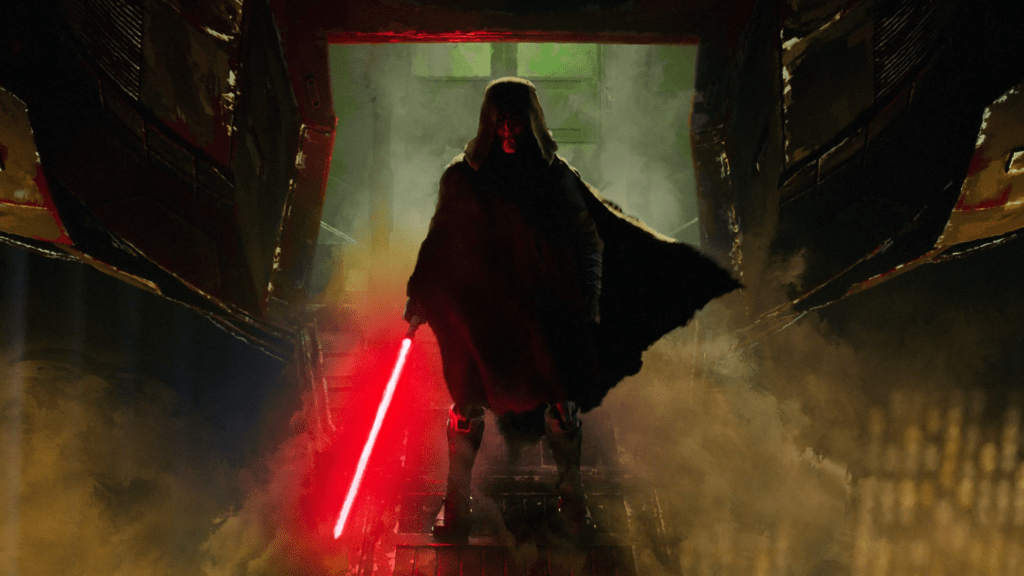
The first two episodes of Maul: Shadow Lord do not feel like a victory lap for a popular character. They feel meaner than that. Smaller, too. Not in scale, but in the way the show traps you in alleyways, back rooms, dim apartments, and crowded streets where everyone looks like they have already lost something. That choice helps a lot. A Maul series could have easily turned into pure iconography: red blade, angry stare, a few cool kills, move on. These episodes are trying for something rougher. They want him in a crime story, in a city that feels nervous and half-rotten, with cops, syndicates, exiled Jedi, and civilians all trying to survive the same bad weather. That was the right angle.
The setting is a huge part of why the premiere works. Janix does not look like a reshuffled Coruscant. It has its own identity. The city sits lower, feels denser, and has more street-level life to it. StarWars.com says the team wanted a “pulpy noir vibe” running through everything and deliberately avoided making Janix feel like another familiar metropolis. You can see that in the color palette right away. Reds, blacks, dirty neon, and that hazy glow around lightsabers and blaster fire give the whole thing a bruised look. Your transcript called it an evolution of The Bad Batch style, and that feels right to me. The linework and light bloom are more controlled here. The image is still stylized, but it is less showy and more lived-in. It looks like a city where trouble has had time to settle into the walls.
Maul himself is excellent in these episodes, mostly because the show never forgets how ugly his mindset is. Lucasfilm’s production page describes this stretch of his life as one where vengeance against Palpatine and the Empire becomes a singular obsession, and that is exactly how Sam Witwer plays him. He does not sound like a man with a plan so much as a man who keeps turning pain into momentum because he has no other use for it. Witwer has been doing this character for years, but there is a little more wear in the voice here. A little more calculation. A little less theatricality for its own sake. When Maul speaks in these episodes, it does not feel like he is trying to impress anybody. He is trying to bend the room toward him. That is a better fit for this stage of the character.
The action helps sell that version of Maul. He is not frightening in the same way Vader is frightening. Vader is heavy. He advances like a machine that has already decided the outcome. Maul is faster, nastier, more personal. When he attacks in Episodes 1 and 2, there is a cruelty to the rhythm of it. The hallway kills in particular stand out because they are not staged as grand mythic moments. They are sudden and vicious. One of the smartest things the show does is remind you that Maul is not simply a tragic figure or a fan favorite. He is still a predator. The series needs that edge if it wants the rest of the character work to matter.
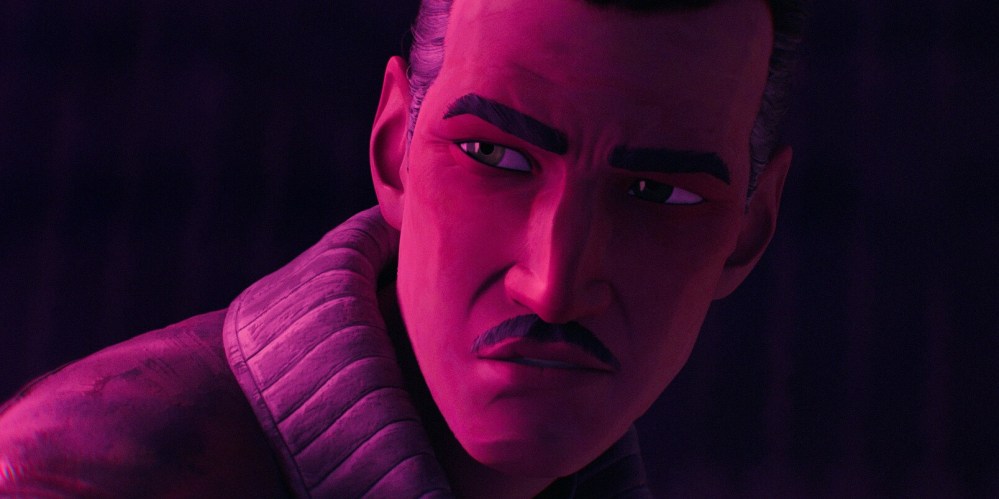
I also like that the show is not built around Maul alone. Brander Lawson gives the story a needed counterweight. Officially, he is a police captain trying to keep Janix safe, and Wagner Moura brings him the kind of grounded fatigue that works well in a city like this. He does not feel like a stock “good cop in a bad town” type. He feels older than the genre around him. Tired, smart, and used to making choices he probably would not brag about. The transcript picked up on one of the better early hooks with him: he is supposed to report Maul to the Empire and decides not to. That one choice tells you almost everything you need to know. He is not clean, but he is not cowardly either. He understands that bringing in one form of authority usually means empowering another. That is a much more interesting place to start than simple heroism.
The droid material around Lawson is stronger than I expected, too. Star Wars usually treats droids in one of two ways: comic relief or beloved exceptions. Shadow Lord does something a little different in these opening episodes. It lets them exist inside the same moral space as everyone else. Your transcript pointed out that moment where a droid comments on another one being killed “for just following his programming,” and the scene lands because the show does not wink at it. Nobody stops to explain why that matters. It just hangs there. It is a small beat, but it gives Janix texture. This is a city where even the droids feel worn down by the job.
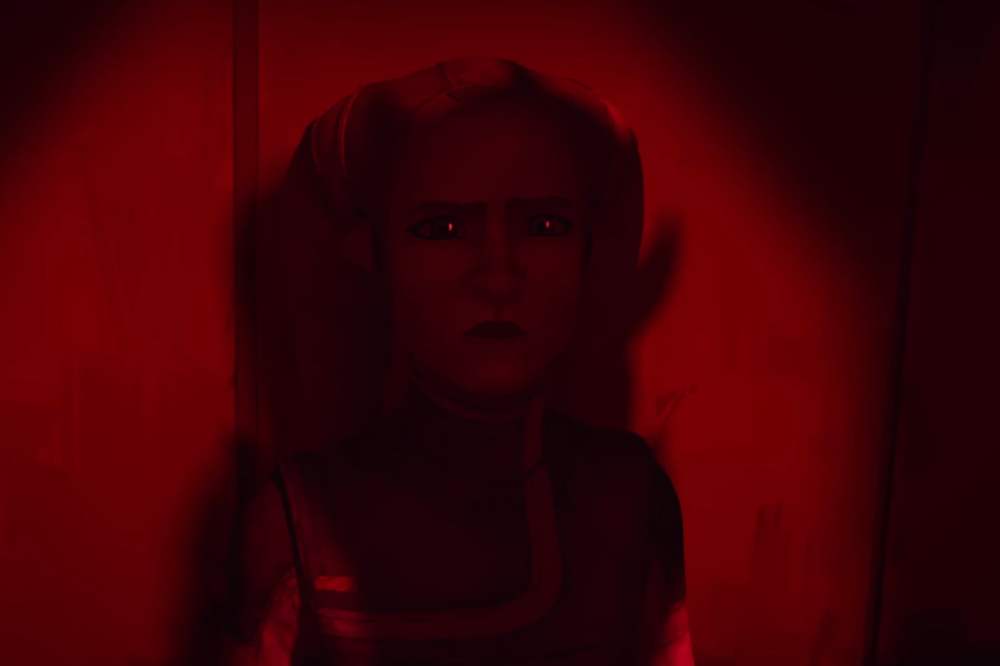
Devon is probably the character I am most curious about after Maul. The easy version of her would be a future dark side turn with a bunch of obvious signposting. These episodes do something better. They make her feel young, frustrated, and stranded. StarWars.com describes her as a Jedi Padawan in a post-Order 66 world trying to decipher right from wrong, and that comes through immediately. She has the ability, but more importantly, she has impatience. That matters more. She is tired of hiding, tired of being talked down to, and clearly tired of being told that survival is the same thing as virtue. Her scenes with Master Eeko-Dio Daki work because neither one is fully wrong. He is trying to preserve a code after the world that gave it structure has collapsed. She is reacting like someone who can already tell that those rules may no longer be enough. That tension is much more compelling than simple rebellion.
That is also why I do not need the show to rush her into becoming some version of Darth Talon or any other legacy figure. Maybe it goes there, maybe it does not. Right now the better material is in her confusion. She has one foot in the old Jedi worldview and one foot in a galaxy that no longer rewards it. The first two episodes understand that uncertainty better than a lot of Star Wars stories understand temptation. Temptation is easy to write. Moral exhaustion is harder. Devon feels closer to the second one, and that gives the show a sharper edge.
My main complaint is pace. These episodes move with confidence, but not always with urgency. I do not mind a slow-burn structure, especially in something pitched as noir, but there are moments where the show is so locked into atmosphere that it delays the next meaningful turn a beat too long. A few scenes feel like they are circling an idea the audience already understands. That is not a major problem yet. It is the kind of thing that can make the later emotional turns hit harder if the season pays it off. Still, if someone walks in expecting the quick forward drive of the best Bad Batch episodes, they may feel the drag here.
Even with that, I had a good time with these first two episodes. More than that, I think the show has found a lane that suits Maul better than a broader galaxy-spanning epic would have. He belongs in something bitter and close to the ground. Somewhere ugly enough that his charisma can feel dangerous again. Janix works. Brander works. Devon works. The violence has weight, the city has character, and Maul finally feels like more than a cool silhouette people remember from better stories. After two episodes, this feels like one of the stronger animated starts Star Wars has had in a while.
I’d put Episodes 1 and 2 at an 8.5/10 right now. The only thing holding it back is that I want the story to trust its momentum as much as it trusts its mood.



 gfpods.com
Leave a comment