
One of the more interesting points raised on Fandom Portals is that How to Train Your Dragon has never really been about dragons in the usual fantasy sense. It is not just a story about fighting monsters, proving yourself in battle, or becoming the kind of hero your culture expects. In the 2025 live-action version especially, the story feels much more focused on a different kind of strength. It argues that empathy, patience, and understanding can carry more power than dominance ever could.
That idea is what makes this version work. Plenty of live-action remakes struggle because they focus too much on recreating familiar moments and not enough on why those moments mattered in the first place. This one succeeds because it keeps the emotional center of the story in place. The dragons look bigger, Berk feels harsher, and the world is more physically grounded, but the core message remains clear. Hiccup is not weak because he lacks force. He is valuable because he sees what nobody else is willing to see.
That difference is everything.
From the start, Hiccup is treated like he was built wrong for the world around him. Berk is a village that measures worth in toughness, size, aggression, and the ability to kill dragons. Hiccup does not fit any of those expectations. He is smaller than the other Vikings, less imposing, and far more interested in problem-solving than combat. In a place like Berk, those qualities are easy to dismiss. People do not see his intelligence or emotional instinct as strengths because their whole culture has been shaped by fear and survival. If you grow up believing the world is trying to destroy you, then naturally you start worshipping the people who can hit back the hardest.
The live-action version makes that disconnect feel even stronger than the animated film did. Berk looks cold, heavy, and physically demanding. The adults feel larger, the armor looks bulkier, and the gap between Hiccup and the rest of his people becomes even more visible. That visual contrast helps the movie sharpen its point. Hiccup is not failing because he lacks value. He is failing because his society only knows how to recognize one type of value.
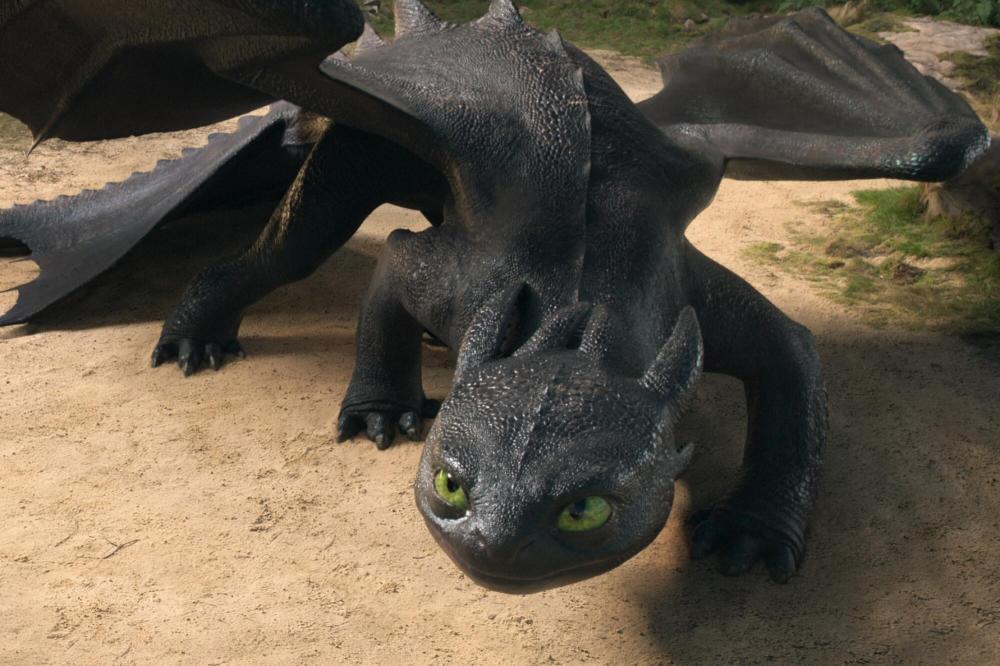
That is why the moment he chooses not to kill Toothless matters so much. It is the scene that quietly changes the entire meaning of the story. Hiccup has finally done the thing that should earn him respect. He has brought down a Night Fury, the most feared dragon of all. This is his chance to prove himself according to Berk’s rules. Instead, he looks at a wounded creature and cannot go through with it. He does not see a trophy. He sees fear, pain, and something living in front of him that does not match the legend.
In most action-driven stories, mercy can be framed like hesitation. Here, it becomes courage. Hiccup does not make the easier choice. He makes the riskier one. He turns away from the one thing his world would celebrate and chooses compassion without knowing what it will cost him. That is the first major sign that the film wants to redefine strength. It is telling the audience that real power is not about enforcing control. Sometimes it is about resisting the pressure to do what everybody else expects.

What follows with Toothless builds on that idea beautifully. Hiccup never conquers him. He never breaks him, commands him, or forces him into submission. Their relationship grows through trial, observation, and trust. Hiccup studies Toothless, learns how he moves, pays attention to what scares him, and slowly figures out how to communicate with him. That process is not flashy, but it is what changes the story. He succeeds because he is curious enough to look beyond fear and patient enough to let trust form on its own.
The live-action version also does a strong job showing that this bond is not one-sided. Toothless is not simply there to heal Hiccup emotionally or help him become special. He is also vulnerable. He cannot fly properly without help. He has lost part of what makes him powerful in the eyes of his own kind. In that way, both characters are outsiders. Both are judged for what they seem to lack. Both are forced to become something new through partnership. That is what makes their friendship feel deeper than a basic boy-and-his-animal story. It is not about ownership or taming. It is about mutual dependence and shared growth.

That same theme carries into the training scenes, where Hiccup starts succeeding against dragons not because he becomes more violent, but because he understands them better than anyone else. He learns their habits, responds to their behavior, and adapts in ways the other Vikings never consider. In Berk’s eyes, dragon fighting is about domination. Hiccup turns it into communication. Even when he is technically winning, he is doing it through knowledge, empathy, and restraint. The film keeps showing us that what his world calls weakness is actually a more advanced form of strength.
This becomes even more meaningful when you look at Stoick. He represents the old definition of strength better than anyone. He is huge, commanding, respected, and completely shaped by a culture that believes survival depends on crushing threats before they can strike. The live-action format gives that mindset extra weight because Stoick feels less like a broad archetype and more like a real father who has been hardened by grief, responsibility, and fear. His problem is not that he does not love Hiccup. It is that he has no framework for understanding a son who leads with empathy in a world built around force.
That is what makes Stoick’s arc so important. If Hiccup embodies the film’s new idea of strength, Stoick embodies the pain of letting go of the old one. His growth is not just about accepting dragons. It is about accepting that leadership is not weakened by humility, listening, or change. In fact, those things may be the only way leadership survives. By the end of the film, Stoick does not become less strong. He becomes wiser about what strength is for. Instead of trying to force his son into an inherited model, he begins to recognize what Hiccup already brings to the table.
That shift matters beyond the father-son story. It changes Berk itself. The village does not simply stop fighting dragons because it has a sudden change of heart. It starts to see that fear has distorted its entire way of life. Once that happens, the culture can evolve. The live-action movie handles this transition in a way that feels emotionally satisfying because it is not framed like weakness or surrender. It is framed like maturity. Berk does not lose itself by embracing dragons. It becomes more complete by broadening its idea of what strength, survival, and community can look like.
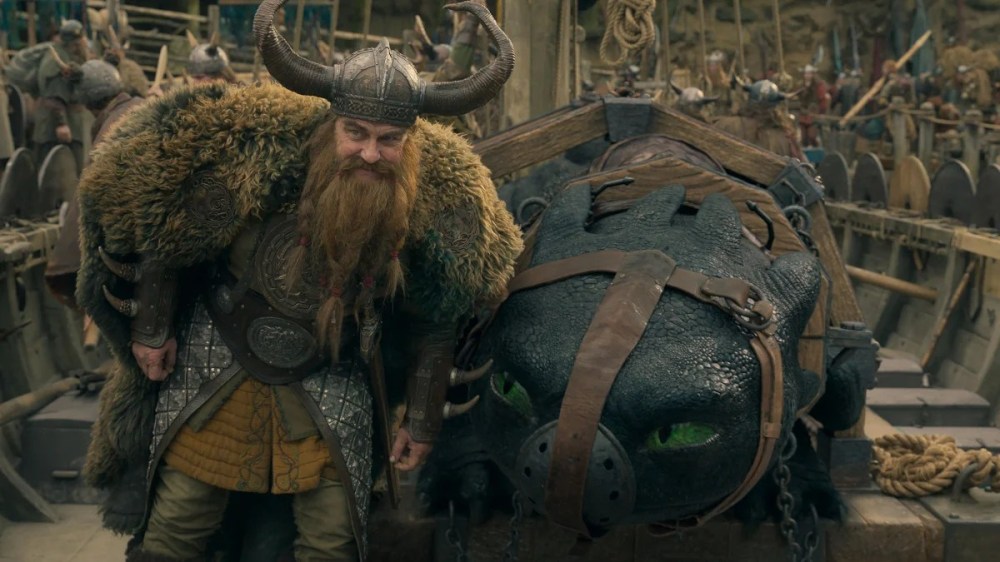
That is one reason this story continues to connect with audiences. Hiccup speaks to anyone who has ever felt out of place in a system that rewards the wrong things. He is not the strongest because he becomes more like everyone else. He is strongest when he stops trying to perform their version of power and starts trusting his own way of seeing the world. That is a timeless idea, and the live-action version makes it land in a more tactile, emotional way.
What makes the 2025 film worth talking about is not just that it recreates beloved moments with bigger sets and more realistic dragons. It is that it still understands what made those moments resonate in the first place. Beneath the flight scenes, the spectacle, and the familiar beats, this is still a story about a boy who changes his world by refusing to let fear define it. That is a powerful message, and it is exactly the kind of conversation that makes Fandom Portals such a good fit for a movie like this. The best fantasy stories are rarely just about fantasy. They last because they reflect something real, and How to Train Your Dragon still has something real to say about the kind of strength that actually matters.







 gfpods.com
Leave a comment