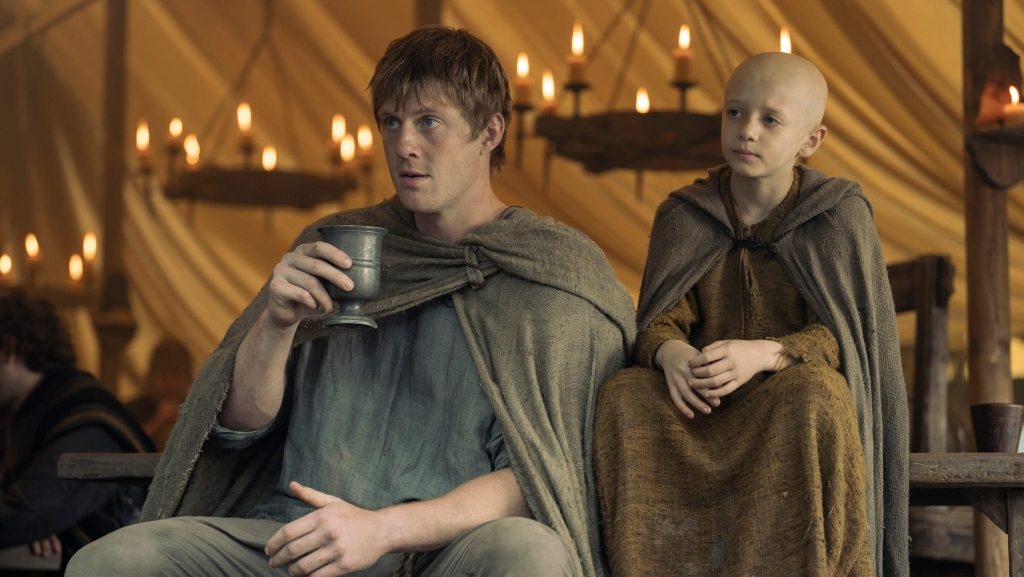
There’s a particular kind of satisfaction you only get when a season finale feels like a real ending. Not a pause. Not a “next week on…” cliffhanger stretched into a season cap. Just a clean final page that still leaves the door open.
Season one of A Knight of the Seven Kingdoms sticks that landing. The last episode doesn’t try to outmuscle the audience with spectacle. Instead, it gives Westeros something it doesn’t always allow itself: peace, closure, and the sense that these characters actually changed.
A Finale That Feels Complete
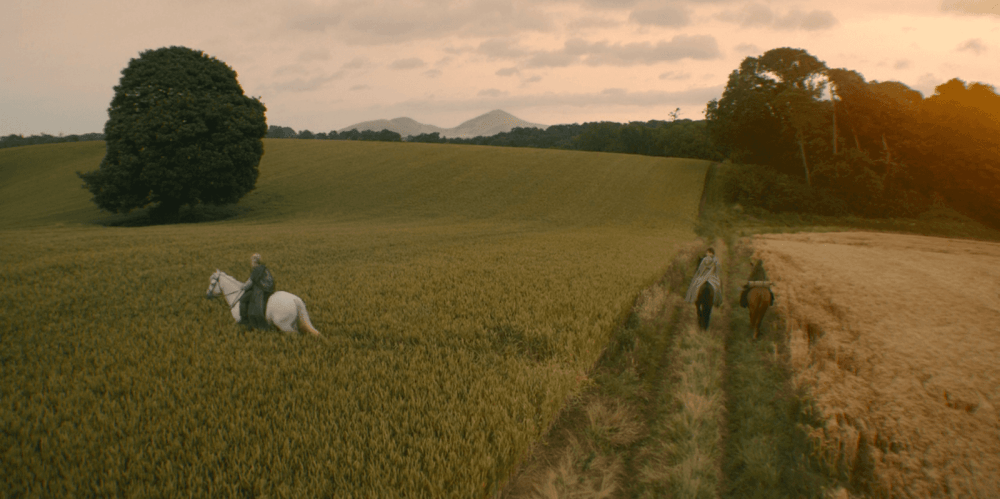
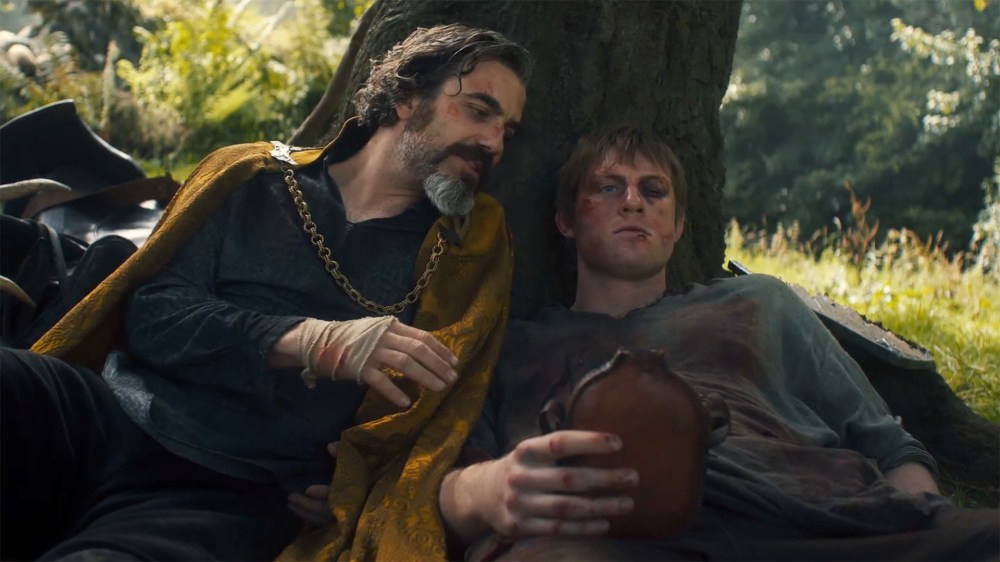
The best final beat is also the simplest one: Dunk and Egg riding off together. Two figures on a horse, moving away from Ashford and into the unknown, with a bond that now feels earned. It’s the kind of image that tells you everything you need to know about what this story is going forward.
What makes the finale work is that it treats “ending” like a responsibility. It checks in with the key players one last time and gives each of them either a clear evolution or a clear direction. It’s not that everyone gets a neat happy wrap, it’s that everyone feels like they’re leaving the season as someone slightly different than who they were when they arrived.
That’s why the season ends with motion that feels meaningful. People are taking action, but they’re taking it as new versions of themselves.
The Wolf and the Cub
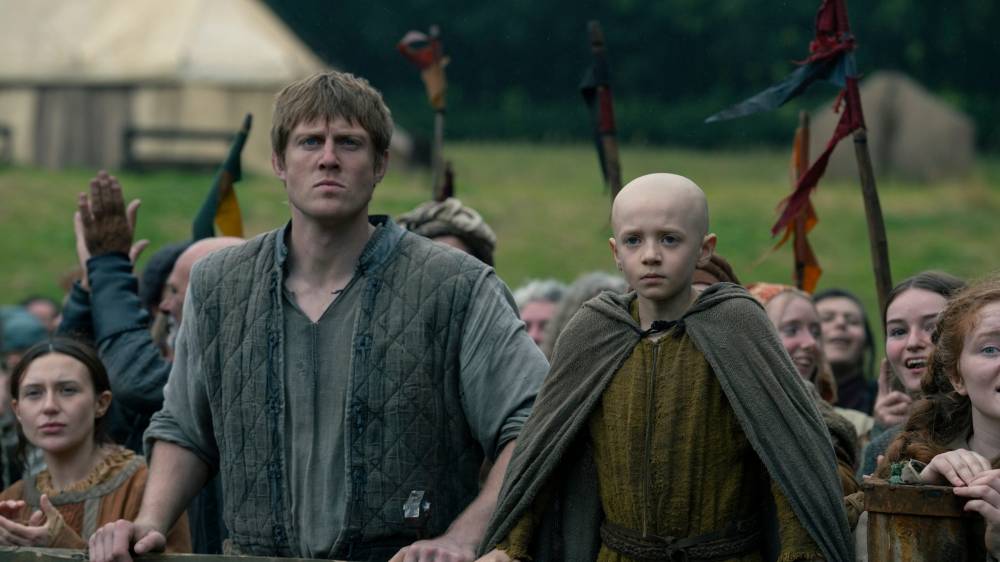
The show’s core is still Dunk and Egg, and the season does the work to turn them from a pairing into a brotherhood.
You can feel the “wolf and the cub” energy click into place the first time Egg needs help and chooses Dunk over blood. When Aerion is attacking Tanselle, Egg doesn’t run to his uncle or his father. He runs to Dunk. That choice matters. It’s not just a plot move, it’s trust. It’s safety. It’s Egg instinctively recognizing who will actually protect him when it counts.
Then the relationship flips and deepens. Egg gets Dunk in trouble, and Dunk ends up committed to a fight he never wanted. And what does Egg do? He goes out into the world, reads the room, plays the social game, and tries to gather support for Dunk’s Trial of Seven. That’s the partnership. Dunk is the muscle and the heart. Egg is the mind and the movement. They save each other in different ways, and the season keeps proving it.
By the time the finale arrives, the wandering-pair setup doesn’t feel like a new pitch for season two. It feels like the natural next step.
A Fairy Tale Tone in a World Built on Blood
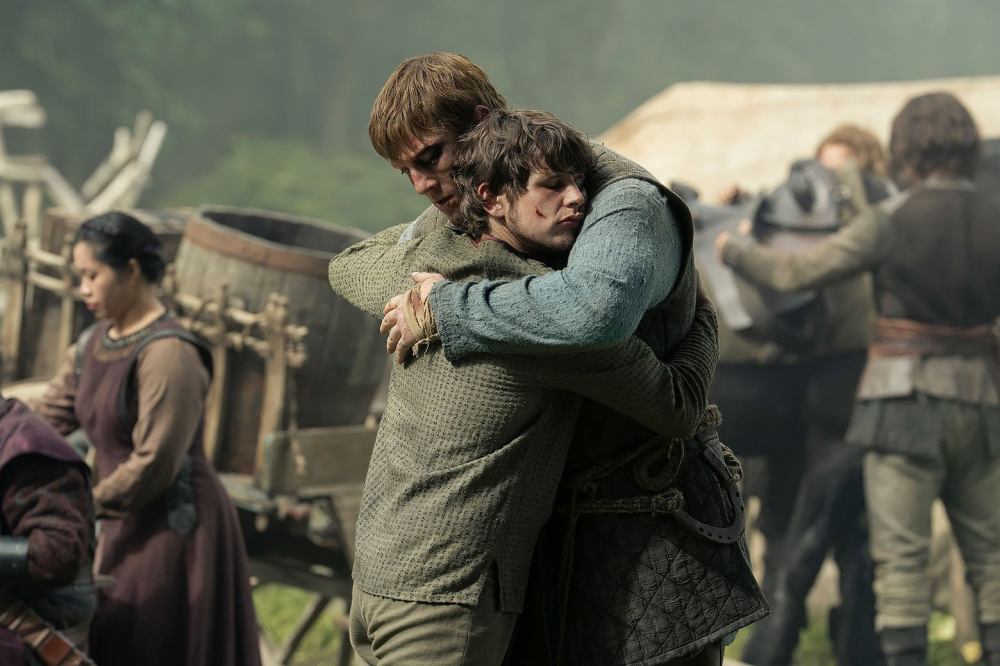
This season doesn’t feel like a chapter of English history reenacted with dragons removed. It feels closer to a story you’d hear by firelight.
Honor matters here. Ideals matter. Knights are still allowed to mean something, at least to the people who need them most.
The small folk and the outcasts are the ones who cling hardest to the idea of knighthood as a moral calling: Dunk, Tanselle, Steely Pate, Arlan of Pennytree. They believe that doing the right thing counts for something, even if the world doesn’t reward it. Meanwhile, the highborn characters often feel like they’ve forgotten that the whole point of the “knight” myth was supposed to be protection, not status.
That contrast is where the show finds its King Arthur energy. Not because it pretends politics don’t exist, but because it lets moral choices be real choices again.
The season’s defining example is still Dunk defending Tanselle. The smart move would have been to look away. The politically sound move would have been to stay quiet. Instead, he acts. It’s messy. It’s impulsive. It’s “baser instincts” in the best possible way, the instinct to protect someone who’s being hurt. And in Westeros, that kind of goodness is almost radical.
That’s why Dunk works as a lead. He’s a Boy Scout, sure, but not a naïve one. He’s good in a way that costs him. He’s good in a way that gets him punched back.
Seeds Planted Without Turning Into Homework
One of the season’s smartest choices is that it keeps the story small while still letting history cast a shadow.
You can feel the future in quiet ways, especially in how the show frames the Targaryens after the loss of dragons. Without that unchallenged fear factor, they have to be politically mindful. They can’t just rely on being “more” than everyone else. And the show makes it clear that they’re not as settled as they want to appear. The family still carries old fissures from civil wars like the Dance of the Dragons and the Blackfyre conflict, and even in a little place like Ashford Meadow, you can sense how fragile legitimacy really is.
Baelor’s absence hits like the loss of a steady hand. The weight shifts to Maekar, a man used to living in someone else’s shadow, and the show doesn’t need to spell out every consequence to make it feel heavy. The whispers alone are enough. Did he do it on purpose? Will people believe him either way? That kind of doubt doesn’t stay contained. It spreads.
The finale also does a strong job saying goodbye, or at least “see you later,” to characters like Ser Lyonel Baratheon and Ser Raymun Fossoway without getting lost in future-casting. You get a touch of where paths might lead, not a lecture.
Lyonel’s arc is the standout here. He leaves the season feeling like a man who just did the math and didn’t like the answer. There’s a simmering realization that the Targaryens didn’t “risk more,” they just had more protection. That resentment reads like the start of something that will echo through generations. Not as a direct line to one specific war, but as the slow cultural shift where rebellion starts to feel imaginable.
The Humor Sometimes Steps on Its Own Foot
This is the one place the season occasionally undercuts itself.
When the comedy comes from character and dialogue, it works. Dunk and Egg joking as they become friends, then brothers, is the show at its warmest. The tug-of-war sequence and the festival texture make the world feel smaller in the best way, like Westeros briefly shrank down to a single meadow.
But sometimes the show leans into broad, crass gags that feel like they’re trying to convince the audience this is a comedy, rather than trusting the humor already baked into the characters. The early diarrhea bit and some of the fart-joke style punctures don’t just miss, they weaken scenes that are trying to build real tension or stakes. It’s that classic problem of undercutting seriousness right when you’ve finally earned it.
The fix doesn’t require removing humor. It just requires letting it be smarter, and letting it come from who these people are, not from a sudden need to release pressure with the bluntest tool available.
The 30-Minute Episodes: Right Choice, Real Trade-Off
The weekly 30-minute format is a double-edged sword.
On one hand, it can feel like a long wait between bites, especially if you’re used to hour-long HBO Sundays. On the other hand, stretching this story to an hour just because “that’s what prestige TV does” would risk turning it into the TV equivalent of overextending The Hobbit. This tale is lean by design. It works because it moves like a story told aloud, not because it tries to fill every corner with extra plot.
The fact that it leaves you wanting more is partly the point. That hunger is a compliment, even if it’s frustrating during the week-to-week run.
What I Hope Season 2 Keeps
If there’s one thing season two needs to protect at all costs, it’s the chosen-family warmth. Dunk and Egg’s bond is the engine, and the show nailed the feeling that Egg’s real brotherhood might not be with the brothers he was born to, but with the one he chose on the road.
Let the world expand. Introduce the new faces. Bring in the weird little book joys. Just keep the heart intact.
Because season one proved something important: Westeros doesn’t always need to be sprawling, brutal, and impossibly tangled to be compelling. Sometimes it just needs a knight, a squire, and a long road ahead.

 gfpods.com
Leave a comment