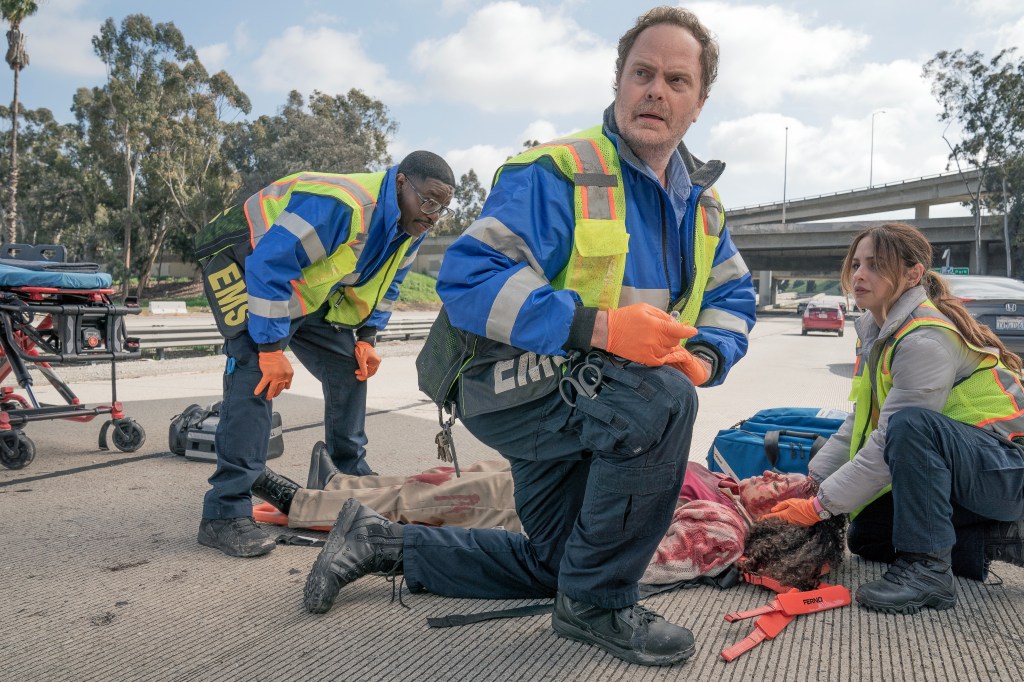
There’s a version of this story that plays like a standard “one last shift” comedy, with a grumpy veteran, an eager newbie, and a string of escalating disasters that end in a tidy lesson. Code 3 does not really want to be that movie. It uses the buddy setup as a delivery system for something sharper: a 24-hour ride-along that’s funny in the way real coping humor is funny, then immediately a little ugly, then suddenly devastating.
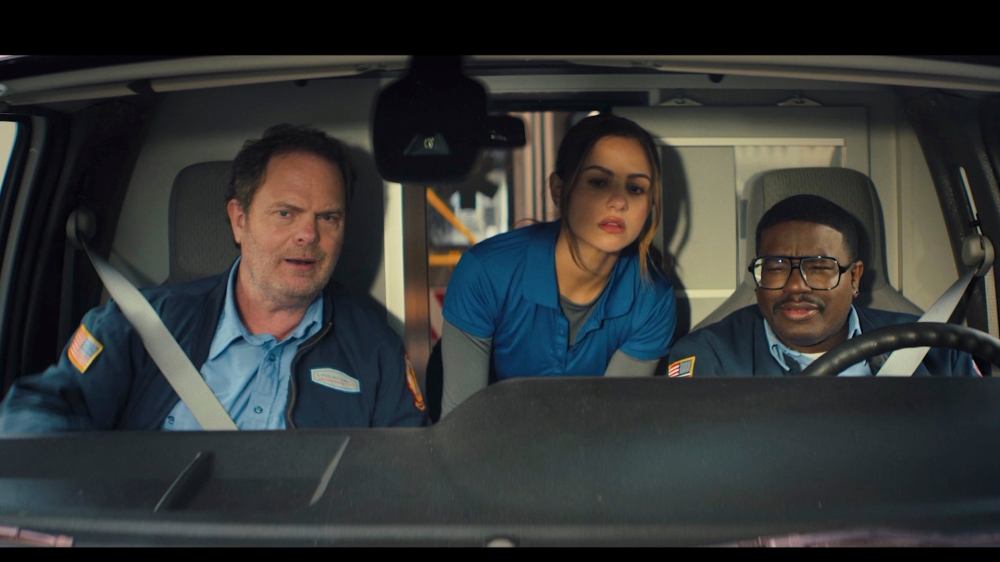
The premise is simple. Randy is a longtime paramedic running on fumes, ready to step away for good. He’s paired with his steady partner, Mike, and assigned a ride-along, Jessica, who arrives with that early-career confidence that the “right” choices always exist if you care enough. The movie’s best trick is how quickly it makes that confidence feel both admirable and naive without turning Jessica into a punchline. Instead, it lets the calls do the talking. Every stop chips away at the idea that emergency work is mostly bravery and clean moral wins. Sometimes it’s triage, sometimes it’s bad options, and sometimes it’s watching a system shrug.
Performances That Keep It Grounded
Rainn Wilson carries Randy with a mix of bite and exhaustion that never reads as “movie crank.” The irritability feels earned, and when the film lets him crack, it lands because you can see how long he’s been holding it together with duct tape and gallows humor. Lil Rel Howery is the real secret weapon here, not because he’s the “funny one,” but because he gives Mike an everyday steadiness that feels like survival strategy. Aimee Carrero makes Jessica’s arc believable: she starts with judgment, then shifts into understanding without the movie forcing a single big speech to justify it.
The supporting cast pops in ways that add texture instead of sketch comedy noise. Yvette Nicole Brown brings warmth and pressure as a supervisor who has to keep the machine moving even when it’s chewing people up. Rob Riggle is used well as the face of hospital friction, not as a cartoon villain, but as a reminder that everyone in this pipeline is overloaded and protecting their own corner.
What The Movie Is Really Saying
At its core, Code 3 is about what chronic stress does to passion. Randy doesn’t hate the work, which is exactly the problem. The film treats burnout like a slow leak, not a sudden breakdown, and it keeps pointing back to the same root: it’s not just “a hard job,” it’s a hard job inside a system that routinely fails the people doing it and the people who need it.
That’s where the movie’s critique of heroism hits. It’s not anti first responder, it’s anti the romanticized version of first responders that lets the world clap, call them heroes, and then move on without paying them, staffing them, or backing them up. Code 3 keeps insisting on the humanity underneath the uniform: the fatigue, the frustration, the dark jokes, the compassion that has to be rationed because there’s another call waiting.
The Balance Of Tone (Mostly) Works
The film walks a tightrope between comedy and heavy drama, and it mostly stays upright. When it stumbles, it’s usually because the pacing can feel like the night is attacking the characters in set pieces rather than letting some moments breathe. But even that has an odd authenticity, because the whole point is the churn: no pause, no reset, just the next problem.
More than anything, the movie feels like it’s trying to make the audience sit in discomfort for a minute and then do something with it. Not guilt. Recognition. And ideally, the understanding that compassion is not enough without structural support.
When Fandom Portals talked about Code 3, the conversation kept circling the same idea: this movie lands because it recognizes how burnout grows out of chronic stress, especially when you care deeply about the work. It frames burnout as a real, ongoing issue for EMS workers, and it points straight at systemic failures in emergency services instead of pretending everything can be fixed with grit. Randy becomes the clearest example of that push-pull between passion and burnout, while Jessica’s evolving perspective gives the audience a way in as she learns what the job actually demands. The community reaction makes sense too, because the film’s emotional resonance comes from treating EMS workers like people, not icons, and by pushing back on the romanticized “hero” framing that can hide the need for real support. Underneath it all, the story argues that compassion has to be paired with structural help, and that meaningful change has to be systemic, not just personal.
Where to watch: It’s streaming on Hulu now, and it’s also available to rent or buy on major digital storefronts.









 gfpods.com
Leave a comment