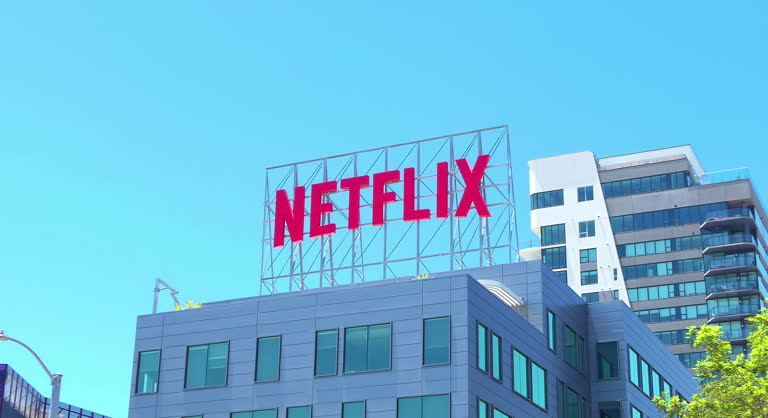
Netflix just made its biggest move yet in the fight for Warner Bros Discovery. A new regulatory filing shows the streamer has amended its offer to make the deal fully cash, while keeping the overall purchase price the same. Warner Bros Discovery’s board backed the revised agreement unanimously.
So what changed? The money, not the math.

What Netflix Changed and Why It Matters
Under the updated agreement, Netflix would pay Warner Bros Discovery shareholders $27.75 per share in cash for the company’s studio and streaming businesses, including the film and TV studios, the larger content library, and HBO Max. That replaces the earlier structure that blended cash with Netflix stock.
The timing is not subtle. Netflix’s share price has slid since the merger was announced in early December, and the old offer relied on a stock component that was protected by a floor price. When the stock drops under that floor, the original structure starts to feel less like a sure thing and more like a rolling negotiation.
Switching to all cash removes that uncertainty. For shareholders, it is simpler. For the board, it is easier to defend. For Netflix, it is a way to keep the deal from getting dragged around by its own stock chart.
What Warner Bros Discovery Shareholders Get
The headline is the cash payout, but the other key piece is what investors still keep.
Warner Bros Discovery is planning a separation that creates a new company, Discovery Global, which would hold the legacy TV assets and Discovery+ alongside properties like CNN and TNT Sports. Warner Bros Discovery’s argument is that Netflix’s deal looks better than the competing bid because shareholders would still receive a stake in that separately traded company after the split.
In plain terms, Netflix is buying the part of Warner Bros Discovery that most resembles a modern entertainment growth engine, while the cable heavy segment gets carved out into its own lane.
The Discovery Global Valuation Debate
The filing also pulls back the curtain on how the board and its advisers are thinking about Discovery Global’s value.
Their valuation work produced a wide spread, with a low end of about $1.33 per share and a high end of $6.86 per share under a scenario where Discovery Global becomes involved in a future deal. That range is doing a lot of work in the narrative. Warner Bros Discovery wants investors to see the spin off stake as real value that sits on top of Netflix’s cash. Rival bidders want investors to see it as dead weight dressed up as upside.
This is where the argument stops being about who loves movies more and turns into a balance sheet knife fight.
Paramount’s Competing Bid and the Courtroom Side Quest
Paramount Skydance has been pushing a competing $30 per share all-cash bid, and it has been aggressively challenging the Netflix deal in public and in court.
Paramount has argued that the Discovery Global piece is effectively worthless, which is a convenient way to make Warner Bros Discovery’s “you keep the spin-off stake” pitch sound like smoke and mirrors. Paramount also tried to force faster disclosure of internal valuation details so investors could compare offers more cleanly. A Delaware judge rejected the request, finding Paramount had not shown it would face irreparable harm without the expedited process.
Warner Bros Discovery, for its part, is sticking to a consistent message: Paramount’s price is not enough once you account for the risks, costs, and uncertainty around execution.
Debt, Leverage, and Why Netflix’s Credit Rating Keeps Coming Up
One of the most interesting parts of the board’s case is how heavily it leans on financial risk, not just price.
The filing argues that a Netflix combination would leave the merged company with roughly $85 billion in debt, compared with about $87 billion under a Paramount scenario, while also carrying a lower leverage profile. It also highlights Netflix’s investment-grade credit rating versus Paramount’s junk-rated bonds, framing Netflix as the buyer more likely to close the deal cleanly and refinance on better terms if needed.
That may sound like inside baseball, but it matters for fans too. When a company is stretched thin, it tends to get conservative fast. That is when budgets tighten, riskier projects get fewer greenlights, and the content strategy starts to feel like it was designed by a committee that is afraid of surprises.
What This Could Mean for Streaming and for Viewers
If this goes through, it is a serious reshaping of how streaming competition works.
Netflix would be pairing its scale and global distribution with Warner’s studio pipeline and HBO’s brand and library. On paper, that is a monster combination for subscriber growth and retention. The big open questions will be practical ones:
How does HBO Max fit inside Netflix’s product without diluting what makes HBO feel premium?
What happens to licensing strategies, theatrical windows, and talent deals when one company controls so much of the pipeline?
How tough will regulators be about market power in both streaming and production?
The all cash revision does not answer those questions, but it does tell you something important. Netflix and the Warner Bros Discovery board are prioritizing certainty and speed right now. They are trying to keep the decision focused on closeability and clean value, not on whose offer looks prettier on a slide.
What Happens Next
This is still a live contest. Paramount has not gone away, and the pressure campaign clearly is not over. But the amended structure is a strong counterpunch because it takes away the easiest critique of the original deal.
At this point, the real story is not just who wins. It is what kind of entertainment giant comes out the other side, and whether that giant behaves like a studio, a tech platform, or something in between.






 gfpods.com
Leave a comment