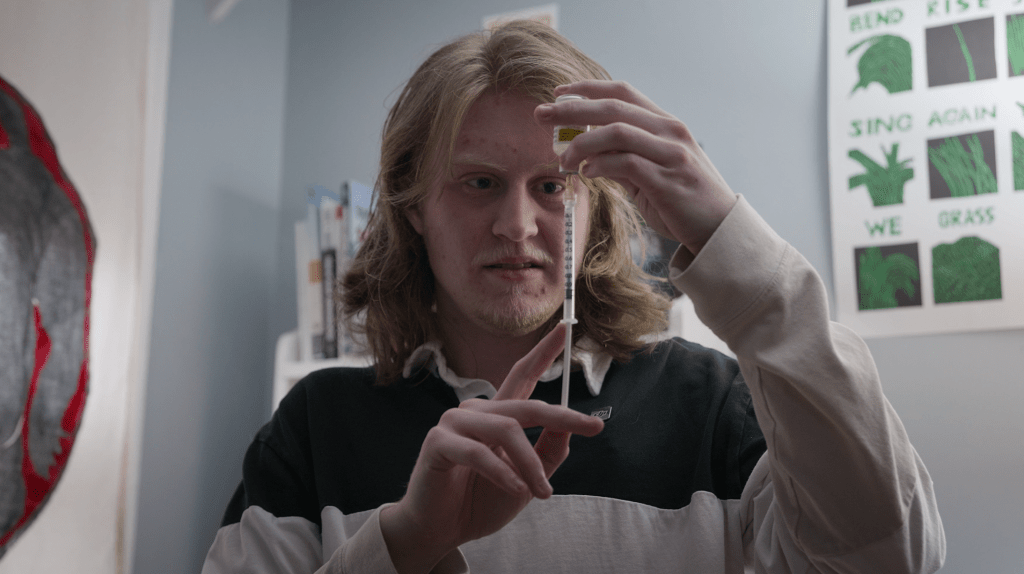
The Art of Being Seen is a documentary that follows Cal Russell, a transgender actor on UConn’s campus, as he navigates rehearsals, performances, and the daily rhythm of being part of a theatre community. It’s less interested in “explaining” Cal and more interested in letting you spend time with him, watching what it looks like when someone is building a life that fits.

Cal comes across as charismatic, driven, and thoughtful in a way that suggests genuine lived experience. There’s a caution there, but it’s paired with confidence, like someone who knows who he is and also knows the world doesn’t always meet that truth with ease. The film’s best moments are the ones that trust Cal’s presence and let the camera hang back long enough for those small, real interactions to do the emotional heavy lifting.
The standout thread is Cal’s dynamic with his friends in Page to Stage. The documentary captures him not just as “the subject,” but as a central pillar of the group, someone who belongs there in a way that isn’t performative or conditional. And then you get the moment where Cal mentions he’s transgender, people are surprised, and the group immediately accepts him without turning it into a big speech or a debate. That “non-issue” reaction is quietly powerful. It doesn’t feel like the film is trying to pat itself on the back. It just shows a room full of people choosing warmth as the default, and it’s genuinely comforting to watch.
That’s where the documentary earns its title. Being seen here is not about a spotlight or a dramatic reveal. It’s about being known and still being safe.
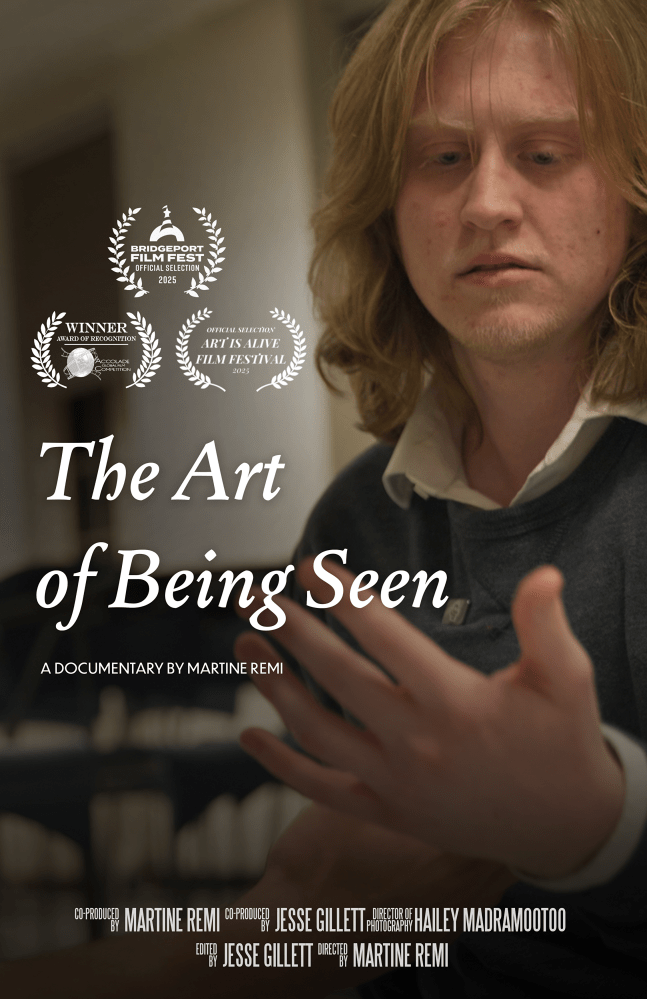
Where the film stumbles a bit is structure. There’s an overarching narrative goal tied to Cal’s last performance at the studio, but it often sits so far in the background that you can forget it’s supposed to be the spine. The result is that the documentary sometimes feels like a collection of meaningful moments (many of them great) without a strong sense of build. When you finally return to that end goal, it can land more like “oh right, we were heading here” than the kind of inevitable emotional payoff you want from a final performance.
It’s not a huge fix, either. The film already has the material. It just needs a clearer throughline. Even simple choices like revisiting that final performance earlier and more often, giving it a visual countdown, or using it as a recurring anchor between sections would make the ending hit harder and help the audience feel the journey tightening as it goes.
Still, what sticks with you is the tone: joyful, supportive, and unafraid to say that trans people deserve to exist loudly, publicly, and without apology. The documentary doesn’t chase tragedy to justify its importance. It makes its point by showing community, artistry, and a young person moving through the world with both care and courage. That’s not just uplifting, it’s necessary.








 gfpods.com
Leave a comment