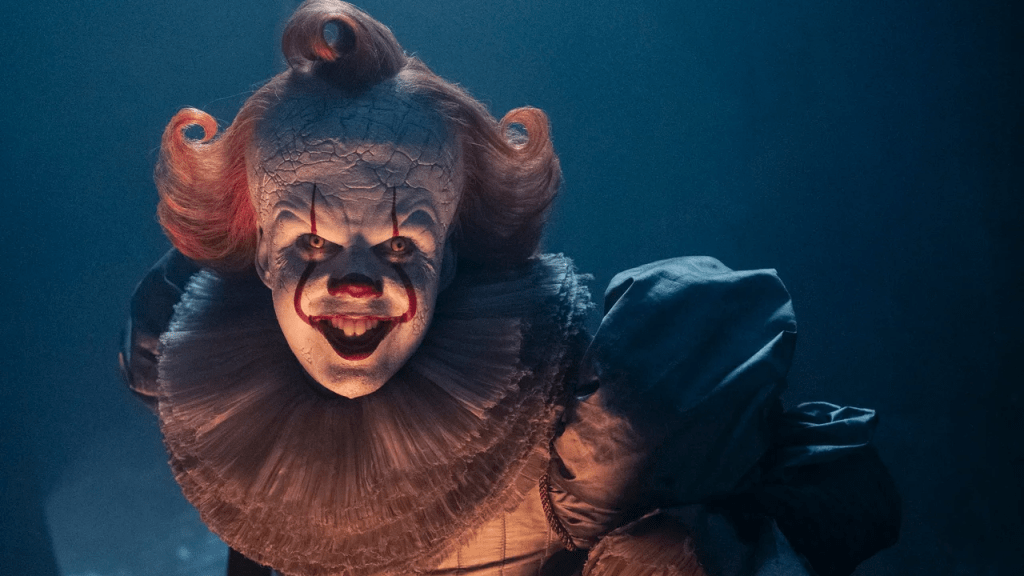
I landed around an 8.5 to a 9 on Season 1, with the back half brushing up against a 10. And I think the reason is simple: this show is at its best when it remembers Derry is the monster, not just the address. The season starts like it’s laying railroad track in the dark, careful and a little slow, but once it hits the Black Spot arc and stops pretending it’s “just” a spooky prequel, it becomes something that can stand on its own while still feeling like it belongs in Stephen King’s world.
Welcome to Derry has a clear priority: character arcs first. The mythology is there, the canon is there, the Pennywise menu of horrors is absolutely there, but the strongest episodes are the ones that keep dragging you back to the same question: what does living in this town do to you, and what does it make you capable of?
The Slow Start Is Real, but It’s Not Aimless
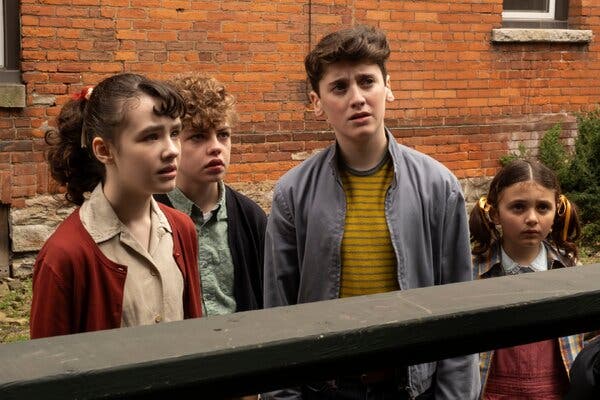
The early stretch has a frustrating kind of patience. It’s not that nothing happens, it’s that the show keeps widening the circle before it tightens it. You can feel it building its web: kids moving through a 1962 Derry that looks sunlit on the surface and rotten underneath, adults carrying trauma like it’s a second job, and this creeping sense that the town’s violence is not an “event,” it’s a system.
That said, the pacing does test you. Some storylines play like they’re auditioning to be the main plot, especially the military thread. It has moments where it works as Cold War-flavored paranoia, but it also burns screen time that the kids could have used. When the season finally commits to its emotional core, you can’t help thinking, “Yeah, this was the show the whole time. Just be that show.”
The Kids and the Time Period Are the Secret Weapons
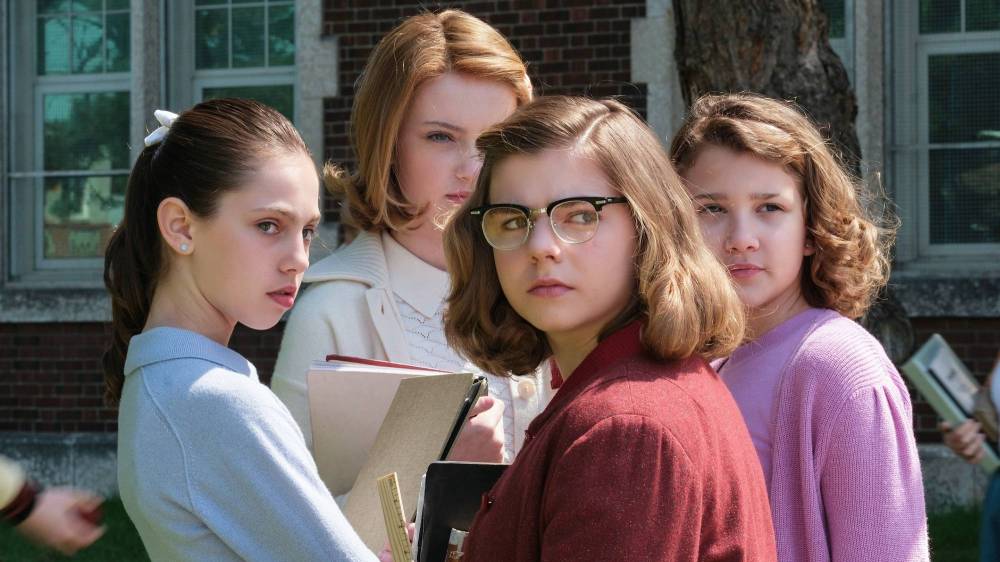
The best thing Season 1 does is make 1962 matter. This is not wallpaper. The era shapes the rules of what people will say out loud, what they’ll ignore, and what they’ll justify. And the younger cast brings a real specificity to it, not in a “kids are so brave” way, but in how their friendships form under pressure and how quickly they’re forced to grow up.
Lilly, Ronnie, Marge, Will, and Rich feel like actual kids with actual fears, not just plot tokens being marched toward a sewer grate. Their relationships are the season’s heartbeat, especially when the show frames their bond less like a cute found family and more like survival. Even when the writing gets busy, the performances keep pulling the story back down to earth.
On the adult side, LeRoy and Charlotte carry the kind of grounded grief that makes the horror hit harder. The show is at its most brutal when it’s not asking “what does Pennywise do,” but “what does Derry convince you is normal.”
The Black Spot Episode Is the Season’s Point of No Return
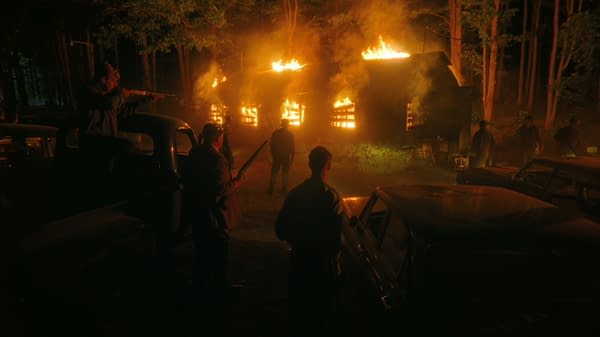
If you’re a King reader, you already know the Black Spot isn’t optional. It’s one of the most haunting pieces of Derry’s history, and the show makes it the anchor of the entire season. The way it adapts the burning is nasty and immersive, and it does not treat the tragedy like lore homework. It treats it like a wound the town has been bleeding from for decades.
The big swing here is making the hate feel as real as the supernatural. The Maine Legion of White Decency aren’t “scary because masks,” they’re scary because you’ve seen versions of them in real life. And then the show twists the knife by trapping the kids inside that nightmare, forcing their story to collide with Derry’s larger violence in a way that changes them permanently.
Rich’s death lands because it’s not written as a grand heroic farewell; it’s written as the kind of sudden, unfair loss that defines childhood trauma. The season never fully recovers from it, in a good way. It’s the moment where the show stops flirting with tragedy and actually commits to it.
And this is also where Dick Hallorann becomes the season MVP.
Dick Hallorann Is the Best Addition to This Corner of King’s World
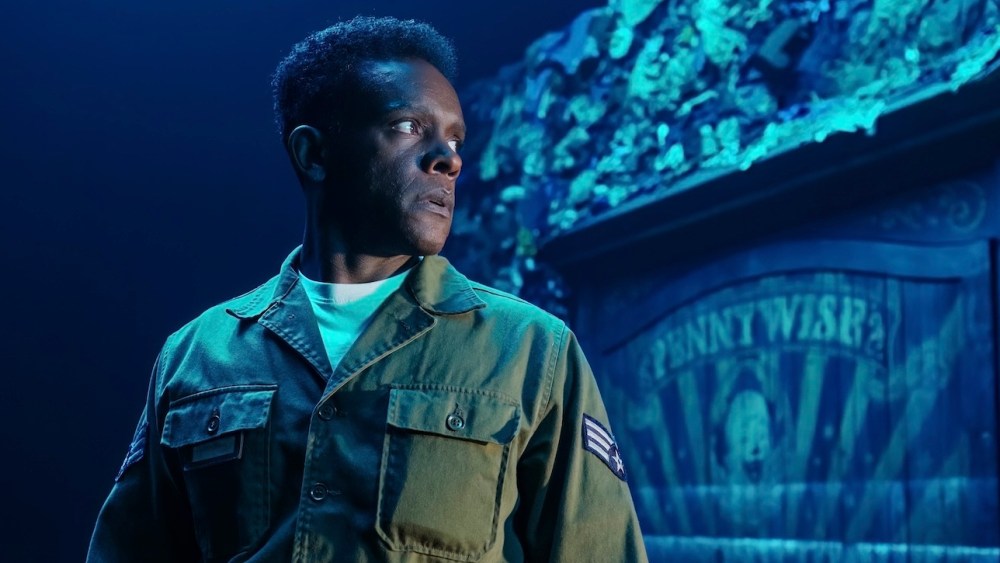
Chris Chalk’s Dick Hallorann is the character who makes the show feel bigger than a “Pennywise origin story.” The season uses him as a bridge between the human and the cosmic, but it also gives him a personal journey that tracks: a man trying to drown out his gift, then learning he can use it to help people, even if it breaks him.
The Black Spot episode gives Dick an entire moral pivot. He’s not just a guy who knows too much; he’s someone choosing to act when it would be easier to shut down. By the finale, you buy that this is the beginning of the Hallorann we recognize, without the show needing to wink at the camera every five minutes to remind you what franchise you’re watching. Even the quieter beats, like the way the season tees up his future in hospitality, feel like a dark little joke that only King fans can fully appreciate.
Pennywise Arrives, and Everything Sharpens
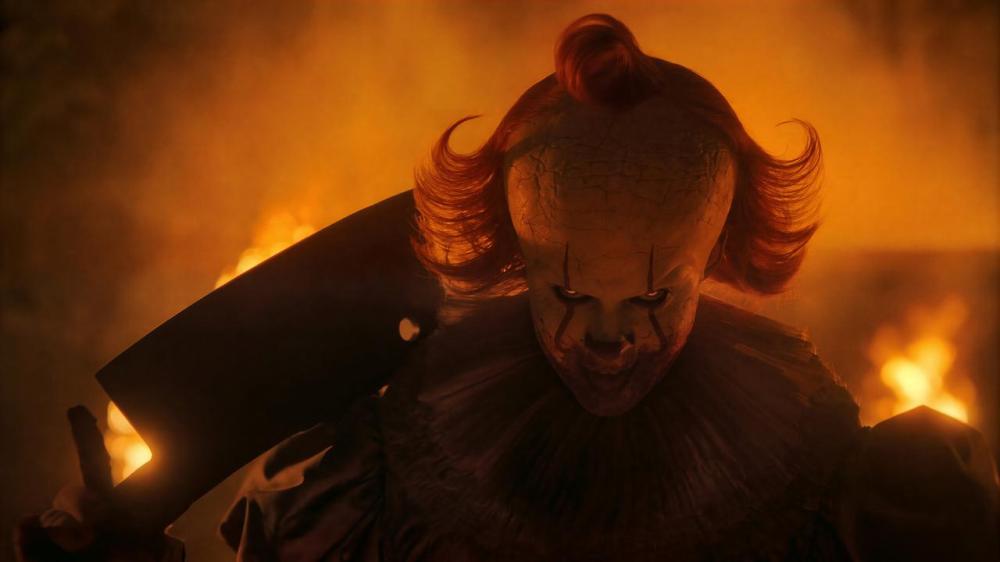
When Pennywise is fully in play, the show levels up. The tension gets cleaner. The imagery gets bolder. The characters get pushed harder. Bill Skarsgård doesn’t just “return,” he changes the rhythm of the series.
What I liked most was that the season didn’t try to outsmart Pennywise by over-explaining him. It gives you new angles, sure, but it still treats him like something ancient, petty, and cruel. The finale even goes full mythic with how time works for him, and instead of feeling like a lore dump, it feels like a threat.
The fog is a good example. It looks like a familiar King reference at first glance, but the show’s team has been pretty direct that it’s not that. In context, it plays like Derry’s atmosphere becoming an extension of Pennywise’s emotional state, like the town itself is reacting to the creature’s anger and hunger.
And then the finale goes big.
“Winter Fire” Goes Loud, Weird, and Mostly Nails It
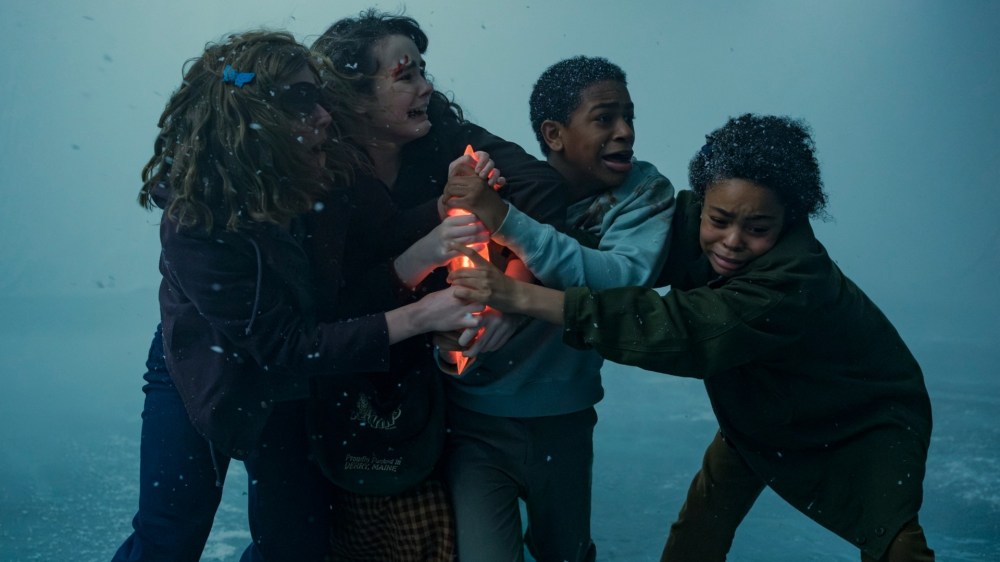
The Season 1 finale is spectacle-heavy, but it’s the rare kind of spectacle that still bothers to bring feelings with it. Pennywise essentially turns Derry into a frozen panic room, herds the underclassmen of Derry High like it’s a nightmare school assembly, and forces everyone into a last-chance sprint toward the show’s central containment solution.
This is also where the military plot finally shows its hand, and honestly, it’s the weakest payoff of the season. The idea of trying to point a cosmic predator at your enemies is a fun pitch in a writer’s room, but on screen, it plays like hubris without enough intelligence behind it. General Shaw’s “control” collapses into trigger-happy chaos, and the damage lands hardest on the characters you actually care about.
Still, the finale earns its biggest moments. Marge getting a glimpse of her future is a great canon-heavy twist, especially because it isn’t just an Easter egg. It’s weaponized. Pennywise is not reminiscing, he’s strategizing. The reveal that he doesn’t experience time the way humans do, and that he’s working backward to prevent his own defeat, is the kind of mythic escalation that could have felt goofy, but it’s delivered like a threat that’s already in motion.
And I loved that the finale makes room for the emotional gut punch, not just the monster fight. Richie’s return, Rich’s lingering presence in the story, Dick pushing himself past the brink, and the kids still being kids even while they’re saving the town, it all hits because the show has been investing in these arcs all season.
The result is what I wanted from this series in the first place: not just “more Pennywise,” but a Derry story that feels like it has weight.
The Post Credits Coda Is Pure King Style Cruelty
Just when the season lets you exhale, it reminds you what Derry does to people.
The Ingrid Kersh material is nasty in the right way, especially when you connect the dots on her role in feeding Pennywise. And jumping ahead to 1988 for the Elfrida Marsh tragedy and the Beverly cameo is the kind of continuity bridge that feels earned, not gimmicky. It also quietly underlines the show’s thesis: you don’t beat Derry. You survive it, if you’re lucky. And even then, it stays with you.
Season 1 isn’t perfect. The early pacing drags, the military thread doesn’t fully cash its checks, and a couple of effects moments earlier in the season are rough enough to pull you out of it. But when this show is on, it’s really on. The Black Spot episode is the turning point. Dick Hallorann is the emotional core. And once Pennywise steps out of the shadows, Welcome to Derry stops feeling like supplemental material and starts feeling like its own nightmare you can’t shake.






 gfpods.com
Leave a comment