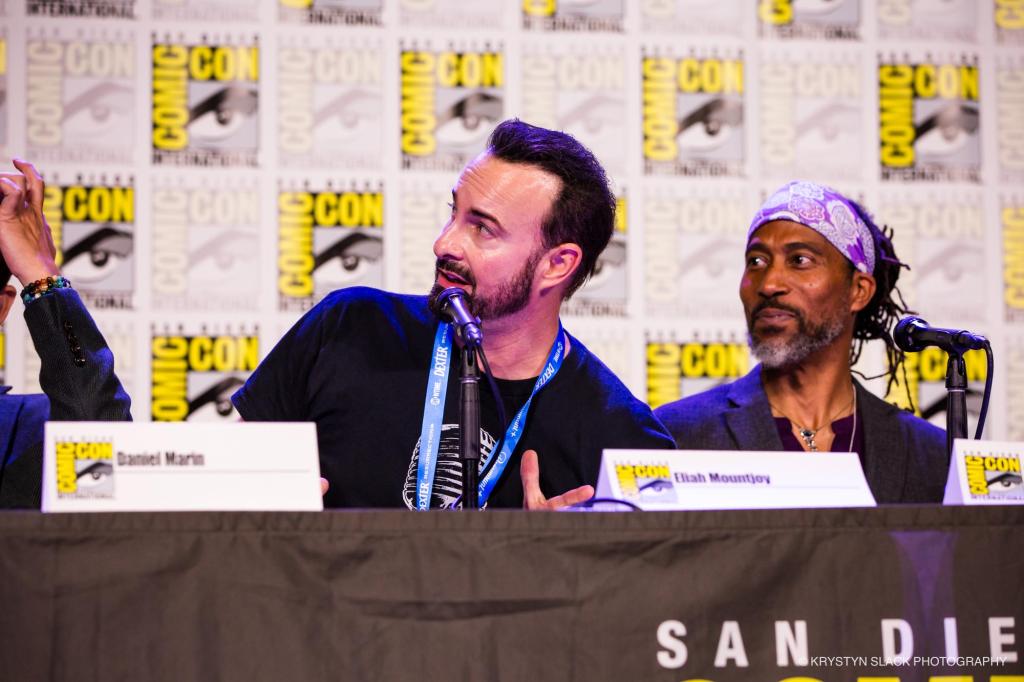
We sat down with Eliah Mountjoy, the voice of Winter Soldier in Marvel Rivals, to talk about landing the role, working in fast-moving game sessions, his roots in dubbing, the convention circuit, and the practical habits that keep him working.
Getting the call for Winter Soldier
Eliah didn’t know he was auditioning for Bucky at first. Like most game castings, everything arrived under a codename to protect secrecy. Only at callback did artwork tip the truth, and the task became clearer: honor what fans know while bringing his own read. He respected Sebastian Stan’s take, but he wasn’t trying to voice-match. Bucky doesn’t have a single fixed vocal print, which gave Eliah room to lead with character over mimicry.
What drew him in is the duality. Bucky is lethal and disciplined, but he’s also a century-old survivor carrying memories he can’t fully access and trauma he can’t fully bury. Eliah wanted that quiet control and lived-in fatigue to sit under the lines so the soldier felt human, not theatrical.
Inside the booth
All of Marvel Rivals’ lines were cut in isolated sessions. No ensemble mics, no partner to volley with. That means an actor has to “speak to somebody who isn’t there” and still make it feel personal. Direction matters, and Eliah credits the Bright Skull team for context that keeps reads honest: this line is mid-battle, push it; this one is casual banter, relax and connect.
Speed is the norm. In game work you meet a line seconds before you say it. Getting script pages a day early is rare, but when it happened on Rivals it helped him map where Bucky was emotionally so choices stayed consistent across efforts, barks, and quips.
Why Bucky sounds so controlled
Off mic, Eliah spent years training with ex-Navy SEALs, kung fu instructors, and stunt coaches to make tactical characters feel credible. That time shaped his approach to Winter Soldier: calm baseline, then a clean, athletic ramp when combat spikes. He wanted the kind of presence you see in real operators who know exactly what they’re capable of and don’t have to prove it in every sentence.
The Marvel Rivals family
If you’ve seen the Rivals cast at cons or on streams, that chemistry is real. Eliah and castmates like Jordan (Hawkeye) and Daniel (Namor) bonded while doing promo and community videos together. That friendship spilled into meetups and online sessions, where they push for a positive, cooperative fan space that mirrors the team-play of the game.
Dubbing taught him timing and intent
Eliah also works heavily in anime and live-action dubbing. The hardest part there is timing: you have a very specific window to deliver a very specific idea. He doesn’t try to replicate the original actor’s exact sound. He listens for intent, then translates the feeling into his own voice while staying inside the lip-flap and scene rhythm. It’s laser-focused work for everyone in the room, from director to script adapter.
On AI: use the tool, protect the art
AI is here. Eliah’s line in the sand is simple: don’t use it to copy or repurpose a performance without consent and fair pay. He can imagine workflows where limited AI saves time on pick-ups and rewrites if actors are compensated, but he worries about the jobs around the mic and the risk of flattening human nuance into the uncanny valley. The goal is to keep people at the center of the art while figuring out practical guardrails.
Straight talk for new voice actors
Eliah’s advice cuts through the noise:
- Voice acting is acting. Take acting classes and improv so you can communicate a shrug, a wink, or an entire backstory using only your voice.
- Start. Don’t wait for perfect timing. Know why you want this, because the path includes uncertainty, rejection, and long stretches without easy wins.
- Love the process. He quotes a classic lesson: “Love yourself in the art, not the art in yourself.” The craft has to matter more than the spotlight.
- Understand the medium. If you want games, play them or at least watch cutscenes and gameplay. You’re talking to a player who needs to act on what you say.
- Bring your voice. Imitations have their place, but most jobs want characters that sound like real people only you can create.
- Be professional in the booth. Take direction fast, keep files tidy, deliver clean audio, and make it easy for teams to work with you again.
Why he resonates
Eliah brings character work and life experience to roles that could read as one-note in the wrong hands. He talks about modern mythology and how these stories help people make sense of their own choices. That perspective shows up in Bucky’s measured cadence, in the way banter still carries weight, and in his belief that communities around games can choose cooperation over cynicism. It’s not just a performance. It’s a point of view on how to show up.









 gfpods.com
Leave a comment