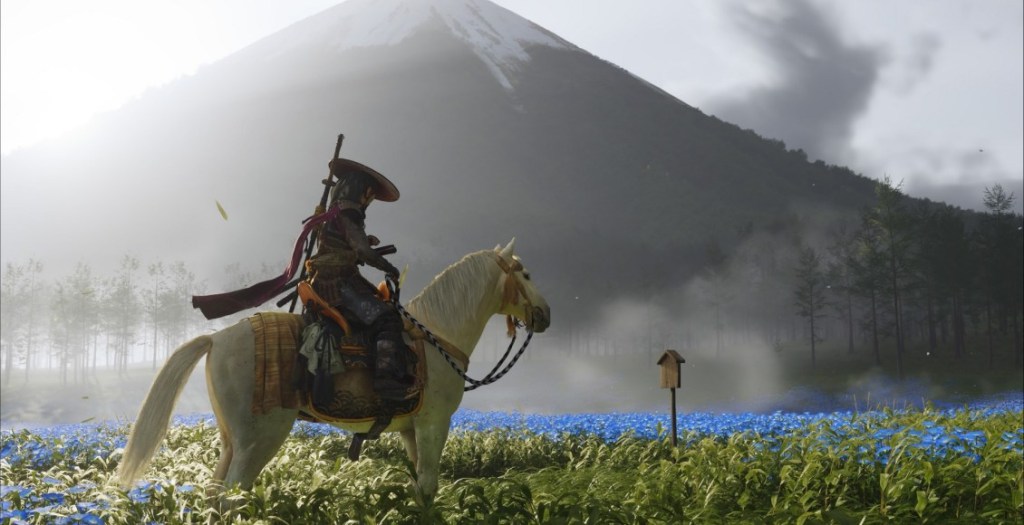
Ghost of Yōtei opens like a film that happens to hand you the camera. The follow up to Ghost of Tsushima trades sweeping invasion drama for a tighter, character-first revenge tale set around Mount Yōtei in Ezo, 1603. It is a PlayStation 5 exclusive from Sucker Punch, and it arrived on October 2, 2025. Those basics matter because they explain the game’s confidence. This is a studio returning to familiar rhythms with a new lead and a fresh setting that begs to be framed in close-ups.

Cinema in motion
Plenty of games use cinematic as a compliment. Ghost of Yōtei treats it like a rulebook. Duels open on measured stillness, blades meet with weight, and the camera gives your inputs room to land. The northern sky is more than a backdrop. Weather rolls across the ridges in ways that shape the mood, from hard blue dawns to nights where lanterns carve islands of warmth into snow. The world wants to be photographed, and the composition often holds just long enough for you to feel why. Sucker Punch’s official materials call out a focus on PS5 features and presentation, and in play it comes through as clarity rather than spectacle.
The setting does a lot of heavy lifting. Moving the series north to Ezo changes the color palette, the architecture, and who the story belongs to. Yōtei’s slopes, lacquered shrines, and lakeside villages are laid out with a director’s eye for negative space. Small touches, like flurries spinning off a torii gate or the long creak of a temple door, make even quiet walks feel staged with intention. It reads like a jidaigeki shot on location, then handed to you with the request to keep the shot honest. The period and place are not window dressing either, since the plot anchors itself to local power struggles and how violence ripples through communities.

A lead performance that carries the cut
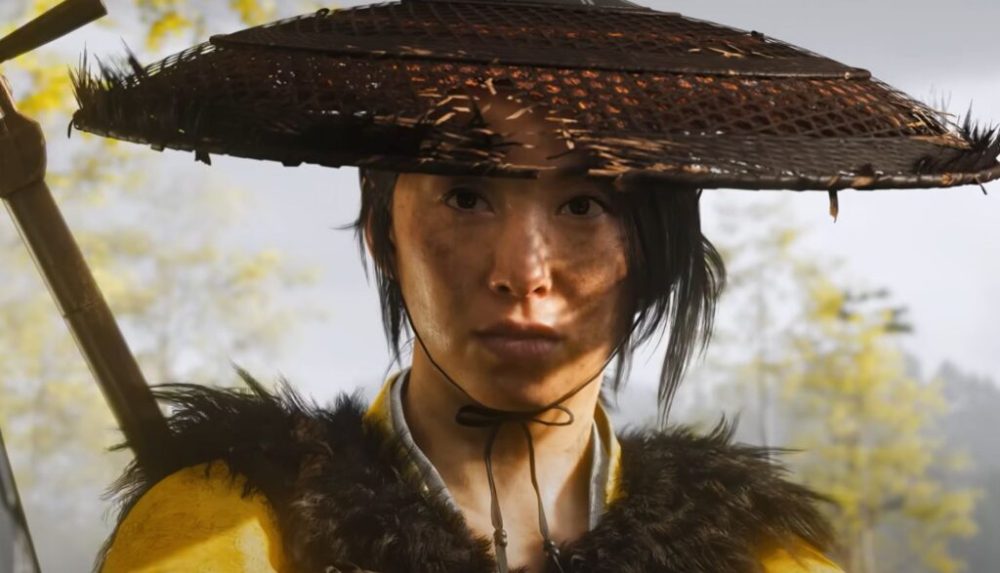
The game does not work without Atsu. Erika Ishii’s performance is the spine of the experience. Atsu is guarded and pragmatic in conversation, then explosive and exact in a duel. The standout moments are simple ones. A clipped apology that still lands as sincere. A shaky breath you can almost see in the cold before she draws. A line delivered with the brittle humor of someone who has learned to ration trust. That range is by design. Both the studio and Ishii have talked about the project as an homage to classic samurai and revenge films, and the direction puts subtext in the actor’s hands.
What helps the performance land is how the writing resists over-explaining. The story sets up a clear target list, then lets character beats surface in how Atsu moves through spaces and how people react to her. Allies push against her rough edges rather than sanding them down. Antagonists speak with distinct cadence and philosophy long before you trade steel. That choice gives the quieter scenes room to breathe. And when the game pushes back into action, the cut from hush to impact feels earned because the character carried it there.
Swordplay that serves the frame
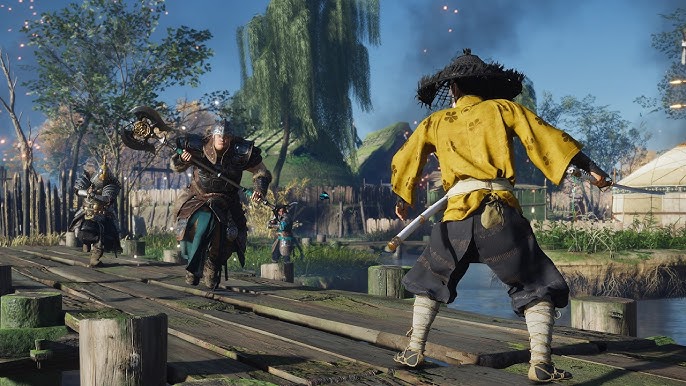
Combat keeps the series’ readable timing and makes tempo control the star. Parries and evades feel decisive, not flashy for the sake of it. Stealth hands you clean tools and spaces that support intent. The handoff between stalk and showdown is smooth, which preserves the mood the camera is chasing. Boss encounters read like arguments in steel. The best duels are little character studies where tells and habits say more than speeches.
The world itself aims for presence over density. You can follow checklists if you want, yet the game is at its best when you ride for the view and let the mood guide you. When side content ties back to the central theme of what vengeance does to people, it adds heat without shouting. When errands lean toward old habits, the pacing can flatten. That unevenness does not break the throughline. It just makes the main path the place where the direction is sharpest.
Sound that knows when to lean in and when to get out of the way
Audio choices match the visual restraint. Combat cues are crisp and easy to parse. The score tilts into strings in duels and steps back into plucked or breathy textures during reflection. The mix also respects the performances. You can hear how a line sits in a mouth before it leaves it. That sounds like a small thing. It is not. It is the difference between a scene you watch and a scene you sit in. The performances and atmosphere stand as pillars, and that alignment is clear with decent headphones.
What changes and what stays familiar
As a follow up, Yōtei walks a careful line. It carries forward what worked in Tsushima, then focuses the lens on a single life rather than an island at war. You feel the tug to compare, and the game does not hide from it. The designers have said the goal was evolution, not a hard reset, and the release packaging is up front about the game being a standalone story with its own identity. It also points ahead, with a follow up to Legends on the way as a free update, which suggests Sucker Punch will keep investing in how this world plays with others after you finish the journey.

Where the cinema meets the controller
The real magic is how often Yōtei lets you forget where film ends and game begins. A low angle on a courtyard, the scrape of geta on wood, the drawn-out quiet before a blade moves. Then you press, the stance shifts, and it is you carrying the beat the scene has set. Most projects that chase cinema confuse volume for presence. This one understands patience. It holds the shot. It trusts the lead to keep you there. And it trusts you to do the rest.
If you come to Ghost of Yōtei for the photography and the snow that swallows the last footstep, you will get what you want. If you come because you are a longtime fan of the lead performer and want to hear what she can do when a whole script leans into subtext, you will probably walk away thinking about the way one line was delivered more than any explosion. The game is not above an indulgent vista or a crowd-pleasing clash, but its best moments are small. A glance held too long. A breath that says more than a speech. A choice that lands with the weight of a final cut.
Ghost of Yōtei is not trying to reinvent the form. It is trying to make something you can feel in your hands that also looks and sounds like it belongs on a big screen. When it hits that mark, which is often, the effect is simple. You put the controller down and remember a scene the way you remember a favorite shot. Then you pick it back up because the next duel is waiting just past the ridge.


 gfpods.com
Leave a comment