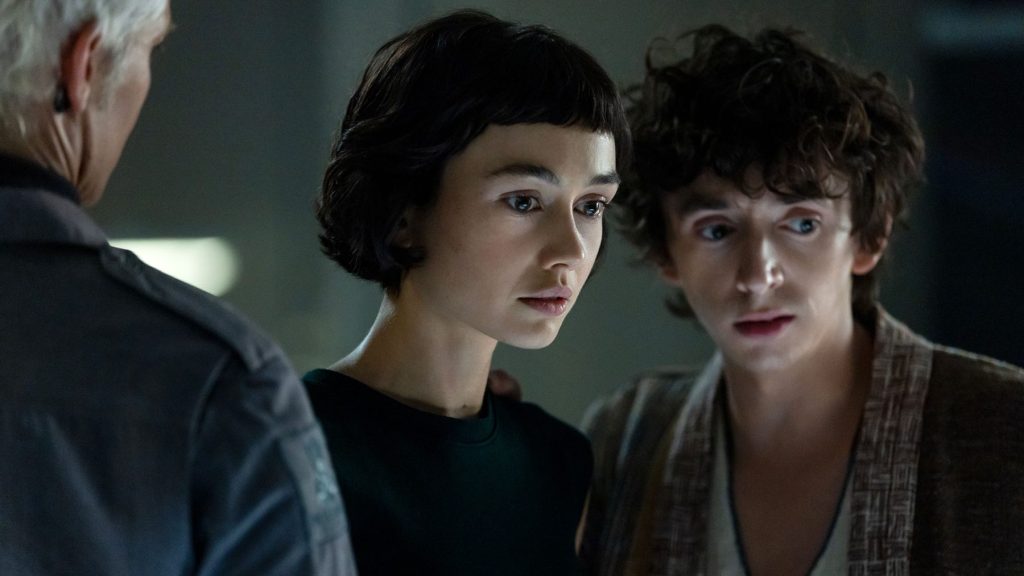
Episode 7, “Emergence,” is where Alien Earth stops flirting with paranoia and lives in it. The hour peels back the show’s central truth: nobody here acts from a single, pure motive. Caretakers look like captors. Saviors become opportunists. Even the kids carry secrets they can barely hold. It makes for a tense penultimate chapter that is messy in the right ways and surprisingly emotional.

The big swing is Wendy’s. After watching Prodigy bury another “accident,” she decides she is done playing along. Her jailbreak isn’t subtle. She frees the Xenomorph and weaponizes the chaos to get off Neverland with Joe and Nibs. The scenes in broad daylight are jarring in a good way. You feel exposed, like there’s nowhere to hide while everything breaks. Wendy’s connection with the creature is the show’s most audacious idea so far. It is not mind control. It is more like hard-won trust from two cornered animals that recognize survival in one another. Whether you buy it or not, the gambit gives the episode its pulse.
The other anchor is Arthur Sylvia’s fate, which lands like a gut punch. After trying to make good by removing the kids’ trackers, he wakes from a facehugger attack only to die in their arms as a chestburster tears free. It is tender and horrific at the same time, and it reframes Arthur not as a cold scientist, but as a man who arrived at compassion too late. The moment underlines the episode’s theme. Intentions matter less than impact in a world built on experiments.
While the jungle burns, Kirsh keeps playing chess. He nudges deals on the beach, corrals rival operators, and keeps both Prodigy and Yutani within reach without ever declaring a side. Timothy Olyphant gives the character a calm, almost parental presence that makes his choices harder to read and more unsettling. You never know whether he is protecting the children, Prodigy’s investment, or just his own design for what comes next. The show is at its best when Kirsh smiles and says nothing.

Then there is Boy Kavalier, who looks at catastrophe and sees opportunity. After reviewing what the eyeball creature did in the lab, he starts talking about moving it and finding a “suitable” human host. It is an idea delivered with the clinical excitement of a kid daring himself to go one step further, and it might be the clearest example of the episode’s thesis. In Alien Earth, curiosity has a body count.
Which brings us to the standout creature of the week, and maybe the season. The Xenomorph remains the franchise icon, but the eyeball alien, officially called T. Ocellus, is the one that gets under your skin. It is patient, calculating, and alien in a way the show hasn’t fully explained yet. Every time it appears, the temperature of the scene drops. You see intelligence, and worse, intent. If the series gets another season, this is the mystery to chase. What does T. Ocellus want, and what happens when it finally gets a host it likes?
The hour isn’t flawless. A few turns are rushed, and the show occasionally leans on coincidence to line up its set pieces. But the atmosphere is thick, the creature work is striking, and the performances keep the story honest. Most importantly, Episode 7 makes your point clear as day. You cannot trust anyone’s motives here. Not Prodigy. Not Yutani. Not the mentors or the kids. Not even the monsters. That uncertainty is exactly why the finale feels dangerous, and why the eyeball alien feels like the future of this story.
A tense, provocative penultimate chapter that sharpens the show’s core idea and lets T. Ocellus steal the spotlight. I’m in for the finale, and I want next season to follow the eye.





 gfpods.com
Leave a comment