
It has been over two decades since 28 Days Later redefined zombie horror, and nearly as long since 28 Weeks Later expanded that terrifying universe. Now 28 Years Later arrives with Danny Boyle back in the director’s chair and Alex Garland returning to write. This third chapter does not just revisit the Rage virus. It reframes it through a modern lens, shaped by real-world pandemics, political division, and the emotional weight of long-term survival.
This is not just a horror sequel. It is a grounded, unnerving, and at times deeply human film that takes its time. It may not be the most terrifying of the trilogy, but it is one of the most thoughtful.
A New Generation in the Wreckage
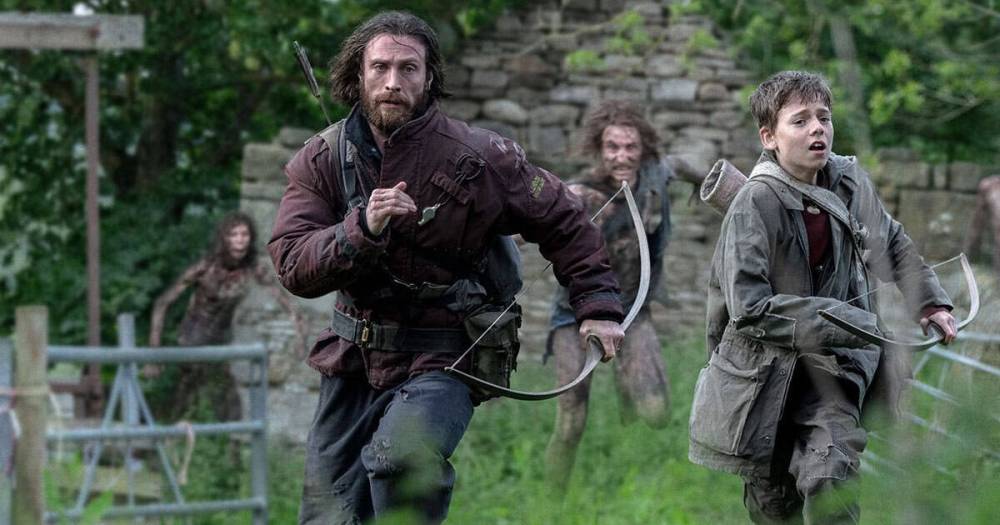
The story begins on a remote Scottish island, where a quiet, off-the-grid community believes it has finally escaped the virus. That illusion fades when Jamie, played by Aaron Taylor-Johnson, and his son Spike, played by newcomer Alfie Williams, leave the island in search of medicine for Spike’s mother, Isla, played by Jodie Comer. What they discover on the mainland is a different kind of horror. The world is not just broken. It is evolving into something new, and perhaps even more dangerous.
Boyle’s direction, paired with cinematographer Anthony Dod Mantle’s visuals, is striking. Empty landscapes feel wide and unforgiving. The few action scenes are chaotic and sharp, but this is a quieter movie overall, interested more in dread than in gore.
More Than Monsters
Garland’s script takes a slower, more deliberate path than past entries. The Rage virus is still active, but it is no longer the biggest threat. Instead, the film explores what people have done in the aftermath. There are small societies operating with cult-like rules, isolationist groups with violent ideologies, and survivors clinging to dangerous nostalgia.
This film has something to say about nationalism, grief, and the ways fear is exploited. Some moments are a little on the nose, but most of it works. The Rage virus becomes a metaphor for what happens when hate spreads faster than hope.

Performances That Carry the Weight
Alfie Williams is the emotional center of the film. His performance as Spike, a boy forced to grow up fast in an unfamiliar and violent world, is surprisingly powerful. Jodie Comer adds emotional depth as his mother Isla, even with limited screen time. Aaron Taylor-Johnson is effective as a protective but conflicted father. And Ralph Fiennes is quietly terrifying as a former scientist whose obsession with control becomes one of the film’s scariest threats.
Not Without Issues
The pacing might challenge some viewers. The middle act slows down considerably, focusing on quiet tension instead of horror. Some characters are underused. The final sequence leans heavily on setup for the next film, The Bone Temple, due out in 2026. It ends well enough, but it clearly exists to keep the story going.
Still, this feels intentional. 28 Years Later is not designed to satisfy in a single sitting. It is a reset and a reminder that horror does not always need to scream. Sometimes it just needs to whisper something that sticks with you.
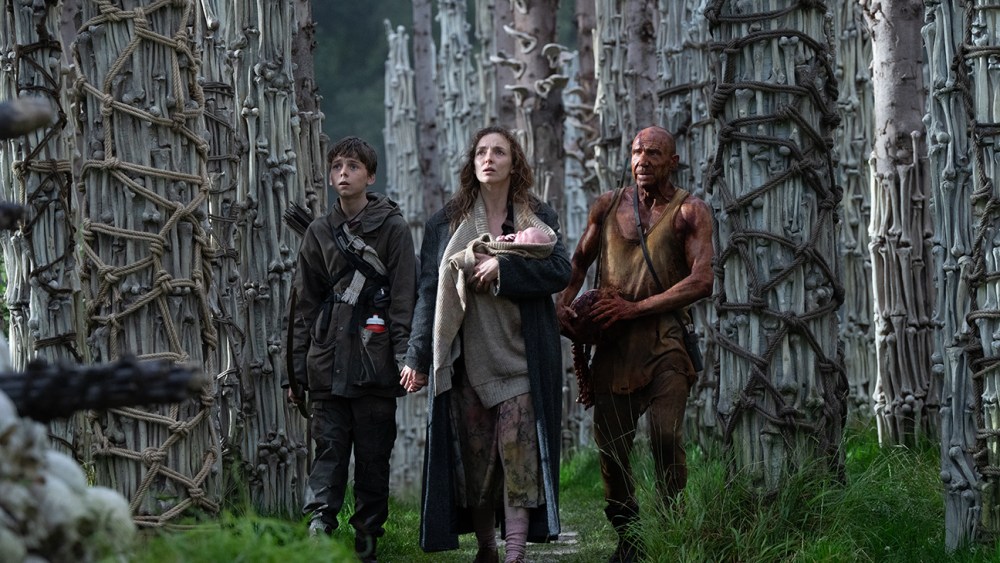
Final Verdict: 8 out of 10
28 Years Later is a visually rich, emotionally grounded, and socially relevant horror film that dares to slow down and reflect. It may not satisfy every zombie fan looking for non-stop action, but for those willing to sit with its ideas, it delivers something deeper. It is a welcome return to one of horror’s smartest franchises, and proof that there is still more story to tell.


 gfpods.com
Leave a comment