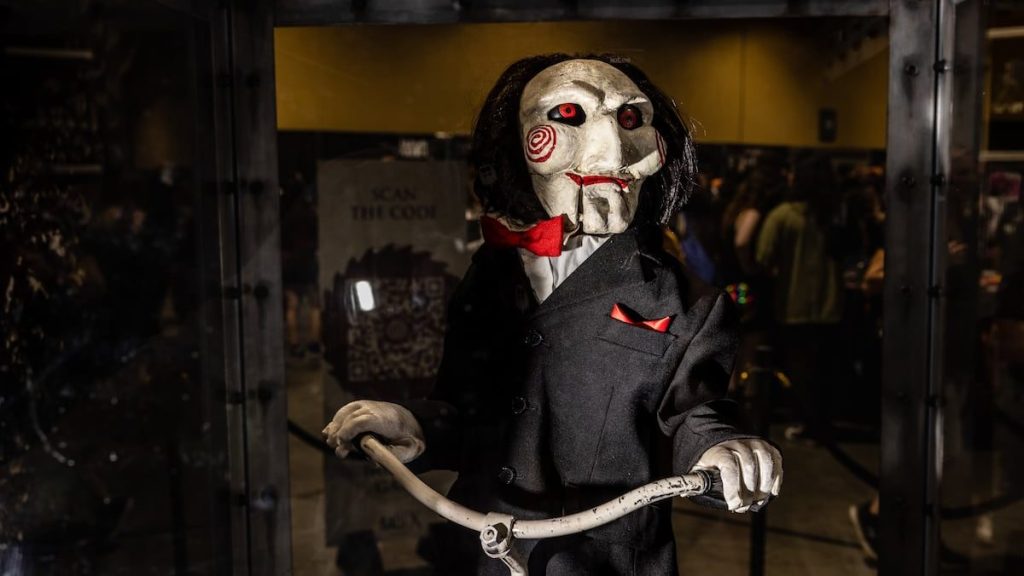
The mastermind of modern horror is stepping into the Saw franchise, and it might be the jolt this long-running series needs. Blumhouse has officially acquired Twisted Pictures’ half of the Saw intellectual property, setting the stage for a major shift in the future of the franchise. Lionsgate still retains its portion of ownership, meaning this will be a partnership effort—but it’s hard to ignore the creative weight Blumhouse now brings to the table.

This move has big implications. Blumhouse is behind some of the most memorable horror films of the past two decades, including Get Out, The Purge, and the 2018 Halloween revival. The studio’s knack for managing franchise storytelling, paired with their low-budget, high-impact model, has repeatedly turned genre projects into box office gold. With Saw, a franchise that once set the pace for October horror releases, this acquisition could finally give it some much-needed consistency and direction.
Saw’s original run, kicked off by James Wan and Leigh Whannell in 2004, changed the horror landscape. It introduced the now-iconic Jigsaw, whose twisted traps and moral tests made for an eerie blend of physical horror and psychological torment. The first film was a gritty, low-budget success that quickly snowballed into an annual Halloween tradition. But after Saw 3D in 2010, the momentum began to fade.
Since then, Twisted Pictures has attempted to reboot and reimagine the franchise, with mixed results. Jigsaw (2017) failed to reignite the franchise spark. Spiral (2021) was an ambitious spin-off with a fresh direction, but it didn’t land with audiences or critics the way it needed to. Then came Saw X (2023), which took things back to the basics—literally, as it was set between Saw and Saw II—and brought Tobin Bell’s John Kramer back in a more emotionally grounded way. Fans and critics responded well, but the franchise still lacked forward momentum.
That’s where Blumhouse can make a difference. Their proven formula—supporting creative voices, sticking to manageable budgets, and focusing on strong themes—feels like a natural fit for the Saw universe. They’ve pulled this off before with the Halloween reboot and The Invisible Man, finding success in honoring legacy while injecting new energy.
If Blumhouse takes a similar approach with Saw, we could be looking at a full creative revival. Whether that means continuing with Bell’s Jigsaw, building new mythology around future “games,” or developing companion projects in television, the possibilities are wide open.
Saw has never lacked for ideas. What it’s needed is a guiding hand to channel those ideas into a long-term vision. With Blumhouse in the game, the pieces might finally fall into place.
Sources:
Deadline



 gfpods.com
Leave a comment