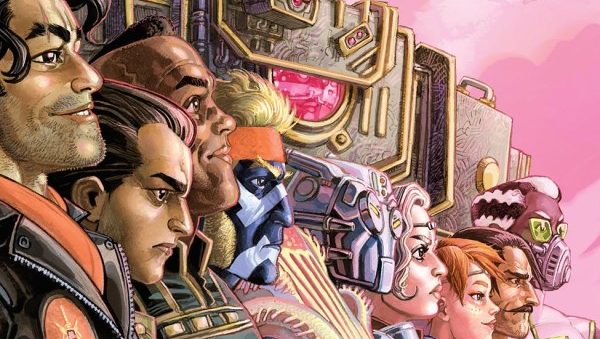
In a comic landscape saturated with familiar tropes and predictable narratives, Free Planet by Aubrey Sitterson and Jed Dougherty carves out its own place as an ambitious, politically charged space opera. The Image Comics series begins not with the fight for liberation, but with the aftermath. It asks, what happens after revolution is won?
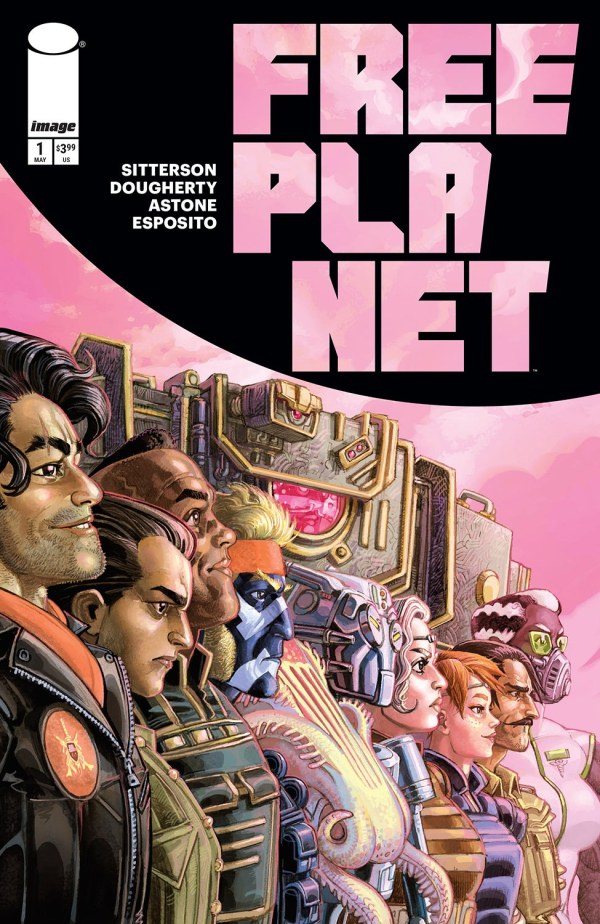
Set on Lutheria, a newly independent planet with no government, no currency, and no prisons, Free Planet is a bold attempt to explore freedom in its rawest and most challenging form. Sitterson doesn’t shy away from the hard questions. Through layered storytelling and a deeply researched political backdrop, he challenges readers to confront how revolutions succeed, fail, or are co-opted, and what freedom really costs.
One of the most striking features of Free Planet is its worldbuilding, built not just from imagination but from a foundation of anthropological and historical research. Sitterson describes the book as an anthropological lens applied to speculative fiction, inspired by real-world post-revolutionary societies. From food shortages to differing cultural ideologies, the comic examines how a society can fracture, adapt, or evolve once common enemies are gone.
At the core of the story are the Freedom Guard, a group of diverse revolutionaries now faced with defending Lutheria’s newly liberated society and its powerful energy source. Characters like Talon, who became unexpectedly popular during early development, and Basil, who embodies a radically different idea of freedom, represent contrasting philosophies and personal stakes. Their tensions reflect broader ideological divides, giving the book both a personal and political pulse.

Sitterson’s commitment to print storytelling is evident in every spread. Free Planet was crafted page by page, with artist Jed Dougherty given full freedom to layout scenes, design tech and clothing, and invent visual languages for each faction. Together with letterer Taylor Esposito and colorist Vittorio Astone, the team created a visually rich and intentionally complex reading experience. From alternate caption styles to a faux-historical narrator, Dr. August Ferrucci, the book presents itself as both narrative and artifact.
What makes Free Planet truly stand out is its confidence. Sitterson calls the book hostile to digital, not out of gatekeeping, but because its design demands presence and attention. It is a comic meant to be read slowly, thoughtfully, and in print. Something tangible, where every page turn is intentional.
With Free Planet, Aubrey Sitterson doesn’t just tell a story. He builds a world that invites readers to wrestle with the aftermath of revolution, the burden of leadership, and the contradictions of freedom. It is not a book you skim. It is one you sit with.
Free Planet is available now from Image Comics. Pick it up, hold it in your hands, and get ready to think.




 gfpods.com
Leave a comment