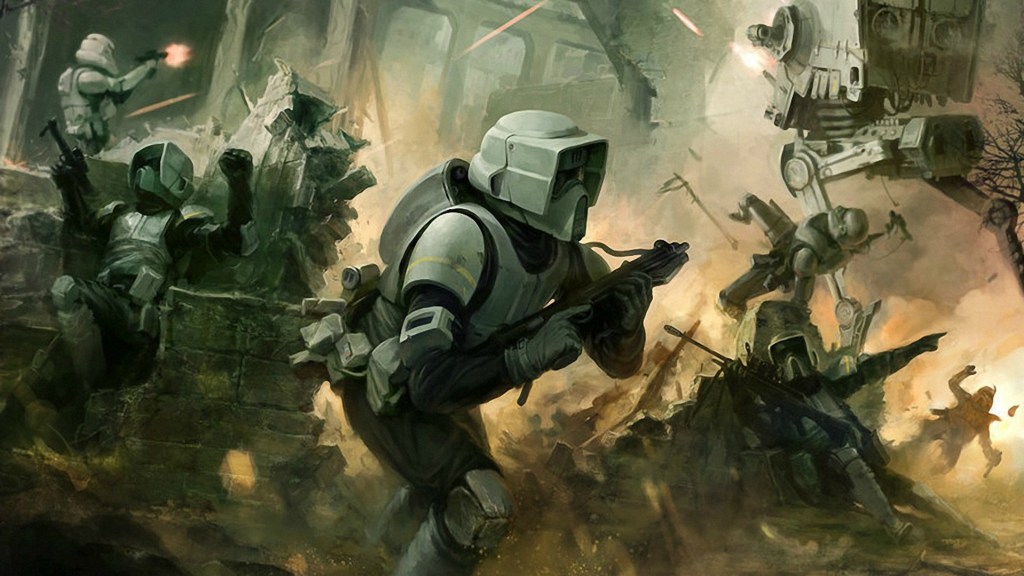
George Lucas infused Star Wars with pointed political themes rooted in the tumultuous era in which it was conceived. In particular, Lucas drew clear parallels between the galaxy’s conflicts and America’s involvement in the Vietnam War. While Star Wars operates on a mythic level with timeless archetypes, Lucas himself has noted that “the political and social bases are historical,” inspired by real events. This blend of myth and modern history gave Star Wars an ideological edge: it is not just a space opera about good versus evil, but also a commentary on imperialism, resistance, and the fragility of democracy. Below, we explore how Lucas’s political beliefs shaped by the Vietnam era guided the narrative structure, character archetypes, and themes of both the original trilogy and the prequel trilogy.
Lucas’s Political Vision and the Vietnam Era
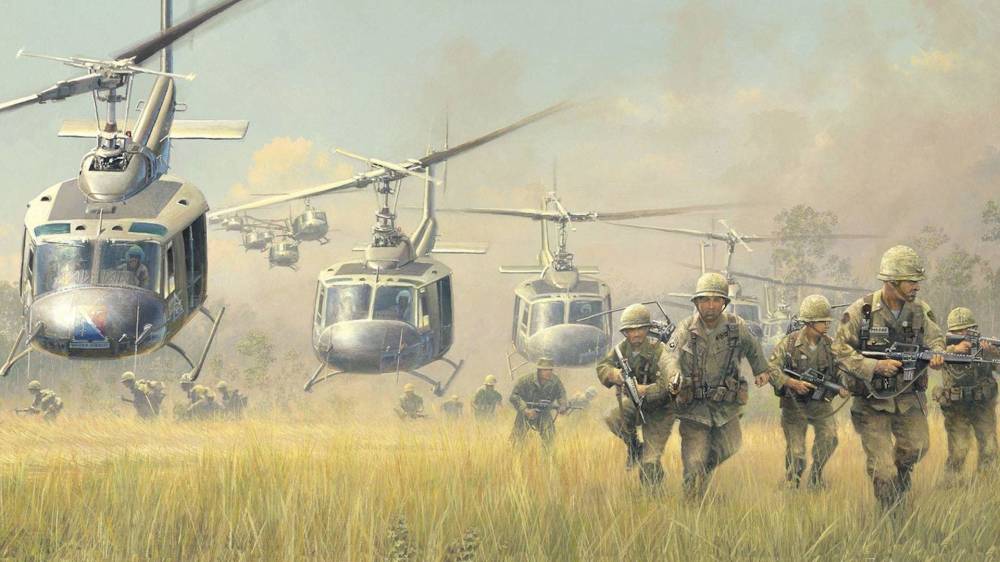
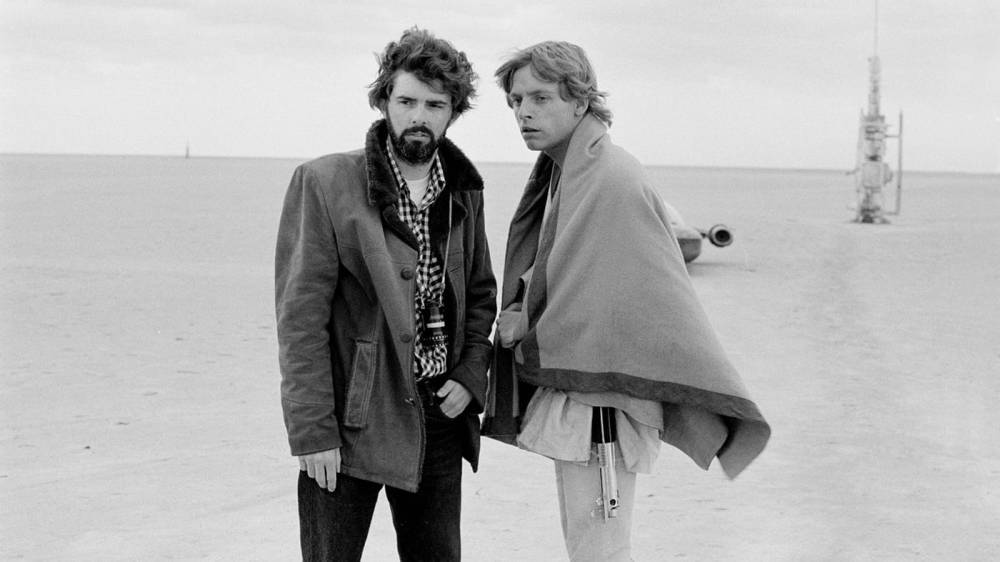
George Lucas came of age during the 1960s and 70s, a period marked by the Vietnam War and widespread distrust of authority. He was strongly anti-war and skeptical of imperial power, sentiments that deeply informed Star Wars. In fact, before creating Star Wars, Lucas had been slated to direct Apocalypse Now, a Vietnam War film, with friend Francis Ford Coppola. When that project fell through, Lucas funneled his anti-war message into a galaxy far, far away. According to film editor Walter Murch, Lucas decided to do Star Wars as a way to channel the anti-war and pro-Vietcong ideology in a disguised form after he could not make his Vietnam movie.
Lucas openly acknowledges that Star Wars was a reaction to American politics of the Vietnam era. “Star Wars was really about the Vietnam War,” he said in 2005, explaining that Nixon’s presidency spurred him to ask how a democracy turns into a dictatorship. During the Vietnam War, Lucas observed America, the champion of democracy, behaving like a colonial empire abroad. This irony was not lost on him. In a 2018 interview with James Cameron, Lucas remarked on historical American rebellions and the Vietnam conflict: “During the Vietnam War, America became the Empire. The irony is that the little guys won. The highly technical empire, the American Empire, lost. That was the whole point.” These convictions formed the political foundation of Star Wars. It would side with the “little guys” fighting an oppressive empire, echoing the real-world saga of Viet Cong guerrillas versus the U.S. military.
Vietnam War Allegory in the Original Trilogy
When Star Wars (later subtitled A New Hope) debuted in 1977, audiences thrilled to its adventure, but underlying the spectacle were Lucas’s Vietnam-inspired politics. The entire Rebellion vs. Empire conflict was crafted as an allegory of the Vietnam War’s asymmetrical struggle. The Rebel Alliance, a scrappy band of freedom fighters, mirrors the guerrilla tactics of insurgent forces like the Viet Cong, while the Galactic Empire embodies a technologically superior superpower akin to the United States. As one historian put it, the guerilla war waged by the Rebel Alliance against the Galactic Empire mirrored the battle between an insurgent force and a global superpower that was playing out in Vietnam as Lucas wrote Star Wars. In early story drafts, Lucas made this parallel explicit. He envisioned an “independent planet” named Aquillae as an analog for North Vietnam, and the Empire as “America 10 years from now.” Though this direct reference was toned down in the final film, the core idea remained embedded in the narrative’s DNA.
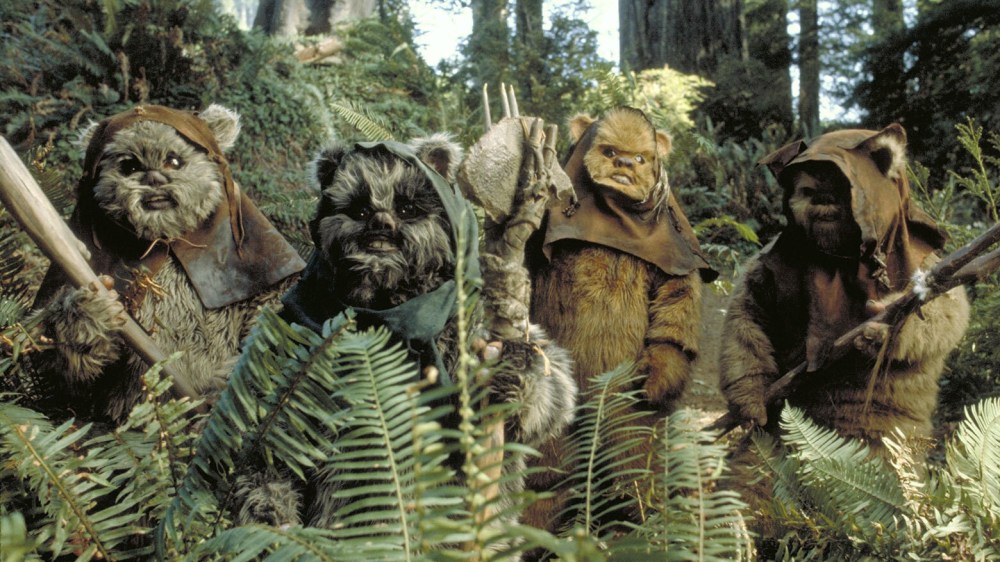
Ewoks in Return of the Jedi (1983) – a primitive, teddy-bear-like species – were a bold Vietnam War metaphor. Lucas confirmed that the Ewoks’ victory over Imperial troops was inspired by the Viet Cong’s guerrilla triumphs over U.S. forces. In both cases, indigenous fighters used superior knowledge of terrain and unconventional tactics to humble a technologically advanced occupier.
By the time of Return of the Jedi, Lucas made one of the clearest Vietnam analogies in the saga. The Battle of Endor depicts the primitive Ewoks helping the Rebels to defeat Imperial stormtroopers and high-tech walkers. Lucas has openly said the Ewoks represent the Viet Cong. In an audio commentary for ROTJ’s 2004 re-release, he explained that a small, native population with “primitive weapons” could overcome a mighty empire, directly citing the Viet Cong as inspiration. Historian William J. Astore notes that both the Viet Cong and the Ewoks benefited from superior knowledge of the local terrain and an ability to blend into that terrain, enabling them to outfox an enemy that ostensibly should have overwhelmed them. This plot resolution, the underdogs prevailing against all odds, is a deliberate reflection of America’s unexpected failure in Vietnam.
Lucas’s portrayal of the Galactic Empire carries the DNA of American militarism as critiqued in the 1970s. The Empire’s massive, bureaucratic war machine and dismissal of dissent (“fear will keep the local systems in line,” Tarkin declares) echoes the United States’ image as an overreaching superpower in Vietnam. Indeed, Lucas has suggested that by the late stages of the war, he viewed his own country as the villain: “We [Americans] were the Empire” in that conflict. This subversive angle effectively inverted the typical Hollywood war story. Star Wars invites the audience to root for the rebels, analogous to Vietnamese insurgents, fighting against an American-like empire. Such framing was Lucas’s quiet commentary on the moral reversal he perceived: the US, traditionally seen as “good,” had behaved like an empire and lost sight of its ideals, much as Star Wars’ Emperor and Vader do.
Key Vietnam War Parallels in the Original Trilogy:
- Underdogs vs. Empire: The Rebel Alliance’s guerrilla campaign against the Galactic Empire directly parallels how the Viet Cong insurgency battled a global superpower during the 1960s. Lucas conceived the Rebels as analogous to Vietnamese resistance fighters, while the Empire embodied the U.S. military might.
- “America as Empire”: Early Star Wars drafts compared the Empire to a future America, reflecting Lucas’s belief that the United States could become an oppressive empire. This theme was born from Vietnam-era anxieties about American power.
- Ewoks = Viet Cong: In Return of the Jedi, the Ewoks, an indigenous tribe armed with bows and traps, were inspired by Viet Cong guerrillas. Like the Viet Cong, Ewoks use home-turf advantage and unconventional tactics to defeat a technologically superior invader.
- Victory Against the Odds: Just as the Vietnamese “little guys” prevailed against the U.S., Star Wars shows the Rebels and Ewoks winning despite being outgunned. This narrative outcome was Lucas’s pointed nod to the Vietnam War’s ultimate lesson – that high-tech imperial forces can be beaten by local resistance.
It is worth noting that Lucas layered these Vietnam-inspired elements alongside other historical allusions. For example, the Empire also draws on Nazi Germany in imagery. But the Vietnam War influence was one of the most provocative, directly flipping real-world roles. As film scholar Benjamin Hufbauer observed, Star Wars can be seen as politically progressive in this light – it sympathizes with anti-imperialist rebels – even as it wrapped its message in swashbuckling adventure. The original trilogy thus operates on two levels: a classic tale of good vs. evil, and an allegory for America’s imperial overreach and the righteous rebellion against it.
The Prequel Trilogy: Democracy, Dictatorship, and the Shadow of Vietnam
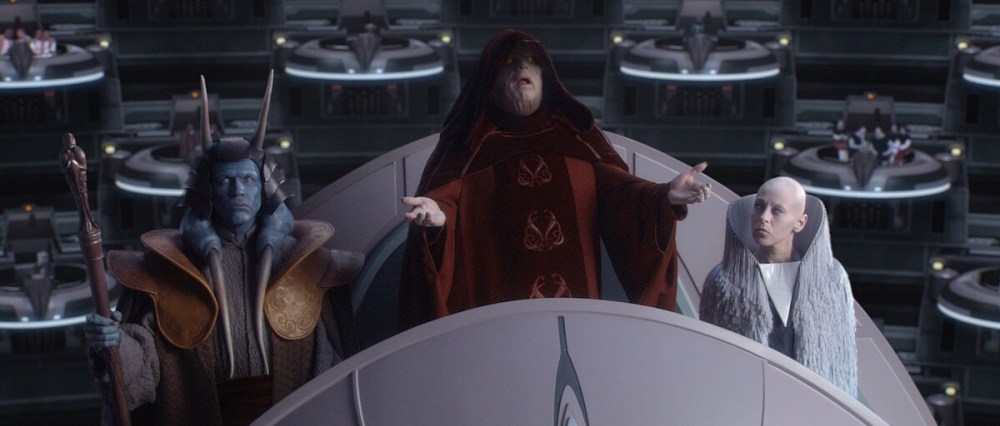
Decades after the originals, Lucas returned to make the Star Wars prequel trilogy (1999 to 2005), and here his political commentary became even more overt. The prequels chronicle the fall of the Galactic Republic into an Empire, depicting how a democracy deteriorates amid war and manipulation. Lucas’s Vietnam-era political beliefs again shaped this narrative arc, now focusing on the internal mechanics of losing freedom, inspired by the 1970s distrust of government. He essentially asks the question that loomed after Vietnam and Watergate: how does a great democracy slide into authoritarianism?
At the center of this cautionary tale is Chancellor (later Emperor) Palpatine, a character Lucas intentionally patterned after real-world political figures like Richard Nixon. In story development discussions as early as 1981, Lucas joked that “Richard M. Nixon was his name” when describing Palpatine’s backstory. Palpatine is a consummate politician who engineers a crisis in order to amass power, an archetype drawn from Lucas’s fears of executive overreach during the Vietnam era. In Lucas’s eyes, Nixon’s attempts to undermine democratic norms, from expanding the war to the Watergate scandal, offered a blueprint for a democratic leader turning tyrant. Revenge of the Sith (2005) brings this parallel to the forefront. Palpatine exploits the Clone Wars, a manufactured conflict, to get the Senate to give away democracy and proclaim him Emperor. This mirrors Nixon-era anxieties that democratic societies might willingly surrender liberties under the pretext of security. As Lucas noted, “democracies aren’t overthrown; they’re given away” – a line of thought that directly informed the prequel storyline.
Throughout the prequels, Lucas uses Palpatine’s manipulations to illustrate the creeping authoritarianism he feared in the wake of Vietnam. We watch as the Republic, beset by war, grants the Chancellor ever-increasing emergency powers. This reflects a pattern Lucas saw in history: leaders manufacturing or exploiting wars to entrench their own power. The character archetypes reinforce this theme. Palpatine is the deceptive politician turned dictator. The Jedi Order and Senate represent the complacent establishment that fails to check his grab for authority. In one famous scene, as Palpatine declares the birth of the Empire, Padmé Amidala laments, “So this is how liberty dies – with thunderous applause.” This line encapsulates Lucas’s Vietnam-informed warning: a free society may cheerfully applaud a strongman leader in a time of fear.
Key Political Parallels in the Prequel Trilogy:
- Palpatine as Nixon: Lucas has compared Emperor Palpatine’s rise to the career of President Richard Nixon. Palpatine’s subversion of the Galactic Senate, creating false pretenses for war and spying on rivals, evokes Nixon-era abuses of power and the expansion of war in Vietnam.
- Democracy’s Demise: The prequels dramatize how a democracy hands power to a tyrant amid crisis. Lucas conceived this in light of the Vietnam and Watergate period, pondering how the American public and institutions might willingly cede freedom out of fear. The Republic’s collapse in Star Wars serves as a dire allegory for any democracy that lets war and fear undermine its core values.
- War as a Political Tool: The Clone Wars in Star Wars are a phony war orchestrated by Palpatine to justify authoritarian control. This reflects Lucas’s cynicism toward the Vietnam War, often regarded as a war launched and prolonged under dubious motives. Palpatine’s manipulation of threats and the Senate’s acquiescence echoes how governments can use war to consolidate power.
- “Giving Away” Freedom: Lucas’s core theme in the prequels is that democracies die not by force but by choice. This idea was directly inspired by the 1970s context. In the films, the Senate voting emergency powers to Palpatine and later cheering the Empire exemplifies this tragic self-surrender of liberty.
Notably, when the prequels were released, many fans and critics saw parallels not only to Vietnam and Nixon but also to post 9/11 politics. Lucas has acknowledged these similarities as somewhat coincidental yet telling. “No matter who you look at in history, the story is always the same,” Lucas reflected. He had outlined the Republic’s fall long before 2001, but history caught up to Star Wars in unexpected ways, reinforcing its relevance. This underscores that Lucas’s Vietnam-inspired narrative was meant to be a broad cautionary tale about the cycle of democracy and tyranny, applicable to various eras.
Legacy of Lucas’s Vietnam-Inspired Themes
George Lucas’s political beliefs, especially his views on the Vietnam War and American power, gave Star Wars a distinct ideological undercurrent that sets it apart from escapist sci-fi. By modeling the heroic Rebels on real insurgents and casting the faceless Empire in the role of a superpower gone astray, Lucas turned his childhood love of adventure serials into a modern parable. The original trilogy asked audiences to reconsider the narrative of the 20th century: what if we, the presumed good guys, are actually the Empire? The prequel trilogy then delved into the how and why, dramatizing the fall of a republic with clear parallels to the U.S. in the Vietnam era. These films portray war as a catalyst for authoritarianism, a lesson Lucas drew from watching America’s own struggles.
In the end, Star Wars weaves together timeless myth with pointed political commentary. Its narrative structure, a republic turned empire and a plucky rebellion, is a direct product of Lucas’s anti-war, anti-authoritarian ethos formed in the shadow of Vietnam. Its character archetypes, from the idealistic young rebels to the scheming politician, are informed by historical figures and forces of that period. And its thematic underpinnings champion freedom over tyranny, implicitly warning against the very real tendencies of great powers. This rich interplay of fiction and history is a key reason Star Wars resonates so broadly. As an allegory, it speaks to cycles seen in America’s past and future, ensuring that the saga remains, in Lucas’s words, a “cautionary tale against American imperialism” for generations to come.
Sources
- Leon Miller, “Star Wars’ Vietnam War Allegory, Explained,” The Escapist (Dec 18, 2023)escapistmagazine.comescapistmagazine.com.
- Christopher Klein, “The Real History That Inspired Star Wars,” History.com (Dec 18, 2019)history.comhistory.com.
- Shannen Dilag, “How International Politics Influenced ‘Star Wars’,” Pacific Council on International Policy (Aug 10, 2018)pacificcouncil.orgpacificcouncil.org.
- Lyvie Scott, “George Lucas Might Not Have Written Star Wars Without Richard Nixon,” SlashFilm (Mar 10, 2023)slashfilm.comslashfilm.com.
- AMC Editors, “George Lucas Reveals How Star Wars Was Influenced by the Vietnam War,” AMC Talk (May 9, 2018)amc.comamc.com.
- J.W. Rinzler, The Making of Star Wars (1977) – as referenced in Escapist and History.com (early script drafts alluding to Vietnam/USA)escapistmagazine.comhistory.com.
- Mark Caro, “‘Star Wars’ inadvertently hits too close to U.S.’s role,” Chicago Tribune (May 18, 2005) – interview where Lucas discusses Vietnam and the fall of democraciesescapistmagazine.com.
- Star Wars and History, eds. Nancy R. Reagin and Janice Liedl (2013) – especially William J. Astore’s chapter drawing Vietnam parallelshistory.com.

 gfpods.com
Leave a comment