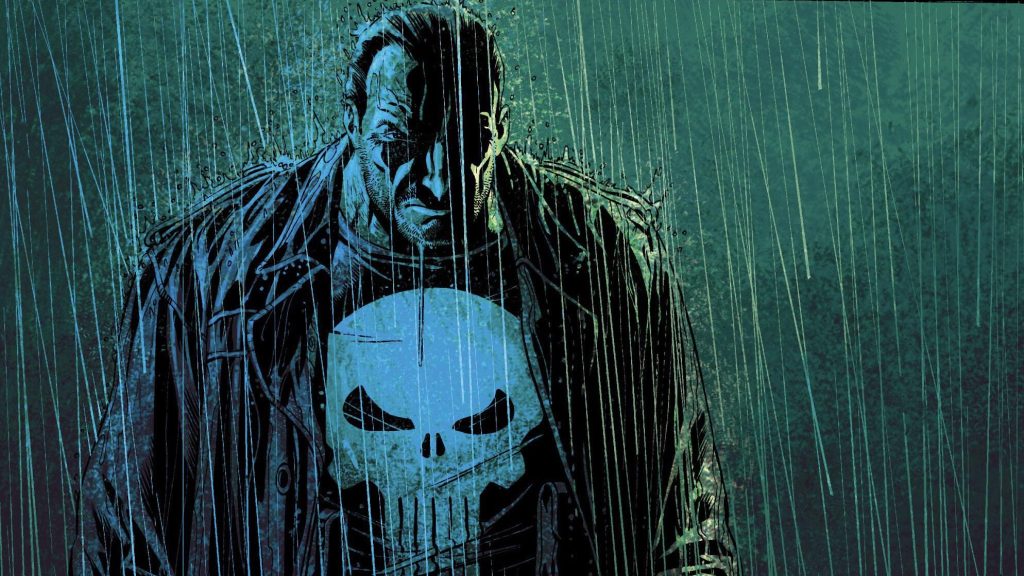

The Marvel antihero Frank Castle, better known as The Punisher, has evolved from a comic book vigilante into a cultural icon embroiled in real-world controversy. Instantly recognizable by his stark white skull emblem, The Punisher’s symbol has transcended the pages of Marvel comics to appear on military gear, police vehicles, and protest paraphernalia. This unexpected adoption of a fictional vigilante’s logo by real-life law enforcement and soldiers has sparked intense debate. Critics argue it glorifies extrajudicial violence and undermines the justice system, while some officers claim it represents a commitment to punishing wrongdoing. In response, Marvel has been forced to reckon with the ethical and cultural dilemmas of its character’s newfound significance. This essay explores The Punisher’s origins and development in Marvel comics, the controversy surrounding the use of his skull symbol by police and military personnel, and Marvel’s official response to these issues. The journey of The Punisher from page to real-world symbol raises complex questions about fiction, responsibility, and the power of iconography.
Origins of The Punisher in Marvel Comics
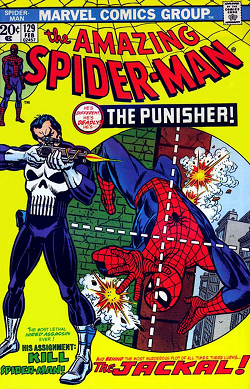
The Punisher was first introduced in The Amazing Spider-Man #129 in 1974, created by writer Gerry Conway along with artists John Romita Sr. and Ross Andru. In this initial appearance, Frank Castle is presented as a vigilante with a vendetta against criminals, crossing paths with Spider-Man as a somewhat antagonistic figure. Castle is a former U.S. Marine – originally a Vietnam War veteran, though later retconned to more contemporary conflicts – who turned to a life of vigilantism after a horrifying personal tragedy.
As the character’s backstory goes, Frank’s wife and children were gunned down by mobsters after witnessing a crime, and the justice system failed to adequately punish those responsible. This loss compelled Frank Castle to “become a vigilante with a uniquely brutal brand of justice”, adopting the moniker “The Punisher” as he launched a one-man war on crime.
From the outset, The Punisher stood apart from Marvel’s traditional heroes. Unlike noble do-gooders such as Spider-Man or Captain America, Frank Castle had no qualms about kidnapping, torture, extortion, and lethal violence in his crusade against criminals. He donned a menacing black Kevlar uniform adorned with a large white skull on his chest – a symbol of death and a warning to his enemies (Notably, Conway’s original design featured a small skull emblem, which Marvel’s art director enlarged to cover the character’s entire chest, emphasizing its grim significance. This skull logo would become The Punisher’s defining visual icon, signifying the relentless, unforgiving nature of his personal war on crime.
From Villain to Antihero
The Punisher’s early appearances cast him as an adversary to superheroes who found his methods abhorrent. In his debut story, he is manipulated into targeting Spider-Man, demonstrating his willingness to eliminate those he (even mistakenly) deems criminal. However, the character’s brooding persona and brutal effectiveness resonated with readers, and Marvel soon realized Frank Castle’s storytelling potential. His initial arc proved a hit with comic fans, prompting Marvel to feature him in other titles throughout the late 1970s and 1980s. Over time, The Punisher evolved from a guest anti-villain into a popular antihero who could carry his own stories. By the mid-1980s, he was starring in multiple solo comic series, including Punisher War Journal and others, cementing his status as a marquee character in the Marvel roster.

As The Punisher’s role expanded, Marvel’s writers explored the complex morality of a vigilante who operates outside the law. Frank Castle was depicted as both frightening and sympathetic: a “one-man army” driven by grief and rage, yet often taking down far worse criminals than himself. Stories often highlighted the contrast between Castle and more idealistic heroes. He frequently clashed with characters like Daredevil and Captain America, who condemned his lethal methods. These encounters reinforced that, within the Marvel Universe, The Punisher was not a model hero but rather a controversial figure—a necessary evil to some and a criminal menace to others. This nuanced representation was deliberate. As Punisher co-creator Gerry Conway later explained, “I never actually felt the Punisher was one of the good guys… I don’t think the Punisher is a hero; he’s an anti-hero… a symbol really of cultural breakdown”. In other words, Frank Castle was created as an embodiment of society’s failure to curb crime through lawful means—a dark commentary on vigilante justice rather than an endorsement of it.

Marvel’s portrayal of The Punisher over the decades stayed true to that ethos. His stories—especially in mature-audience imprints like Marvel’s MAX series—often underscored the consequences of violence and the thin line separating vengeance from justice. Frank Castle was never given superpowers; his relentless drive, military training, and arsenal of weapons were his tools. By keeping him mortal and morally ambiguous, Marvel positioned The Punisher as a gritty reflection on crime and punishment, rather than a fantasy of righteous heroism. This internal complexity made him a compelling figure within comics while clearly distinguishing him from Marvel’s traditional superheroes. Ironically, it is exactly this ruthless antihero image that later appealed to some in the real world who began co-opting The Punisher’s iconic skull for their own use.

The Punisher’s Skull Symbol and Its Real-World Adoption
What began as a comic book emblem – the large white skull on The Punisher’s chest – has taken on a life of its own outside Marvel’s pages. Over the past two decades, the Punisher skull has been appropriated by certain military and law enforcement personnel as an unofficial logo. Often stylized with variations (like a skull overlay on the American flag or with a colored “Thin Blue Line”), this symbol has appeared on soldiers’ uniforms, police vehicles, patches, and other gear. The trend is remarkable because it represents a fictional vigilante’s icon being adopted in reality by those entrusted to uphold the law, blurring lines between pop culture and real-world values. This section examines how and why the Punisher skull spread into these arenas, and the key instances that fueled the ensuing controversy.
From Battlefield to Patrol Car: Key Instances of Adoption
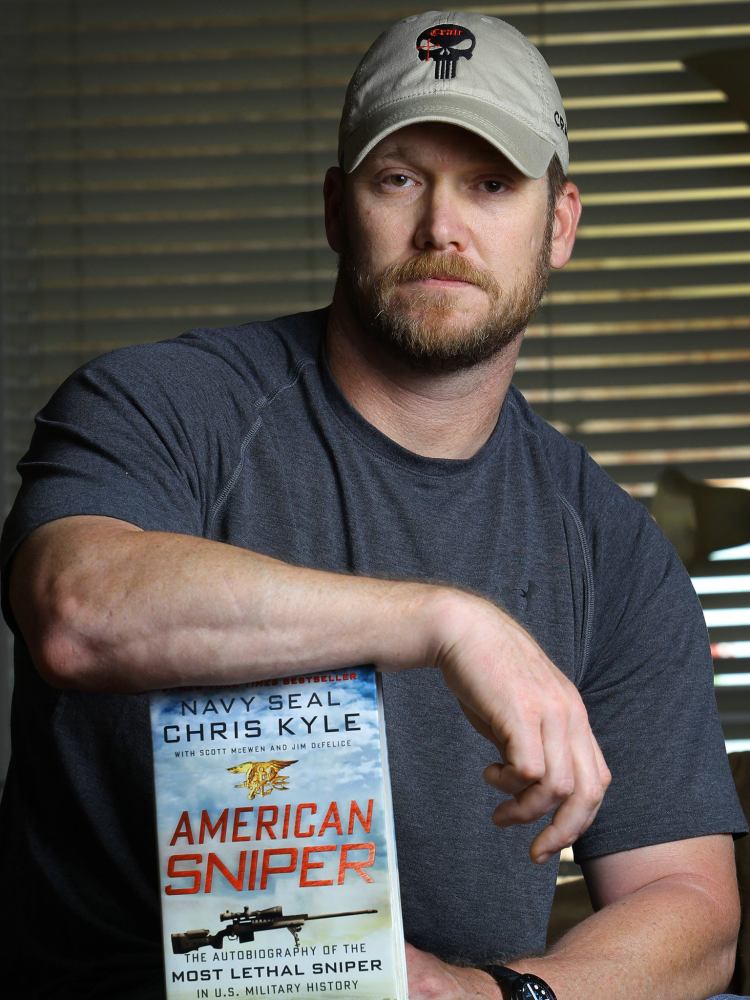
Wartime Use by U.S. Military (Early 2000s): The Punisher skull’s leap into real life arguably began with American military units during the Iraq War. Notably, Navy SEAL sniper Chris Kyle and his SEAL Team 3 embraced the skull symbol during the Second Battle of Fallujah, Iraq (2004), using it as a paramilitary emblem. Kyle recalled in his autobiography that his team “spray-painted it on our Hummers and body armor… and on every building or wall we could” to intimidate insurgents. To them, “He’s a real bad-a* who rights wrongs… He killed bad guys. He made wrongdoers fear him. That’s what we were all about. So we adapted his symbol – a skull – and made it our own”. The symbol spread among some U.S. troops and even Iraqi allied forces trained by Americans, becoming an “unofficial symbol” for certain fighters by the mid-2010s. The Punisher’s grim visage seemed to resonate with soldiers facing life-and-death struggles, who saw it as a sign of dispensing justice by “any means necessary.”
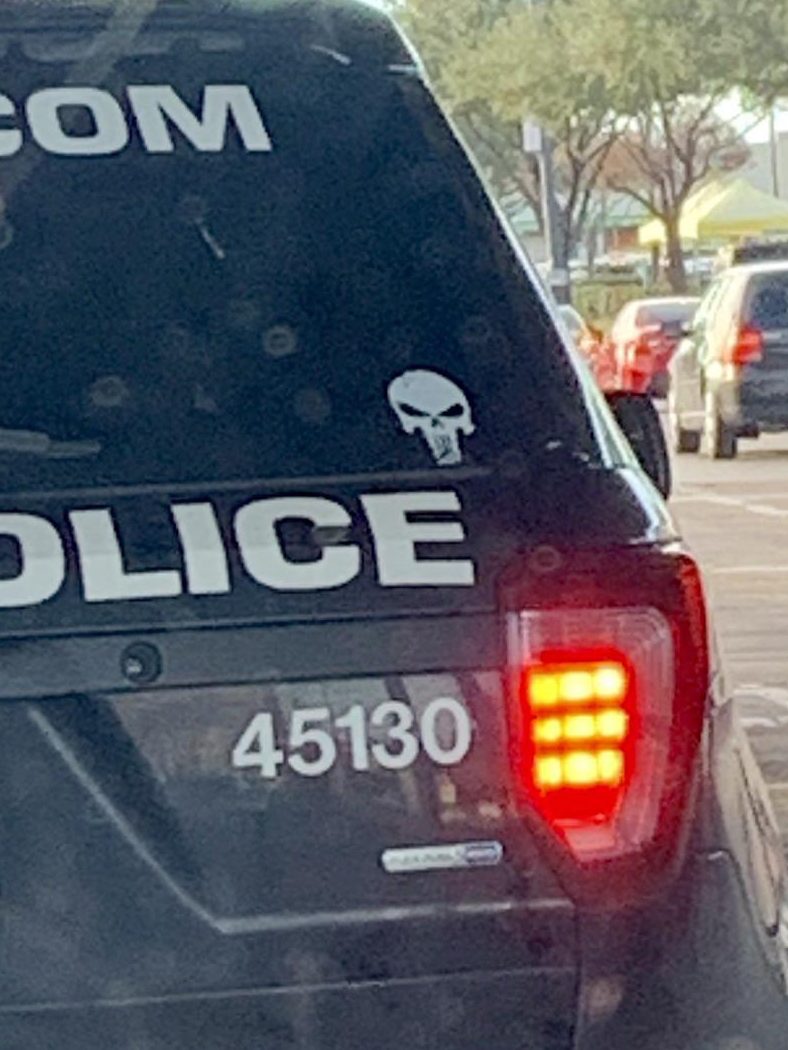
Police and “Blue Lives Matter” (2015–2017): By 2015, the Punisher skull had been adopted by some in American law enforcement, often tied to the emerging “Blue Lives Matter” movement that supports police officers. Companies began producing decals and merchandise featuring the skull colored with a thin blue line or set against the U.S. flag. This trend brought the symbol onto patrol cars and uniforms. In 2017, for example, the police department in Catlettsburg, Kentucky placed large Punisher skull decals with the Blue Lives Matter stripe on their squad car hoods. The public backlash was swift – many citizens interpreted the symbol as a message that police “were out to kill people,” an impression that alarmed the community. The police chief admitted the negative interpretation “didn’t cross my mind,” and the department removed the decals after the public outcry. This was one of the first high-profile incidents revealing a disconnect between how police insiders and the public viewed the use of The Punisher’s emblem.

Police Union Endorsement (2019): In July 2019, the St. Louis Police Officers Association – a union representing St. Louis police – encouraged its members to adopt the Punisher skull symbol with a blue line, effectively co-signing the vigilante logo as an identifier for officers. This move garnered media attention and criticism. Even the St. Louis police chief pushed back, warning officers not to display the symbol. The union’s enthusiasm for The Punisher (a “murderous comic book vigilante,” as one local outlet described him) struck many as tone-deaf. It highlighted a growing subculture within some law enforcement circles that idolized The Punisher’s no-mercy approach, worrying critics that some officers saw themselves as above the law they swore to uphold.
George Floyd Protests and Police Insignia (2020): The issue exploded into national debate during the 2020 protests against police brutality following the murder of George Floyd. Amid demonstrations for reform, observers noted that some police officers responding to protests were sporting the Punisher skull on their gear. In Detroit, for instance, officers were seen wearing Punisher skull patches during protest duty, which many found provocative in a time of public anger at police violence. The fact that an “antihero with a penchant for… violently killing his enemies” had become a mascot for some police was deeply concerning to onlookers. It suggested that those officers identified more with vigilantism than community guardianship. This wave of sightings led Gerry Conway and others to openly call on Marvel and its parent company Disney to clamp down on such uses of the logo.
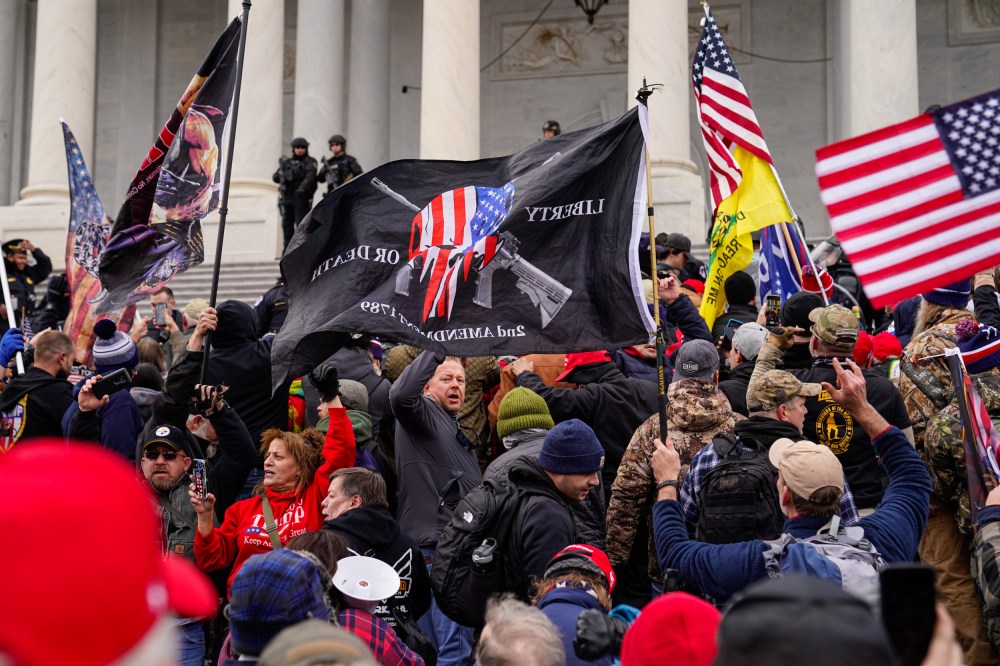
Far-Right and Extremist Usage (2020–2021): Compounding the controversy, the Punisher emblem has also been appropriated by far-right activists and extremist groups. It’s been seen on the attire of some militia members and protest counter-demonstrators, often alongside nationalist or white supremacist imagery. The climax came during the January 6, 2021 U.S. Capitol riot, where at least one insurgent famously wore a Punisher skull patch while storming the Capitol. Photographs from that day – such as a rioter carrying zip-tie handcuffs emblazoned with the skull – brought the issue to a head. Marvel’s murderous vigilante symbol, now linked to an attack on democracy, prompted widespread public outcry. Many commentators and fans demanded Marvel retire The Punisher character or his logo altogether in light of these events. Others urged Disney/Marvel to enforce their intellectual property rights against unauthorized use of the skull symbol, noting that the company had historically been aggressive in protecting its trademarks (for instance, having once pressured daycares over unlicensed Disney character murals). The skull had transformed into a politically charged emblem, and Marvel could no longer ignore its fraught real-world significance.
Symbolism and Misinterpretation

Why did police and soldiers adopt The Punisher’s skull in the first place, and what do they believe it represents? For many in the military, as Chris Kyle’s example shows, the skull was a morale-boosting symbol of righteous vengeance – a message to enemies that punishment was coming. Some law enforcement officers similarly claimed they use the icon not to signal brutality, but to warn criminals that justice will be served. Pete Forhan, a spokesman for a pro-police “Thin Blue Line” group, described their interpretation of the Punisher logo this way: “[It’s] less of a violent overtone, more of a promise to criminals: You might think you’re getting away with it, but it’s karma… if you’re committing violent acts, one way or another, you will be meeting consequences.” In this view, the skull is meant to convey inevitability of punishment to wrongdoers, aligning with a tough-on-crime stance rather than vigilantism.
However, this benign interpretation is not shared by the public at large or by The Punisher’s own creators. To many citizens, seeing the skull on a police officer evokes exactly the “violent overtone” that supporters downplay – essentially a threat of lethal force. The context of who The Punisher is cannot be ignored. As one observer wryly noted, the character is literally “a murderous vigilante… whose appearance often serve[s] as a contrast to the more overtly heroic characters” like Captain America. The Punisher was written as “an example of social failure”, not a role model for disciplined justice. Thus, when real police adopt his imagery, it understandably alarms those who expect police to work within the law. It raises fears that officers may be embracing an “outlaw mentality” at odds with principles of accountability and restraint.

This sentiment was encapsulated by Punisher creator Gerry Conway, who said: “It’s disturbing whenever I see authority figures embracing Punisher iconography because the Punisher represents a failure of the justice system… when cops put Punisher skulls on their cars or members of the military wear Punisher skull patches, they’re basically siding with an enemy of the system… Police should not be embracing a criminal as their symbol.” In Conway’s view, a police officer displaying The Punisher’s skull is as inappropriate as “putting a Confederate flag on a government building” – a stark analogy highlighting how contrary it is to law enforcement’s mission.
Public perception has largely aligned with Conway’s critique. As these incidents piled up, many within comics fandom and in society questioned the judgement of those wearing the symbol. Rather than seeing the skull as a mere esprit de corps emblem, critics interpret it as a banner of brutality or even bigotry. Indeed, some extremists have explicitly embraced the Punisher logo alongside racist and authoritarian imagery, which further taints the symbol’s reputation. All of this has put Marvel in an uncomfortable spotlight: what responsibility does the company have when its fictional iconography is co-opted in ways that contradict the character’s intended message?
Marvel’s Response to the Skull Controversy
Marvel Comics, and its parent company Disney, eventually recognized that The Punisher’s skull symbol had ignited a public relations and ethical issue that merited a response. Over the past few years, Marvel’s response has come in several forms: statements in the press, actions within the comic storylines, and even alterations to the character himself. These moves reflect Marvel’s attempt to reclaim the narrative around The Punisher and make clear their stance on the symbol’s misuse.

In-Story Rebuttal: Punisher Confronts the Cops
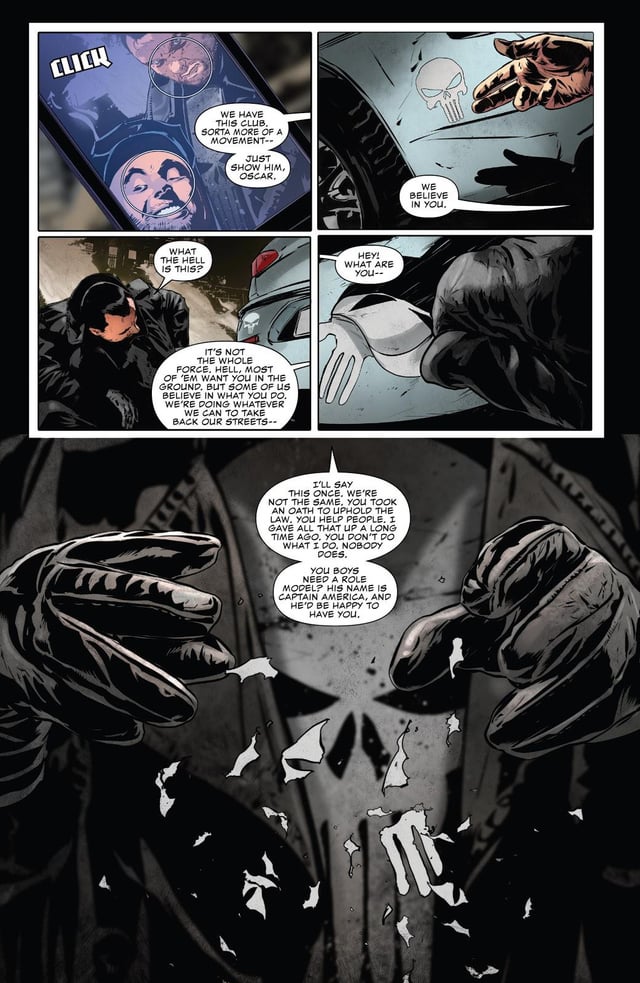
Marvel’s most direct response unfolded within the pages of a comic book. In The Punisher (2018) series issue #13 (published July 2019, written by Matthew Rosenberg), the storyline explicitly addresses the phenomenon of police idolizing Frank Castle. In this issue, Frank encounters two NYPD officers who are self-professed “fans” of the Punisher and have his skull decal on their patrol car. The officers excitedly compare their work to his, clearly admiring his vigilante approach. Frank Castle’s reaction is swift and scathing. He rips the skull sticker off the police car and scolds them: “I’ll say this once – we’re not the same. You took an oath to uphold the law. You help people. I gave all that up a long time ago… You boys need a role model? His name’s Captain America, and he’d be happy to have you.” He then drives the point home with an ominous threat: if he finds any cops imitating him, “I’ll come for you next”. In essence, the Punisher himself tells police to stop using his symbol, condemning their misappropriation of his persona. This meta-message was an unusual but powerful device – Marvel using its own character to speak to real-world issues, effectively making the comic’s stance the company’s stance.
That scene did not go unnoticed. It was widely covered in news outlets and by fans as a clear signal of Marvel’s disapproval. In fact, Marvel later stated that this story’s message was its official position on the matter. By canonizing the idea that The Punisher would reject being embraced by police, Marvel aimed to undermine the symbol’s allure among law enforcement admirers. The choice of invoking Captain America – the paragon of lawful good in the Marvel Universe – further underlines Marvel’s view that legitimate heroes for police to emulate are those who uphold justice, not vigilantes who forsake it.
Public Statements and Corporate Stance
Around the same time, Marvel representatives began addressing the controversy in public forums. In early 2020, amid rising tensions over police brutality, Marvel issued a rare official statement regarding the unauthorized use of the Punisher logo. A Marvel Comics spokesperson told reporters that the company was “taking seriously” the unlicensed use of its characters’ imagery by police, and pointed to the Punisher #13 comic scene as clarification of Marvel’s stance. Rather than announcing immediate legal action, Marvel “stood by” a message posted on its social media that weekend – a broader statement against racism and injustice. In a May 31, 2020 tweet from the official Marvel Entertainment account, the company affirmed its support for those fighting for justice and equality. (This coincided with Marvel announcing a $5 million donation to social justice nonprofits, including $2 million to the NAACP, as part of the company’s response to the national conversation on race and policing.) By referencing this anti-racist, pro-equality message in the context of the Punisher logo issue, Marvel subtly aligned itself against the misuse of the symbol by authorities during the protests.
Marvel’s spokespeople stopped short of threatening police departments with lawsuits or cease-and-desist orders for displaying the skull. Legally, the issue is thorny – trademark and copyright enforcement against individual officers or departments could be difficult and could also spark backlash. Nonetheless, Marvel hasn’t been entirely passive on the legal front. The company has defended the Punisher logo’s usage rights in other contexts: starting in 2015, Marvel (and Disney) filed multiple lawsuits against manufacturers producing unlicensed merchandise with the skull icon. For example, Marvel sued a weapons accessories company (Molon Labe) and various vendors who were selling Punisher-branded gun parts and apparel. These actions show Marvel’s willingness to legally protect its IP when it’s commercially exploited. However, confronting police organizations directly for using the emblem (often informally, not as an official logo) is a more sensitive scenario. Instead, Marvel chose the route of public denouncement and narrative control – making it clear that it does not condone the symbol’s meaning being twisted to represent law enforcement bravado or oppression.

Marvel’s top creators have also lent their voices. Gerry Conway, outraged to see his creation co-opted, has been vocal in interviews and online. Aside from condemning the practice as “disturbing and offensive”, Conway took action by launching a campaign in mid-2020 to reclaim the skull symbol for good. He partnered with artists of color to create “Skulls for Justice” apparel – basically reimagining the Punisher logo alongside Black Lives Matter themes – with proceeds supporting BLM causes. “For too long, symbols associated with a character I co-created have been co-opted by forces of oppression… This is a symbol of a systemic failure of equal justice. It’s time to claim this symbol for the cause of equal justice and Black Lives Matter,” Conway wrote in a statement. While this was not an official Marvel initiative, it was a powerful statement from the character’s co-creator, implicitly blessed by Marvel (which did not object). It demonstrated an effort to flip the script – transforming the skull from a symbol some associate with intimidation into one supporting justice and reform.
Evolving the Character and His Iconography
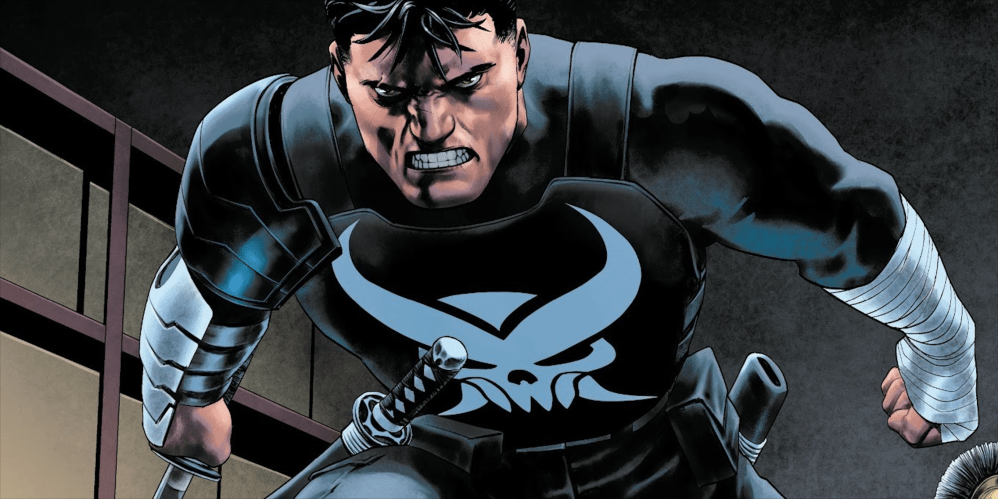
In addition to these direct responses, Marvel proceeded with a significant change to The Punisher in its comics. In late 2021, Marvel announced a new Punisher series (written by Jason Aaron) that launched in March 2022, featuring a dramatic update to Frank Castle’s status quo – including the retirement of his classic skull insignia. In this storyline, Frank Castle becomes an agent of The Hand (an ancient ninja cult), and as part of this new chapter, he adopts a new emblem: a horned demon-skull design inspired by Japanese oni masks. The iconic long-toothed skull that had been on Castle’s chest for decades was deliberately left behind. Marvel’s announcement of the redesign came amidst the ongoing controversy over the original logo’s real-world usage, and many observers linked the change to Marvel’s desire to distance The Punisher from the co-opted symbol. One article noted that Marvel “retired the motif as it was becoming popular with white supremacists and the far right”, replacing it with the new oni-inspired logo for story purposes. Marvel itself framed the change within the narrative context (Castle’s new role), but the subtext was evident: the classic Punisher skull had become too charged and misused, and a refresh was in order.
Whether this change will be permanent remains to be seen, but it serves as a bold statement within the comics realm. By abandoning the original skull logo in current Punisher comics, Marvel reinforces the message that it does not celebrate what that skull has come to represent outside of the comics. In essence, Marvel is attempting to reclaim control of The Punisher’s image—either by redefining the symbol on its own terms or at least by denying those who misappropriate it the validation of seeing it continue unchanged in new Marvel stories.
Ethical and Cultural Dilemmas
The saga of The Punisher’s skull symbol highlights a tangle of ethical and cultural dilemmas at the intersection of fiction and reality. One core issue is the role of pop culture icons in public service. Should real police officers align themselves with a fictional vigilante who operates outside the law? Most would argue it’s a fundamental contradiction. Police are meant to embody the rule of law and protect citizens’ rights; The Punisher represents frustration with legal limits and the temptation to take the law into one’s own hands. When law enforcement embraces an icon that is explicitly a “failure” of justice and order, it sends a confusing message to the public. It can erode trust in police by suggesting some officers self-identify as warriors accountable to no one but their own sense of justice – a chilling prospect for a democratic society. The cultural dilemma here is how a symbol’s meaning can drastically diverge between subcultures: within some military and police circles, the Punisher skull might simply signal toughness or solidarity, but to many communities, it signals a badge of extrajudicial violence. Bridging this perception gap is challenging, and it begs questions about police culture: Why do some officers feel drawn to this emblem in the first place? Is it harmless fandom, or a symptom of deeper issues in policing mentality?
From Marvel’s perspective, a different ethical quandary arises: What responsibility does a creator or company have for the unintended use of their symbols? The Punisher was created as a critique and a cautionary character, not as a heroic ideal for armed forces. Yet Marvel cannot fully control how audiences interpret or repurpose its content once it’s out in the world. This is a common phenomenon – symbols take on lives of their own (consider how the Guy Fawkes mask from V for Vendetta became a worldwide protest symbol, far removed from its original context). In Marvel’s case, the company must weigh its corporate interests against social responsibility. If a segment of its customer base (e.g. law enforcement fans) enjoys The Punisher and buys merchandise, direct confrontation might alienate those consumers. However, Marvel also has a brand image and moral stance to uphold, especially under the umbrella of Disney which is very conscious of public relations. The company’s careful, somewhat indirect approach – allowing the story to do the talking and issuing general statements – illustrates this delicate balance. Aggressively suing police departments or outspokenly attacking officers’ behavior could open a political can of worms, but doing nothing would seem like tacit approval of the misuse. Marvel opted for a middle path: clarifying its disapproval and adjusting the comic portrayal, thus exercising soft power to influence the conversation.
There’s also a legal and free-speech dimension. Legally, using a trademarked logo without permission is usually infringement, and Marvel has every right to clamp down on it. However, when individuals put a skull sticker on personal or government property, enforcement is tricky. Moreover, symbols carry speech value; the Punisher skull, when used as an expression of personal ethos by an officer or soldier, enters a gray area of the First Amendment (especially in the U.S.). Marvel’s intellectual property rights exist, but in practice, policing every instance – and doing so without appearing to police free expression – is nearly impossible. Thus, the situation highlights how cultural symbols can escape the control of their originators, becoming part of the broader social lexicon with meanings the creators never intended. Marvel finds itself in a continuous effort to re-contextualize the symbol back towards its narrative meaning (vigilante as critique, not model).

On the flip side, one might consider whether it’s fair to “blame” Marvel at all for how people misuse The Punisher’s image. The character was never promoted as a beacon for cops or soldiers – quite the opposite. Yet the reality is that iconic imagery can be co-opted in unforeseen ways. Marvel’s challenge – and by extension, the challenge for creators of any influential media – is how to respond when a creation enters the cultural zeitgeist in a controversial manner. In Marvel’s case, they have taken a stance that aligns with the ethical viewpoint of their comics: they have unequivocally denounced the idea of cops acting like Punisher. They’ve shown support for those who see the symbol’s co-optation as a symptom of injustice. But they also continue to publish Punisher stories, perhaps with more caution and context than before. There is an argument to be made that rather than retiring the character (which some called for), it’s more productive to continue using him to tell stories about these issues – effectively using the character to hold up a mirror to the very real problems his symbol has become embroiled in. A recent op-ed suggested that “as calls to retire The Punisher and his symbol rise, Marvel’s best move would be to utilize the character” to directly confront those themes. Marvel’s 2019 comic scene and the new 2022 series can be seen as doing just that.
The Punisher’s journey from a 1970s comic book antihero to a flashpoint in 21st-century cultural debates is a testament to the power – and unpredictability – of fictional symbols. Frank Castle was conceived as a tragic figure, a man who becomes a monster to battle monsters, intended to provoke thought on the cost of vengeance. Decades later, his iconic skull emblem has slipped into the real world, adopted by people far removed from the context of the comics. This has forced a reckoning not only for those people (police and soldiers, who must consider what it means to wear that symbol), but also for Marvel, which must reckon with the legacy of its creation. The controversies surrounding police and military use of The Punisher’s logo have illuminated a stark clash between pop culture and public service ethics. They have sparked conversations about whether a comic book symbol has any place in the serious business of law enforcement, and what it says about police culture when it does.

Marvel’s response—through storylines, statements, and changes—demonstrates an awareness of the responsibility that comes with the influence of its intellectual properties. By explicitly disavowing the misuse of the Punisher symbol and reasserting the character’s true narrative role, Marvel has taken a clear stance without necessarily resorting to heavy-handed legal battles. The company’s actions, from Frank Castle admonishing cops in a comic panel to the replacement of the skull logo in 2022, show an intent to reshape the cultural meaning back towards critique rather than endorsement of vigilantism. It is an ongoing effort, and one brand alone cannot control how a symbol is perceived in every context. Yet, Marvel’s handling of The Punisher controversy opens a broader dialogue about fiction’s impact on reality. It underscores the need for critical understanding of characters like The Punisher – by both the public and those inclined to sport his symbol – so that the ethical lines between heroism and brutality remain brightly drawn.
In the end, The Punisher’s story has become dual-layered: one layer on the comic page, another in the real world. Marvel’s challenge (and to an extent, its duty) is to guide both narratives responsibly. Through frank acknowledgment of the issues and creative course-correction, Marvel has shown a willingness to address the cultural dilemmas head-on. The Punisher’s skull, meanwhile, remains a potent image – one that will likely continue to provoke debate about justice, power, and how we choose our symbols. By understanding the character’s origins and the intent behind his creation, perhaps fewer will be inclined to wear his skull as a simplistic emblem of toughness, and more will recognize it as a cautionary symbol of a path we should avoid rather than emulate. The conversation around The Punisher thus becomes as important as the character himself, challenging us to consider the fine line between vigilantism and justice in both fiction and reality.
Sources: The information in this essay is supported by diverse sources including Marvel’s official character biography
- marvel.com
- marvel.com, comic book issue analyses and news articles
- comicbook.com
- insidehook.com
- foxnews.com, commentary from The Punisher’s co-creator Gerry Conway
- knowyourmeme.com
- comicbook.com, and reports on real-world usage of the Punisher symbol by military and police figures
- warhistoryonline.com
- en.wikipedia.org
- foxnews.com. These sources provide a comprehensive view of Frank Castle’s development in Marvel comics, the real-life adoption of his skull logo, the public’s reaction, and Marvel’s ensuing response to the controversy.







 gfpods.com
Leave a comment