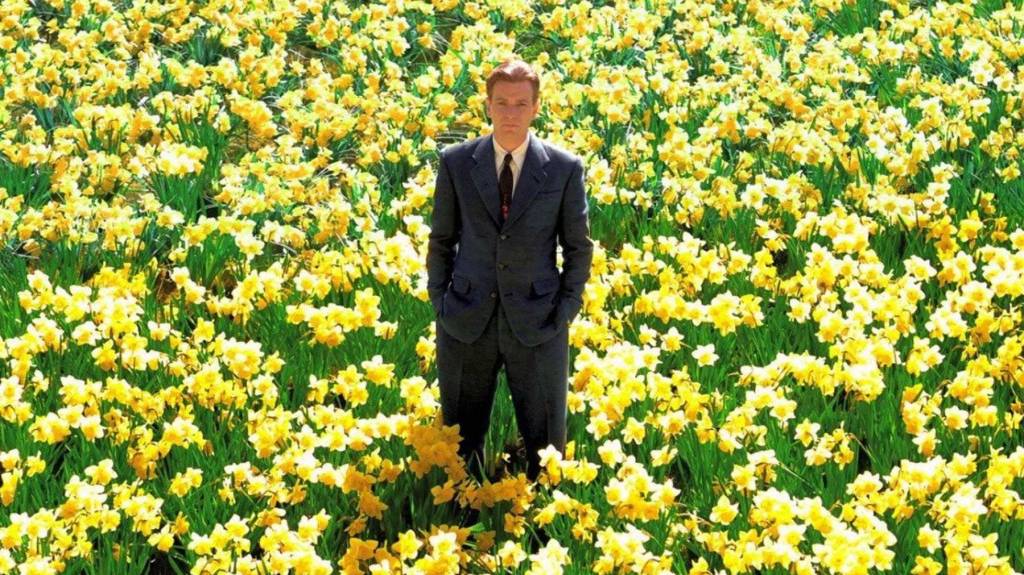
Tim Burton’s Big Fish (2003) is a film that lingers long after the credits roll. While it may be wrapped in the whimsical storytelling and fantastical imagery Burton is known for, at its heart, Big Fish is a poignant meditation on adulthood, the strained relationships that often define it, and the inevitable reckoning with our past. Through the journey of Will Bloom as he grapples with his father’s larger-than-life tales, the film explores how we reconcile childhood wonder with adult realities—and why the line between them isn’t always as clear as we think.
The Struggle Between Fact and Fiction
At its core, Big Fish is about the struggle to understand and accept the people we love, even when they don’t fit neatly into our expectations. Will Bloom, played by Billy Crudup, spends much of the film wrestling with his father Edward’s (Albert Finney/Ewan McGregor) tendency to exaggerate—or outright fabricate—his life story. Will, now an adult with a more rigid and pragmatic view of the world, wants truth and honesty. His father, on the other hand, has always preferred grand, sweeping tales where he is the hero of an endless adventure.
This dynamic is something many adults face as they move through life. The stories we are told as children—about our parents, our world, and even ourselves—often don’t hold up under scrutiny. There comes a point when we question them, seek out the truth, and sometimes even resent the illusions. But Big Fish argues that there is more to life than cold facts. The truth isn’t just about what happened—it’s about how we choose to remember and interpret it.
Adulthood as a Loss of Magic
One of the most striking aspects of Big Fish is how it contrasts the magic of childhood with the stark realities of adulthood. Edward’s stories, full of giants, witches, and werewolves, seem absurd to Will—but they also represent something he’s lost: the ability to see life as an adventure.
Growing up often means letting go of the impossible and embracing the mundane. Careers, responsibilities, and societal expectations force people to ground themselves, to reject idealism in favor of practicality. Will’s skepticism mirrors this transition—he no longer sees the world through the lens of possibility. In contrast, Edward refuses to accept a dull, uneventful existence, choosing instead to create his own legend.
This struggle resonates deeply with audiences because it reflects the universal experience of growing up. How much of our childhood wonder should we hold onto? At what point do we stop believing in the larger-than-life versions of our loved ones and accept them as flawed human beings? Big Fish doesn’t give a simple answer—it merely suggests that perhaps both perspectives have merit.
Legacy and the Stories We Leave Behind
Another powerful theme in Big Fish is the idea of legacy—what we leave behind when we’re gone. Edward Bloom knows his time is running out, and rather than leave his son with only the bare facts of his life, he leaves behind something greater: a myth, a story that will endure long after he’s gone.
In adulthood, we begin to understand the weight of this responsibility. We start to think about how we will be remembered—not just by our accomplishments, but by the stories others tell about us. Big Fish suggests that the details of our lives may fade, but the emotions, the impact, and the magic we create for others can last forever.
Will’s eventual acceptance of his father’s stories is not just about making peace with Edward—it’s about understanding that there is value in seeing life as more than a collection of events. By choosing to embrace the beauty of the myth, Will reconnects with something he had lost: his sense of wonder.
Conclusion: Embracing the Balance Between Reality and Imagination
Big Fish is ultimately a film about learning to accept life’s contradictions. Adulthood doesn’t have to mean abandoning childhood dreams, and truth doesn’t always mean forsaking imagination. The film reminds us that reality and fantasy aren’t opposing forces—they can coexist, shaping the way we see the world and the people in it.
For anyone facing the transition into adulthood, Big Fish offers a reassuring message: growing up doesn’t mean losing the magic. It means learning to see the magic in a different way.





 gfpods.com
Leave a comment