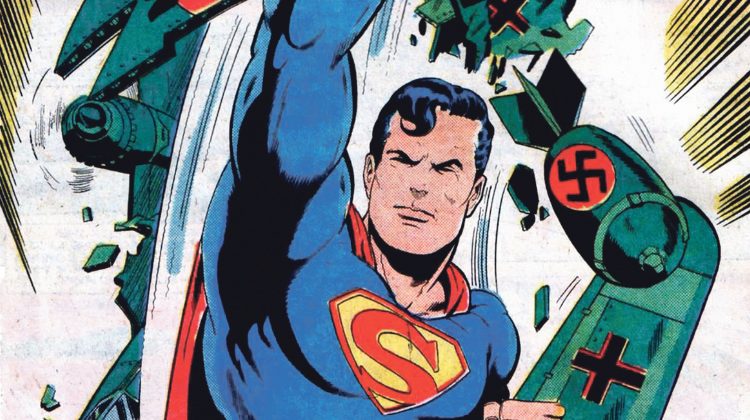
Superman, the iconic superhero created by Jerry Siegel and Joe Shuster in 1938, became a symbol of hope and justice during the tumultuous years leading up to and during World War II. Both Siegel and Shuster were Jewish, and their creation of Superman was influenced by their cultural background and the global events of the time. Superman’s battles against the Nazis in comic books not only provided entertainment but also served as a form of propaganda and moral support for the Allied cause.

Superman’s Confrontation with Hitler and Stalin
In February 1940, nearly two years before the United States entered World War II, Look magazine published a two-page comic strip titled “How Superman Would End the War.” In this story, Superman breaches the Siegfried Line, captures Adolf Hitler and Joseph Stalin, and delivers them to the League of Nations for justice. This narrative was a bold statement, showcasing Superman directly confronting the tyrannical leaders responsible for the war.

Nazi Reaction to Superman
The depiction of Superman capturing Hitler did not go unnoticed by the Nazi regime. On April 25, 1940, the SS’s official newspaper, Das Schwarze Korps, published an article attacking Superman and his creators. The piece mocked Jerry Siegel’s Jewish heritage and criticized the character for promoting values contrary to Nazi ideology. The article stated:
“Jerry Siegel, an intellectually and physically circumcised chap who has his headquarters in New York, is the inventor of a colorful figure with an impressive appearance, a powerful body, and a red swim suit who enjoys the ability to fly through the ether.”
This reaction highlights the impact that a fictional character like Superman had on the Nazi regime, provoking them to respond to what they perceived as subversive propaganda.

Superman as American Messaging
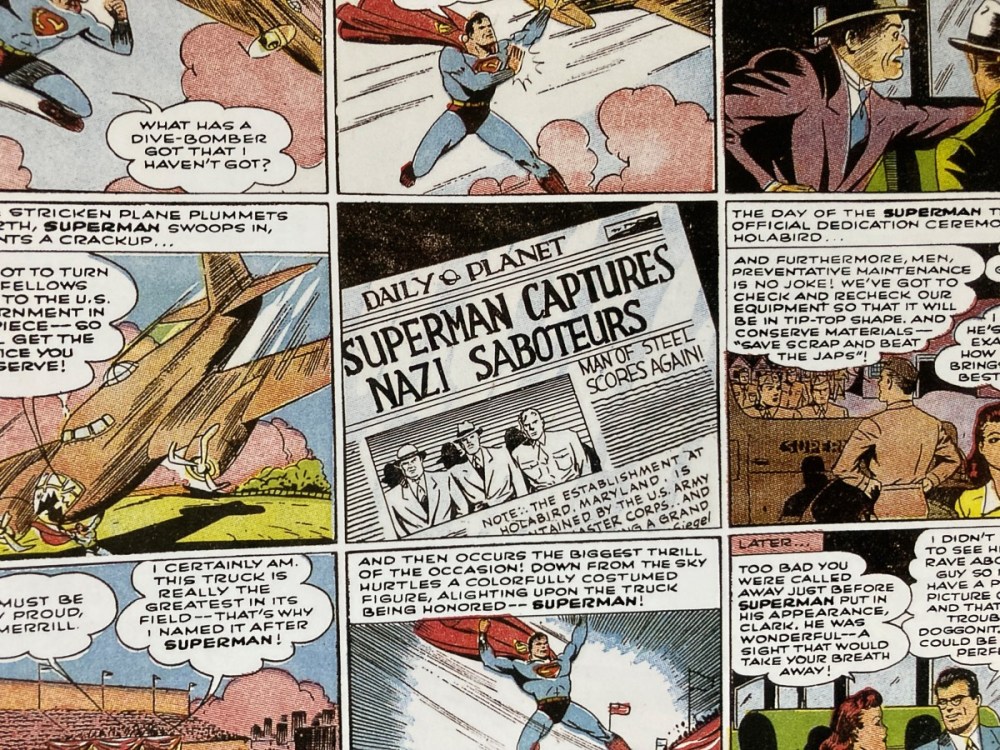
As World War II progressed, Superman became an emblem of American ideals and was utilized in various propaganda efforts. The U.S. government enlisted Superman’s image to promote enlistment, blood donations, and the purchase of war bonds and stamps. Comic book covers and stories frequently depicted Superman combating Nazi soldiers, sabotaging their plans, and standing up for democratic values. These narratives served to boost morale on the home front and among troops abroad.
Cultural and Religious Influences
The creation of Superman was deeply rooted in Jewish cultural and religious themes. The character’s origin story parallels that of Moses, being sent away by his parents to save him from impending doom and later becoming a savior for his people. Additionally, Superman’s Kryptonian name, Kal-El, resembles the Hebrew phrase “qōl ʾēl,” meaning “voice of God.” These influences underscore how Siegel and Shuster infused their heritage into their creation, making Superman not just a hero, but a symbol of hope against oppression.
Legacy of Superman’s Wartime Role
Superman’s involvement in World War II narratives left a lasting legacy in comic book history. He set a precedent for superheroes taking on real-world villains and participating in global events. This blend of fiction and reality provided readers with a sense of empowerment and optimism during one of history’s darkest periods. Superman’s battles against the Nazis exemplified the power of storytelling in shaping public perception and bolstering national spirit.
In conclusion, Superman’s confrontations with the Nazis transcended mere comic book pages; they were a significant part of the cultural fabric of the era. Through these stories, Superman embodied the fight against tyranny and the defense of freedom, reinforcing his status as a timeless symbol of justice.
Sources: Aish, Calvin University, Wiki







 gfpods.com
Leave a comment