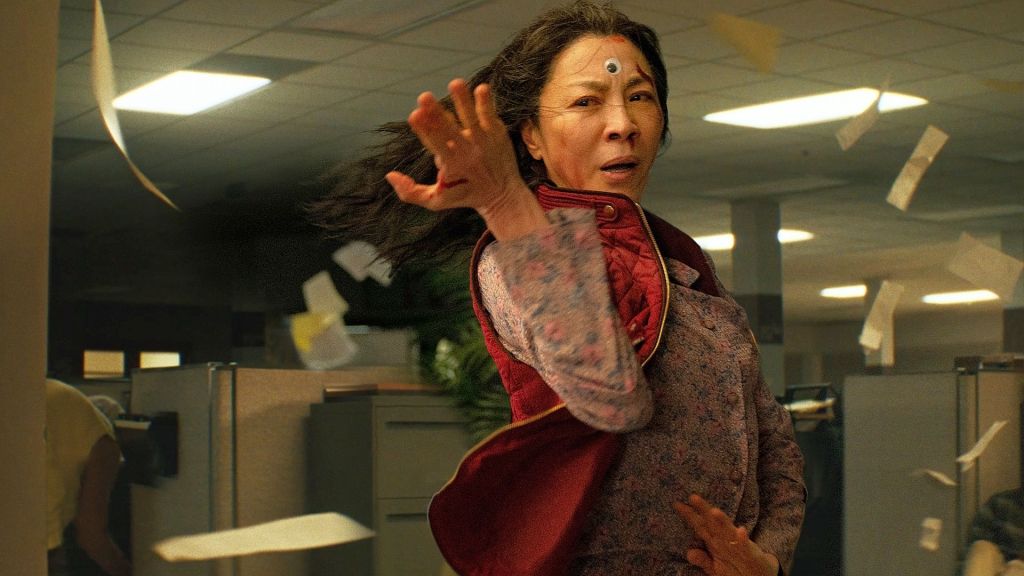
“Everything Everywhere All At Once” is a cinematic odyssey that takes audiences on a wildly imaginative journey through multiple universes, blending genres and defying traditional narrative structures. Directed by Daniel Kwan and Daniel Scheinert, collectively known as the Daniels, the film has been hailed as a multiverse masterpiece that pushes the boundaries of conventional filmmaking.
Thank you and Goodbye. Challenge Accepted

In this final episode of Challenge Accepted, Frank and Thomas Law reflect on what the show became over three years and 250-plus episodes, and why ending it now feels like the right move. They talk about the grind of weekly reviews, the fun of theme months, the lessons they're carrying forward, and how the best parts of this podcast will live on through Geek Freaks and what's next for the network. Thomas also shares where Sick Burn is headed, why the message matters more than the metrics, and how storytelling and vulnerability have become a core part of the work. Timestamps and Topics 00:06 – Welcome in, and why this is the final episode of Challenge Accepted 00:54 – Ending on a high, not because of listeners or quality 01:21 – Other commitments, new projects, and Thomas balancing a newborn 02:48 – We're not disappearing, we're shifting the energy somewhere else 03:28 – Looking back: 3 years, 250-plus episodes, weekly challenges and reviews 04:15 – The "three episodes a week" stretch and the Ahsoka grind 04:31 – Avatar episode-by-episode was the definition of podcast marathoning 05:01 – Theme months: Nolan Month, A24 Month, and expanding the watchlist 05:43 – "Prestige" and "Ex Machina" as challenge wins and rewatches 06:13 – Revisiting favorites through each other's eyes (Hook, Big Fish) 07:19 – Special guests, community moments, and what we learned from collaborations 08:48 – Building something "really special" and what made it work 09:06 – The biggest lesson: authenticity and being the brand 10:00 – Confidence on camera, anxiety, and learning to be vulnerable 12:13 – Using analytics without losing yourself, pushing past imposter syndrome 13:48 – Why disagreements made some of the best episodes (Dune: Part Two) 15:12 – Podcasting as a space for real conversation, not just hot takes 16:55 – Learning to talk about craft: music, tone shifts, and deeper analysis 19:09 – Thomas on Sick Burn: adversity, healing, and the message moving forward 22:16 – How Frank and Thomas linked up, Joystick Show roots, and what's next 23:22 – The reality of growing an indie network, and why it keeps evolving 26:13 – Geek Freaks goals: authenticity, bigger discussions, and themed episodes 31:14 – Cleaning up old feeds, early audio memories, and advice to new podcasters 33:04 – Farewell, the archive stays up, and the classic sign-off Key Takeaways Ending a show can be a positive move when it protects the quality and the friendship behind it. Challenge Accepted worked because it pushed both hosts to try new genres, new formats, and new levels of honesty. Theme months were a cheat code for discovery, and a reminder that structure can actually spark creativity. The best media conversations go past "this rules" or "this sucks" and dig into the why. Being yourself on mic and on camera is not optional anymore if you want longevity. Analytics can be useful when they guide you toward what the audience wants more of, without forcing you to fake a persona. Sick Burn is built around resilience and real stories, with growth measured by impact as much as numbers. The spirit of Challenge Accepted will continue through Geek Freaks and the broader network's next wave. Quotes "We figured it's best to put this away on a high than it is to struggle with scheduling." "It would be a disservice to everybody listening if we couldn't put the same time, energy and effort into this show." "The brand is me, essentially." "I should just trust being myself." "They need to be talked about if you actually want to get to what really happened." "We'll be here, just in a different way. Come find us." Call to Action If you've been with us for one episode or all 250-plus, thank you. Subscribe wherever you listen, leave a review if this show ever made your week a little better, and share this finale with a friend who needs a good podcast sendoff. Use #ChallengeAcceptedPodcast when you post about the episode. Links and Resources All news discussed on our podcasts comes from the Geek Freaks Podcast website (link below). Follow Us Sick Burn: https://www.sickburnpodcast.com/  Geek Freaks Instagram: @geekfreakspodcast Threads: @geekfreakspodcast Twitter: @geekfreakspod Listener Questions Got a movie or show you want us to cover on the next chapter of what we're building? Send your recommendations, challenges, and thoughts to: ChallengeAcceptedgfx@gmail.com Links: GeekFreaksPodcast.com Apple Podcast tags: Challenge Accepted, Geek Freaks, Geek Freaks Network, Movie Reviews, TV Reviews, Pop Culture, Geek Culture, Streaming TV, Film Discussion, Podcasting, A24, Christopher Nolan, Star Wars, Marvel, Stranger Things, Avatar The Last Airbender, Mental Health, Sick Burn

A Symphony of Chaos and Emotion

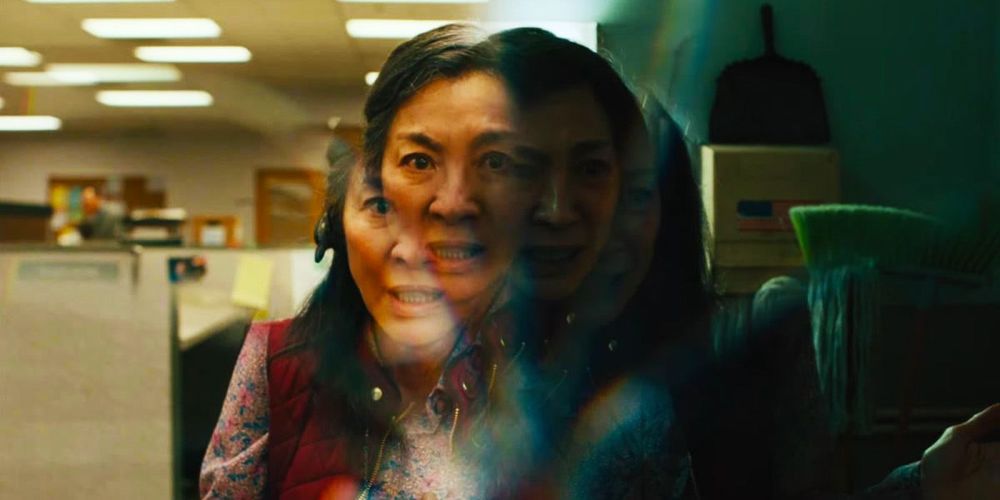
At its core, the film explores deeply personal and emotional themes wrapped in layers of absurdity and high-energy action. Michelle Yeoh delivers a powerhouse performance as Evelyn Wang, a beleaguered laundromat owner whose mundane tax audit spirals into a surreal adventure across dimensions. Yeoh masterfully navigates through various iterations of Evelyn, from a martial arts expert to a disheveled mother, anchoring the film’s wild narrative turns with her profound emotional depth​.

Ke Huy Quan, as Evelyn’s husband Waymond, brings a heartfelt and nostalgic presence, weaving his childhood roles through the character’s evolution in the story. Stephanie Hsu, as their daughter Joy, embodies the generational and cultural conflicts, adding a poignant layer to the narrative. Together, they explore themes of regret, choice, and the impact of unfulfilled lives, suggesting that the specter of personal and familial disappointment can transcend even the boundaries of different realities​.

Visual and Narrative Innovation

The film’s visual storytelling is as bold and inventive as its narrative structure. It employs a dizzying array of special effects and stunt work to bring its varied universes to life, each more fantastical than the last. From a universe where characters have hot dog fingers to another where a rock with googly eyes communicates in text, the Daniels fuse absurd elements with serious themes, creating a visually stunning and emotionally resonant experience​.

A Cultural and Cinematic Triumph

“Everything Everywhere All At Once” is not just a film about saving the multiverse; it’s also a profound meditation on identity, family, and the meaning of life itself. It challenges viewers to find coherence in chaos and to cherish the fleeting moments of connection and understanding, even amidst the most outlandish scenarios​.

Conclusion

“Everything Everywhere All At Once” stands out as one of the most original films in recent years. It combines a heartfelt story with groundbreaking visual effects and a daring narrative that captivates and entertains. This film is a testament to the creative vision of the Daniels and a must-watch for anyone who appreciates the power of cinema to explore new realms of storytelling.

In a film landscape often dominated by formulaic sequels and predictable plots, “Everything Everywhere All At Once” offers a refreshing, exhilarating, and ultimately uplifting experience that resonates deeply with its audience, making it one of the standout films of the year.


Something went wrong. Please refresh the page and/or try again.

Discover more from

Subscribe to get the latest posts sent to your email.

Leave a comment

Trending