
In 2021, the cinematic world was gifted with a spectacle of epic proportions – Denis Villeneuve’s adaptation of Frank Herbert’s seminal science fiction novel, “Dune.” This ambitious project aimed to breathe life into Herbert’s complex universe, a task that has daunted filmmakers for decades. As we stand on the precipice of “Dune Part 2,” it’s imperative to look back and dissect “Dune Part 1” – not just as a film but as a monumental narrative achievement that sets the stage for what’s to come. This article aims to refresh your memory on the sprawling dunes of Arrakis, diving deep into the themes, characters, and cinematic beauty of “Dune Part 1,” ensuring you’re well-prepared for the sequel.
Plot Summary
“Dune Part 1” introduces us to Paul Atreides (Timothée Chalamet), the scion of House Atreides, who is thrust into the heart of a cosmic conflict upon his family’s move to Arrakis. Known for its exclusive supply of the universe’s most coveted resource, spice melange, Arrakis is a desert world of immense political and economic significance. The narrative arc of betrayal against House Atreides, coupled with Paul’s burgeoning powers and destiny, forms the crux of the story. From the lush, water-rich world of Caladan to the stark, unforgiving sands of Arrakis, Paul’s journey is one of survival, discovery, and destiny.

Characters and Performances
At the heart of “Dune” are its compelling characters, brought to life by a stellar cast. Timothée Chalamet’s portrayal of Paul Atreides is both nuanced and powerful, capturing the complexity of a young man burdened with great expectations. Rebecca Ferguson as Lady Jessica, Paul’s Bene Gesserit mother, delivers a performance filled with strength and vulnerability. Duke Leto, played by Oscar Isaac, epitomizes the noble leader, torn between political machinations and family. Zendaya’s Chani, though glimpsed briefly, leaves a lasting impression, hinting at a deeper role to come. These performances, among others, elevate the film, creating a tapestry of characters that are as complex as the universe they inhabit.
- Paul Atreides: The young heir to House Atreides, grappling with visions of the future and a destiny that intertwines him deeply with the fate of Arrakis. He is the central figure, portrayed as both a gifted leader and a reluctant hero.
- Lady Jessica Atreides: Paul’s mother, a member of the mystical Bene Gesserit sisterhood. She is torn between her loyalty to her son and her duties to the sisterhood. Her character embodies strength, wisdom, and complexity.
- Duke Leto Atreides: Paul’s father and the noble leader of House Atreides. Known for his integrity and leadership qualities, he is tragically ensnared in the political machinations that lead to his downfall.
- Duncan Idaho: A skilled swordmaster loyal to House Atreides. He is Paul’s mentor and friend, known for his bravery and expertise in combat.
- Gurney Halleck: A warrior-minstrel and another of Paul’s mentors. He is devoted to House Atreides, offering a mix of stern military guidance and emotional support through music.
- Thufir Hawat: The Mentat (human computer) and chief strategist for House Atreides. His wisdom and analytical skills are crucial to the house’s efforts to navigate the treacherous political landscape of Arrakis.
- Baron Vladimir Harkonnen: The primary antagonist of the story, leader of House Harkonnen. He is a figure of greed and cruelty, seeking to regain control of Arrakis and destroy House Atreides.
- Piter De Vries: A Mentat loyal to the Harkonnens, characterized by his cunning and sadistic tendencies. He plays a key role in the plot against House Atreides.
- Chani: A young Fremen woman who appears in Paul’s visions before they meet. She becomes a significant figure in his life, symbolizing his connection to Arrakis and its people.
- Stilgar: A leader among the Fremen, the native inhabitants of Arrakis. He is wary of outsiders but comes to respect Paul and Jessica. His character represents the strength and resilience of the Fremen.
- Dr. Wellington Yueh: The Suk doctor serving House Atreides. Despite his oath to do no harm, he is compelled by personal tragedy to betray the Atreides, showcasing the complexity of loyalty and betrayal.
What is Spice?
Spice, or melange, is the most coveted substance in the universe of “Dune,” central to the saga’s plot and the socio-political dynamics of its world. Harvested from the deep sands of Arrakis, spice is a potent drug that offers an extended lifespan, heightened awareness, and, most importantly, the psychic abilities required for space navigation. This makes it invaluable to the Spacing Guild, whose Navigators use the spice to safely guide spaceships across vast interstellar distances without the need for conventional, time-consuming travel methods.

Beyond its practical applications, spice also has profound spiritual and cultural significance, especially to the Fremen of Arrakis, who see it as a gift from their harsh planet. The monopolistic control of spice production leads to intense political scheming, as various factions within the universe vie for dominance over Arrakis. The struggle for control over spice, with its ability to grant power and shape the cosmos, underscores the broader themes of “Dune,” exploring the intersections of power, addiction, economics, and destiny.
The People of Arrakis
The Fremen are the indigenous people of Arrakis, deeply woven into the fabric of the planet’s harsh desert landscape. Characterized by their fierce independence, resilience, and adept survival skills, the Fremen have adapted to the extreme conditions of Arrakis with remarkable efficiency. They are a warrior culture, known for their formidable combat abilities and their unique relationship with the giant sandworms, which they revere as sacred beings and integral to their way of life. The Fremen’s survival strategies include the use of stillsuits, sophisticated garments designed to preserve body moisture in an environment where water is more precious than gold.

Despite their initial appearance as mere desert dwellers, the Fremen harbor a deep spiritual and prophetic tradition, anticipating the arrival of a messianic figure, the Mahdi, who would lead them to freedom and transform Arrakis into a verdant world. Their society, though appearing primitive to outsiders, is rich in customs, social cohesion, and ecological wisdom, making them pivotal to the unfolding events on Arrakis and the broader political intrigue of the “Dune” saga.


Family and Houses
The relationship between House Atreides and House Harkonnen is marked by deep-seated enmity and rivalry, a feud that is both political and personal, spanning generations. At its core, this animosity stems from their contrasting values and the strategic battle for control over the desert planet Arrakis. House Atreides, led by Duke Leto, is known for its honor, integrity, and benevolent leadership, garnering respect and loyalty from those under its rule. In stark contrast, House Harkonnen, under the ruthless Baron Vladimir Harkonnen, epitomizes greed, cruelty, and oppression, exploiting Arrakis and its people for its own gain. This bitter rivalry is further exacerbated when the Emperor, seeking to curb the rising power of House Atreides, orchestrates their move to Arrakis, fully aware that it would place them in direct conflict with the Harkonnens. The ensuing struggle is not just for control over the spice but also represents a broader conflict between opposing ideologies and ways of life, setting the stage for a saga of betrayal, war, and revenge that impacts the entire galaxy.
Themes and Symbolism

“Dune Part 1” is rife with themes of power, destiny, and environmentalism. The struggle for control of spice mirrors real-world conflicts over natural resources, while the desert landscape of Arrakis serves as a stark reminder of our own planet’s environmental challenges. Paul’s journey is emblematic of the hero’s journey, a narrative arc steeped in prophecy, leadership, and the burden of destiny. Villeneuve masterfully weaves these themes into a narrative that is both grandiose and intimate, reflecting Herbert’s original vision.
In the universe of “Dune,” prophecies play a pivotal role, weaving a complex tapestry of expectation, destiny, and manipulation. Central to these prophetic themes is the figure of the Kwisatz Haderach, a messianic figure foretold by the Bene Gesserit sisterhood to possess extraordinary abilities, including prescience and the capacity to bridge space and time. This figure is believed to bring about significant change and hold immense power. The Bene Gesserit, through their Missionaria Protectiva, have seeded many planets with prophecies to ensure their influence and control, preparing the way for this messianic figure. Paul Atreides finds himself at the heart of these prophecies on Arrakis, identified by the Fremen as their Mahdi, a prophesied liberator who is expected to lead them to freedom and transform the desert into a paradise. His arrival fulfills these long-standing prophecies, but also challenges and transcends them, as Paul grapples with his destiny, the consequences of fulfilling these prophecies, and his own burgeoning powers. The interplay of prophecy in “Dune” not only drives the narrative forward but also explores themes of free will, destiny, and the dangerous allure of power.
Cinematography and Visual Effects
Visually, this film is nothing short of breathtaking. Villeneuve, alongside cinematographer Greig Fraser, captures the vastness and beauty of Arrakis with sweeping shots of desert landscapes and towering sand dunes. The film’s visual effects bring to life the novel’s iconic sandworms and ornithopters, creating an immersive experience that is both grand and detailed. The use of practical effects and real locations adds a tangible quality to the film, grounding the fantastical elements in reality.

Arrakis, colloquially known as Dune, is a desert planet that serves as the fulcrum upon which the epic saga of “Dune” pivots. Its harsh, arid landscape is dominated by endless sand dunes, fierce sandstorms, and the iconic giant sandworms that burrow beneath its surface. Despite its inhospitable conditions, Arrakis is the only source of the universe’s most valuable substance, the spice melange. This spice, capable of extending life and enhancing consciousness, is crucial for space navigation, making Arrakis the center of political intrigue and conflict. The planet’s severe environment shapes the culture and survival strategies of its indigenous people, the Fremen, who have adapted to life in this extreme climate with remarkable resilience. Their customs, knowledge, and relationship with the sandworms, whom they revere as sacred, are integral to the planet’s unique ecosystem. Arrakis is not just a setting but a character in its own right, its brutal beauty and strategic importance influencing the destiny of all who come to its sands.
Music and Soundtrack
Hans Zimmer’s score for “Dune” is a masterpiece in its own right, enhancing the film’s epic scale and emotional depth. The music is both haunting and beautiful, echoing the alien yet familiar world of Arrakis. Zimmer’s use of unconventional instruments and soundscapes creates a unique auditory experience, complementing the visual spectacle on screen.
Expectations for “Dune Part 2”
As “Dune Part 1” concludes, it leaves audiences eagerly anticipating the continuation of Paul’s journey. With the foundations laid, “Dune Part 2” promises to delve deeper into the political intrigue, cultural depth, and cosmic destiny that define Herbert’s universe. The sequel will undoubtedly explore the Fremen’s resistance, Paul’s rise as a leader, and the unfolding prophecy that surrounds him. Fans are left speculating how Villeneuve will navigate the remaining narrative, hoping for a sequel that is as visually stunning and thematically rich as its predecessor.
Conclusion
“Dune Part 1” is a cinematic marvel that successfully adapts one of science fiction’s most daunting texts. Through its intricate plot, deep characterizations, and breathtaking visuals, it not only honors Herbert’s novel but also stands as a testament to Villeneuve’s vision. As we await “Dune Part 2,” it’s clear that the journey through the sands of Arrakis is only just beginning, promising more political intrigue, character development, and visual splendor.
As the sands of Arrakis continue to shift, join us on the Geek Freaks podcast for an in-depth review of “Dune Part 2.” Share your thoughts, theories, and expectations for the sequel, and let’s explore the vast dunes of this story together. The journey through the desert is far from solitary; it’s a shared experience that binds us, fans and newcomers alike, in anticipation of what’s to come.
Latest posts
-
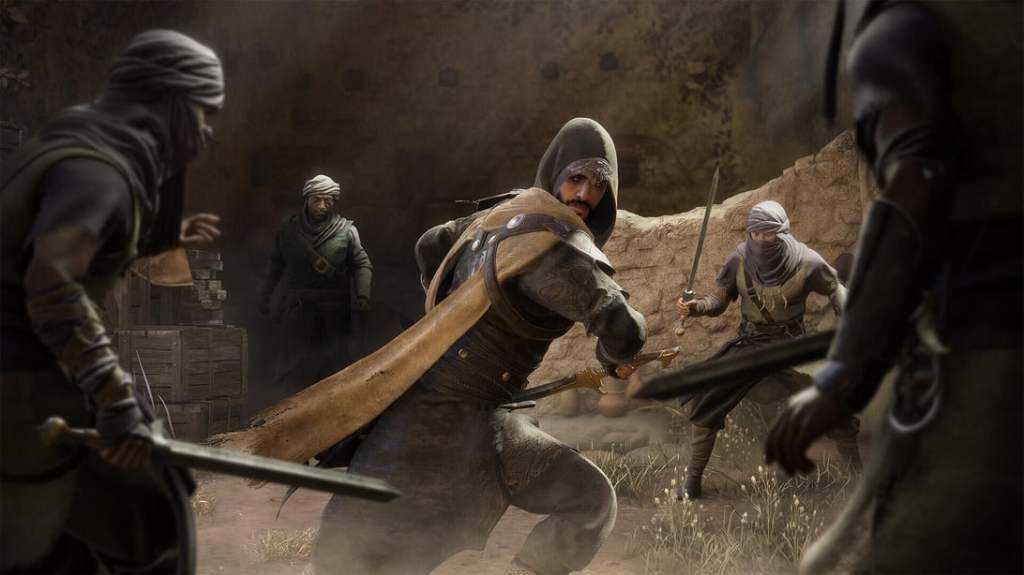
Netflix’s Assassin’s Creed Series Heads to Ancient Rome
Netflix’s live-action Assassin’s Creed series is set in Ancient Rome in 64 AD, featuring an original story that diverges from the game’s narratives. This period under Nero allows for a darker, politically charged atmosphere. With… Read more
-

Ryan Gosling Says Ghost Rider Talks Have Happened, but Marvel Has Not Made It Official
Ryan Gosling has acknowledged discussions with Marvel regarding the role of Ghost Rider, although no formal deal or project has been announced. This marks a shift from speculation to genuine conversation, highlighting Gosling’s long-standing interest… Read more
-

Kirsten Dunst Joining A Minecraft Movie Sequel as Alex Feels Like a Smart Next Step
Kirsten Dunst has been cast as Alex in the upcoming Minecraft movie sequel, highlighting a strategic move by Warner Bros. and Legendary to connect more closely with the game’s essence. Dunst’s grounded performance style is… Read more






 gfpods.com
Leave a comment