
Netflix’s ambitious attempt to bring the beloved world of “Avatar: The Last Airbender” to life in a live-action format has been met with both anticipation and skepticism. The first season, with its limited eight-episode arc, had the colossal task of not only introducing the rich, elemental-bending universe to newcomers but also satisfying the expectations of long-time fans. Here’s a closer examination of how it fares on various fronts:
Character Design and Adaptation
One of the most immediate changes fans will notice is in the characters themselves. Zuko, with a less pronounced scar, and a somewhat youthful Uncle Iroh, represent the most striking departures from their animated counterparts. These alterations, while controversial, do not detract significantly from the essence of these characters. Zuko’s internal struggle and growth are still palpable, and Uncle Iroh’s wisdom shines, albeit through a slightly different lens.
The series excels in adding layers to the complex relationship between Zuko and his sister, Azula, deepening the narrative of familial discord and ambition. However, it stumbles in fully realizing Uncle Iroh’s poignant backstory, particularly his grief over his son’s death. While emotionally resonant, the adaptation misses the opportunity to delve as deeply into Iroh’s transformation and philosophies as the animated series did, potentially leaving new viewers unaware of the depth of his character.
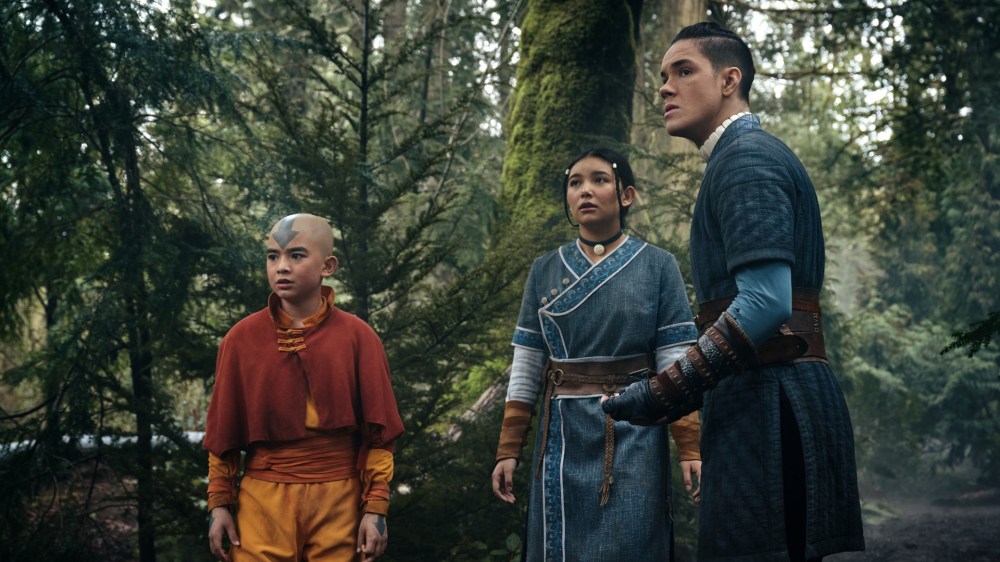
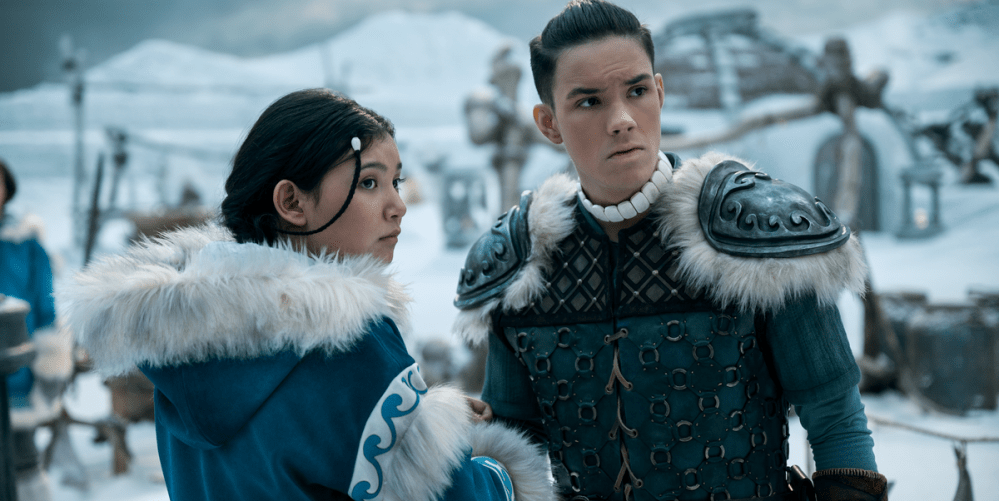
It’s not just the Fire Nation family that receives a narrative makeover. The adaptation delves deeper into the dynamics of Aang, Sokka, and Katara, presenting them with a fresh take. Aang’s struggle with his Avatar responsibilities and his childish innocence is balanced with care, allowing his character to resonate with audiences new and old. Sokka’s journey from skepticism to belief in the supernatural, alongside his growth from comic relief to a strategic mind, is portrayed with a keen eye for character development. Katara’s evolution from a protective sister to a powerful waterbender is given the depth it deserves, showcasing her resilience and leadership.
Narrative Choices and Storytelling Pace
By choosing to reveal key plot points and backstories earlier than the original series, the adaptation alters the storytelling pace and character development trajectory. This approach is a double-edged sword; it provides immediate depth to characters but risks sacrificing the gradual unveiling and suspense that characterized the original series. The adaptation’s streamlined narrative, a result of merging several story arcs into a concise format, is both a practical solution to format constraints and a source of contention for purists who cherished the original’s pacing.

Overall Adaptation Strategy
The live-action series has been described as a “surface-level” adaptation, a characterization that acknowledges both its successes and shortcomings. It captures the essence of the Avatar universe and its central characters but often glosses over the subtleties and depth that made the animated series a masterpiece of storytelling. This first season feels like an introduction, laying the groundwork for potentially richer exploration in future seasons.
The season’s final episodes are noteworthy for their faithfulness to key scenes and battles from the animated series, capturing the spirit and excitement that fans remember. However, the decision to compress storylines, while practical, means that some of the original’s intricacies and character moments are lost.
Conclusion
Netflix’s “Avatar: The Last Airbender” Season 1 is a commendable effort to adapt a deeply beloved series into a new medium. While it captures the broad strokes of the Avatar universe, it occasionally misses the finer details that gave the original its enduring appeal. The adaptation brings to life the characters and world in a new light, offering a solid foundation that leaves room for deeper exploration in future seasons. Fans and newcomers alike will find moments of brilliance and areas longing for more depth, but the journey back to the world of Avatar is, without a doubt, worth embarking on. 8/10.








 gfpods.com
Leave a comment